Japanese Kamachi Step - Edo Period
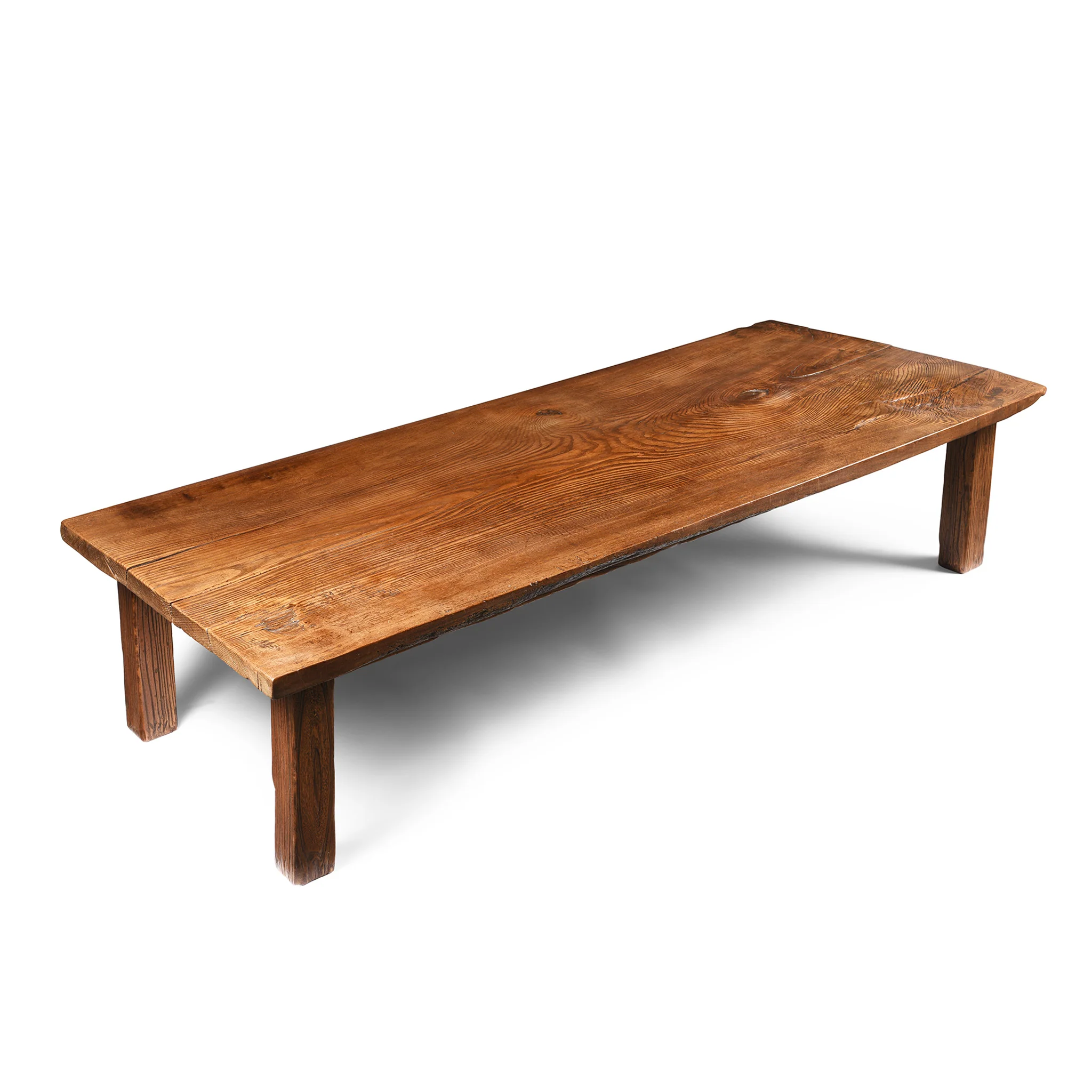
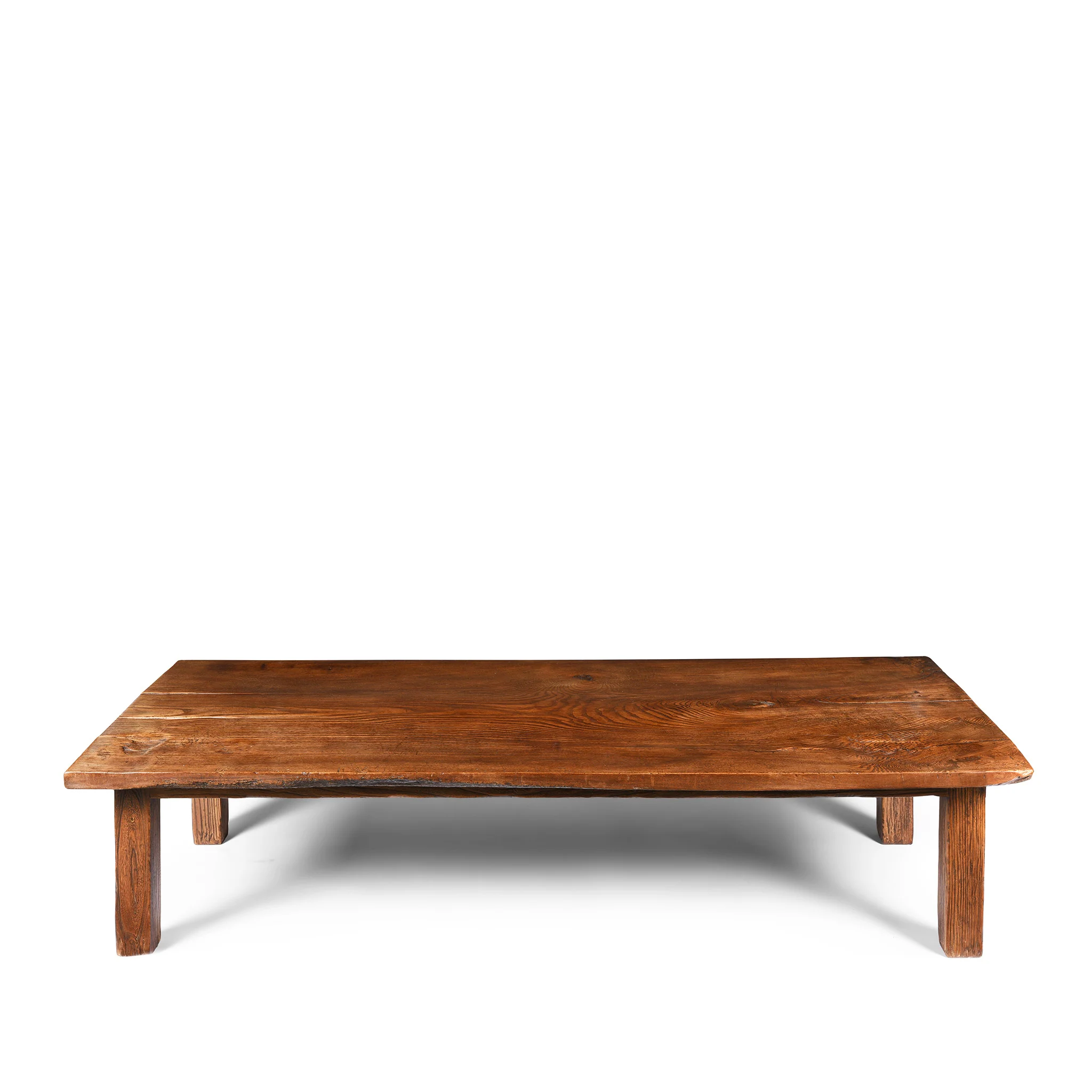
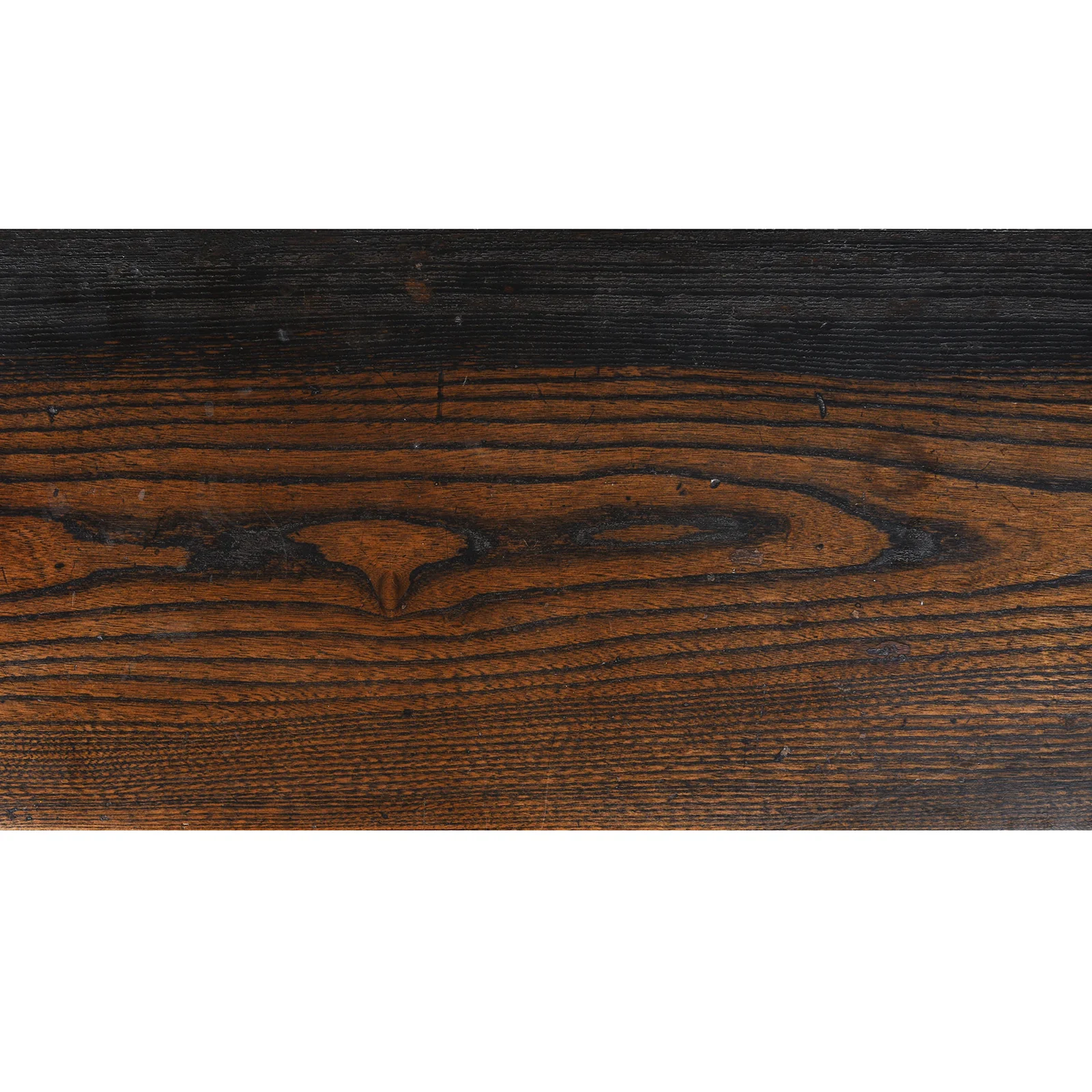
This rare Japanese kamachi step from the Edo period (1603–1868) is an now rare to find. These steps were originally designed as an entrance or threshold step in a Japanese home or merchant property and signified the entry into the main house where guests should enter barefoot. Crafted from richly patinated keyaki (red elm / zelkova) wood with beautifully figured grain. The step was originally lacquered, remnants can be seen top of the step which would have been obscured by a ledge, hence less worn away. The surface has developed a warm, tactile finish through centuries of use.
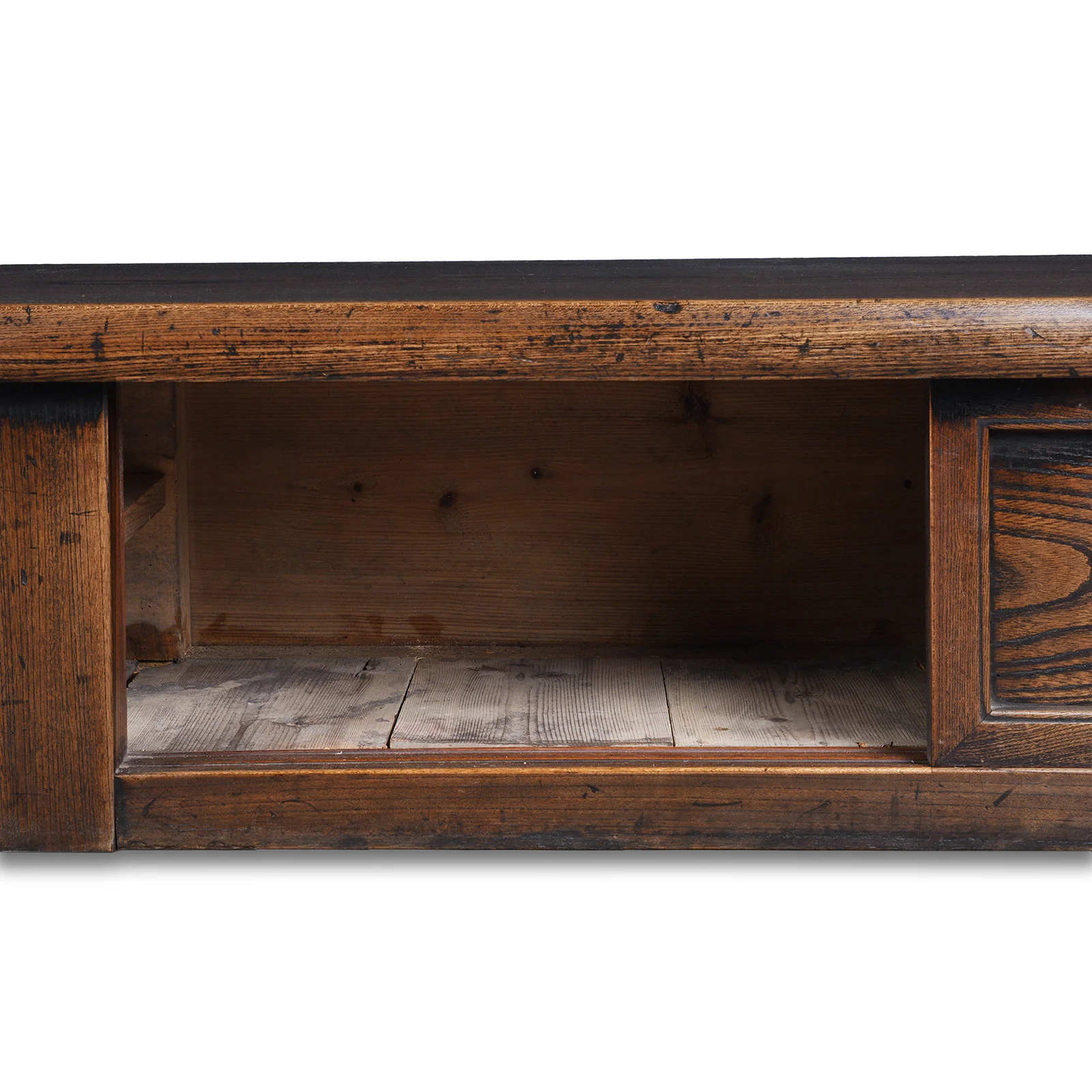
Sliding panel doors conceal generous internal storage compartments where guests could store their shoes. Its low horizontal profile lends itself perfectly to contemporary interiors, whether used in a hallway for shoe storage, as a media console, or as an architectural statement piece. The simplicity of the construction and the quiet beauty of the aged timber embody the refined utilitarianism associated with Japanese Edo period furniture.
- Origin: Japan
- Date: Edo Period (1603–1868) - Circa early 19th century (1820).
- Materials: Solid keyaki wood (red elm / zelkova)
- Features: Sliding Panel Doors, Internal Storage Compartments, Long Low Profile, Rich Natural Patina
- Condition: Age-Related Wear Consistent With Centuries Of Use, Beautifully Aged Surface
- Dimensions: W287 x D41 x H36 cm
Product Information
Product Information
Shipping & Returns
Shipping & Returns






Japanese Kamachi Step - Edo Period
Japanese Kamachi Step - Edo Period
This rare Japanese kamachi step from the Edo period (1603–1868) is an now rare to find. These steps were originally designed as an entrance or threshold step in a Japanese home or merchant property and signified the entry into the main house where guests should enter barefoot. Crafted from richly patinated keyaki (red elm / zelkova) wood with beautifully figured grain. The step was originally lacquered, remnants can be seen top of the step which would have been obscured by a ledge, hence less worn away. The surface has developed a warm, tactile finish through centuries of use.
Sliding panel doors conceal generous internal storage compartments where guests could store their shoes. Its low horizontal profile lends itself perfectly to contemporary interiors, whether used in a hallway for shoe storage, as a media console, or as an architectural statement piece. The simplicity of the construction and the quiet beauty of the aged timber embody the refined utilitarianism associated with Japanese Edo period furniture.
- Origin: Japan
- Date: Edo Period (1603–1868) - Circa early 19th century (1820).
- Materials: Solid keyaki wood (red elm / zelkova)
- Features: Sliding Panel Doors, Internal Storage Compartments, Long Low Profile, Rich Natural Patina
- Condition: Age-Related Wear Consistent With Centuries Of Use, Beautifully Aged Surface
- Dimensions: W287 x D41 x H36 cm
Original: $3,930.45
-65%$3,930.45
$1,375.66Product Information
Product Information
Shipping & Returns
Shipping & Returns
Description
This rare Japanese kamachi step from the Edo period (1603–1868) is an now rare to find. These steps were originally designed as an entrance or threshold step in a Japanese home or merchant property and signified the entry into the main house where guests should enter barefoot. Crafted from richly patinated keyaki (red elm / zelkova) wood with beautifully figured grain. The step was originally lacquered, remnants can be seen top of the step which would have been obscured by a ledge, hence less worn away. The surface has developed a warm, tactile finish through centuries of use.
Sliding panel doors conceal generous internal storage compartments where guests could store their shoes. Its low horizontal profile lends itself perfectly to contemporary interiors, whether used in a hallway for shoe storage, as a media console, or as an architectural statement piece. The simplicity of the construction and the quiet beauty of the aged timber embody the refined utilitarianism associated with Japanese Edo period furniture.
- Origin: Japan
- Date: Edo Period (1603–1868) - Circa early 19th century (1820).
- Materials: Solid keyaki wood (red elm / zelkova)
- Features: Sliding Panel Doors, Internal Storage Compartments, Long Low Profile, Rich Natural Patina
- Condition: Age-Related Wear Consistent With Centuries Of Use, Beautifully Aged Surface
- Dimensions: W287 x D41 x H36 cm