Kashmiri Tinned Copper Paan Box - Late 19th Century
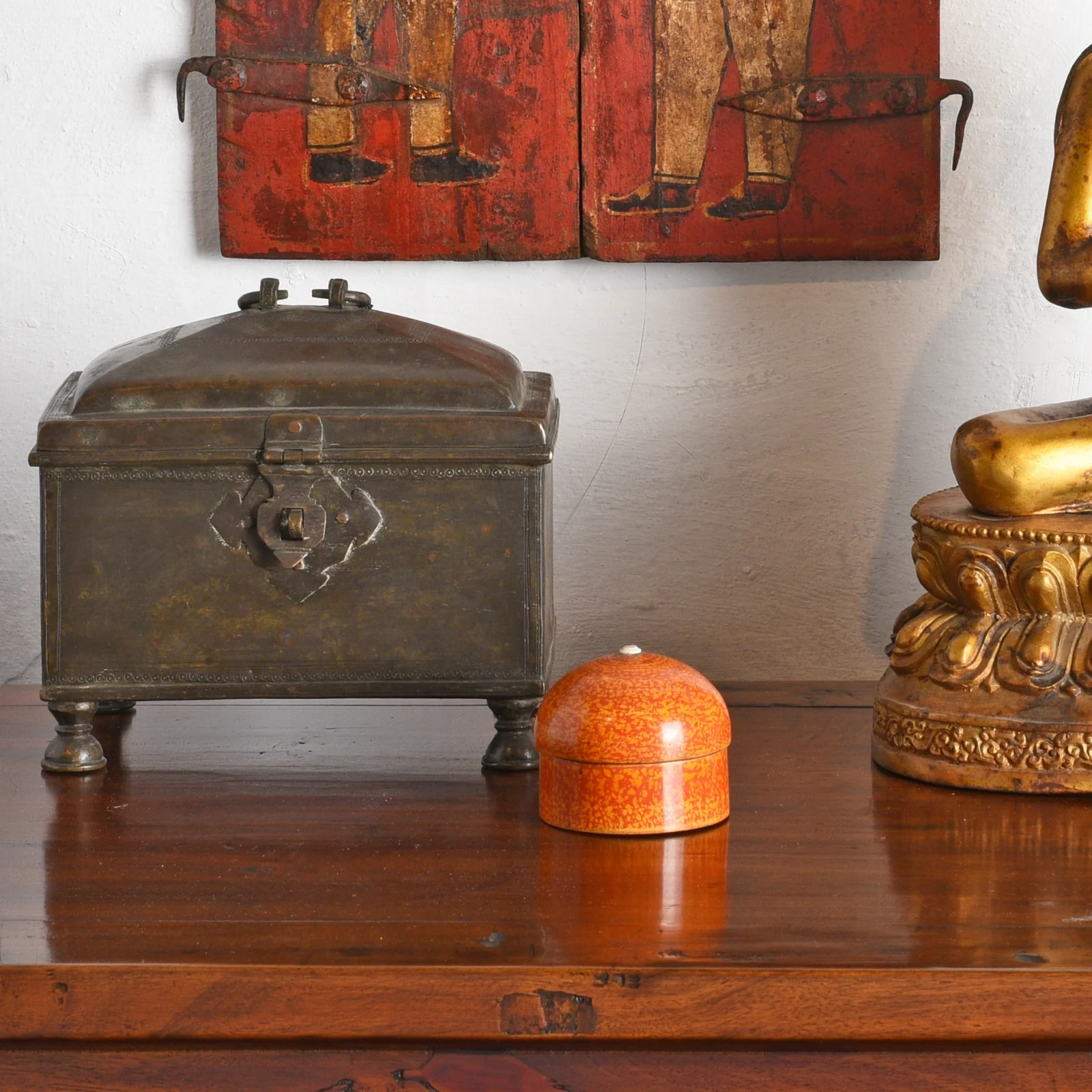
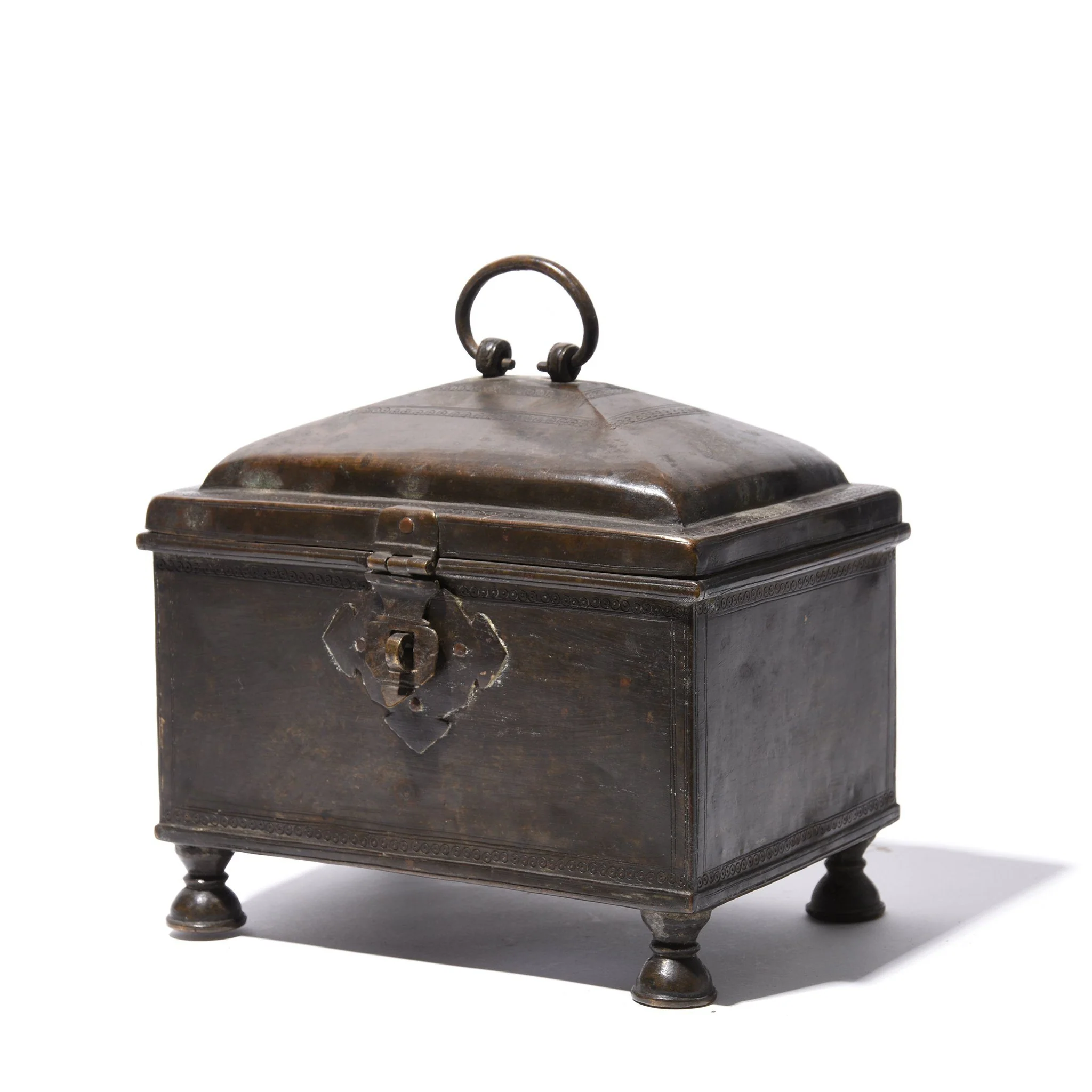
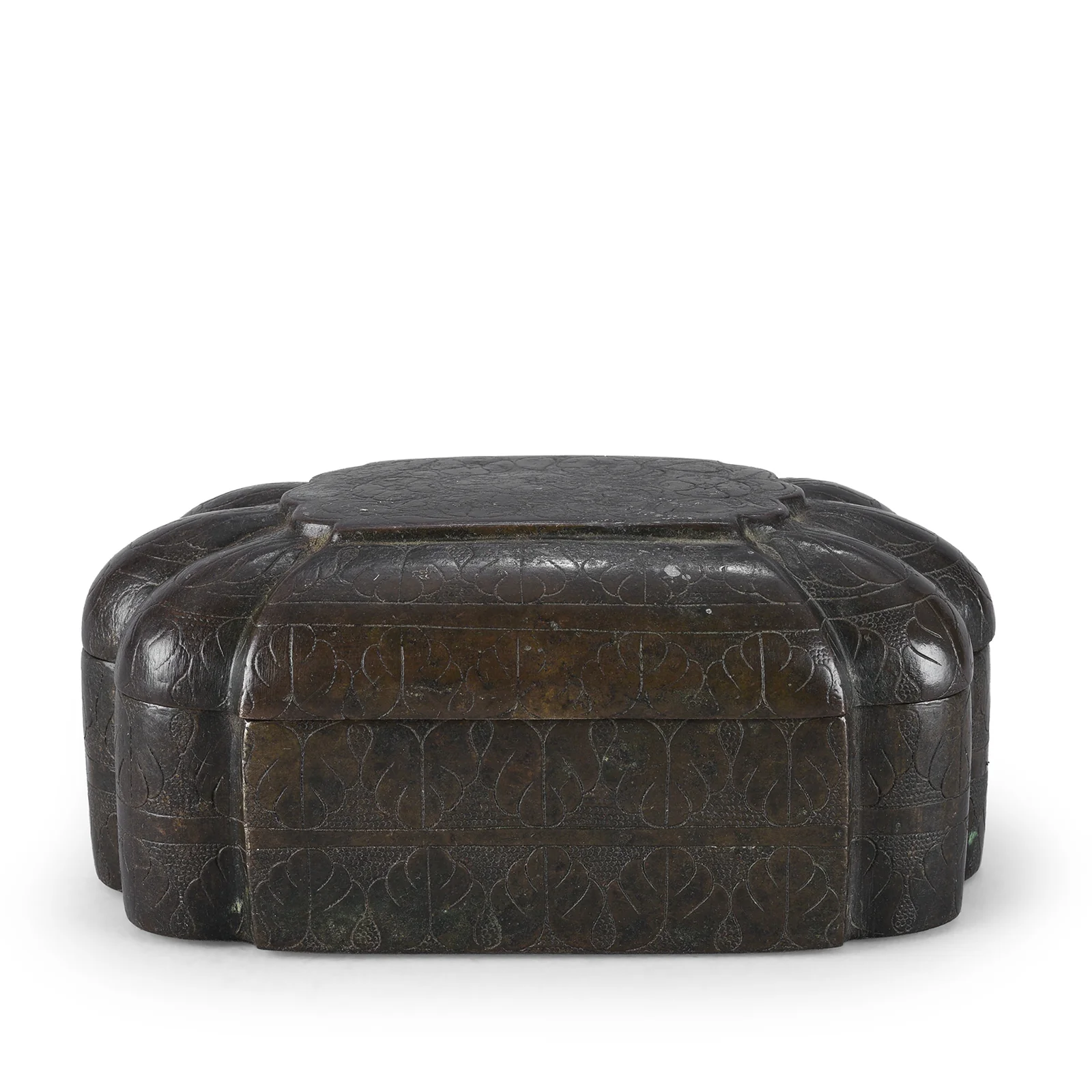
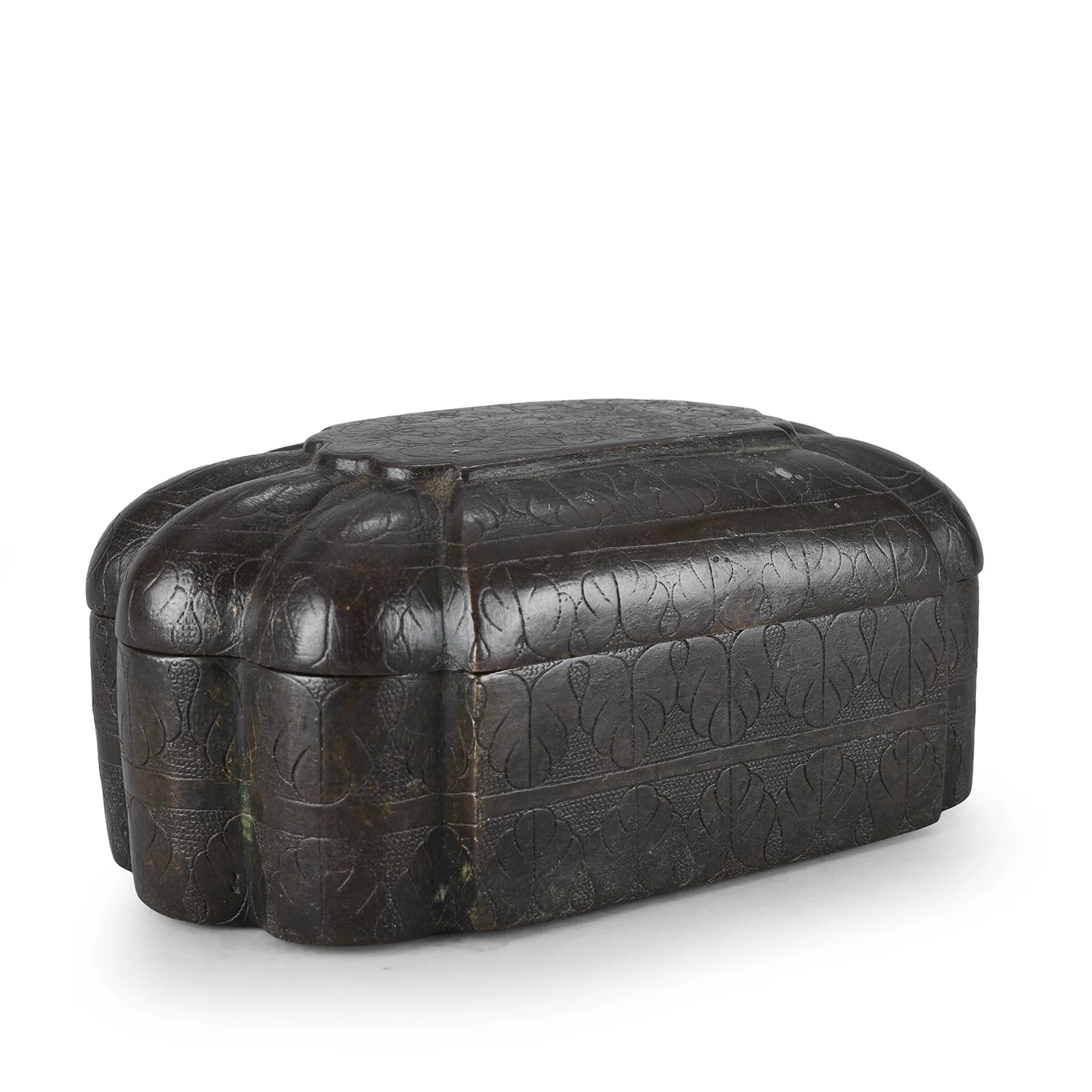
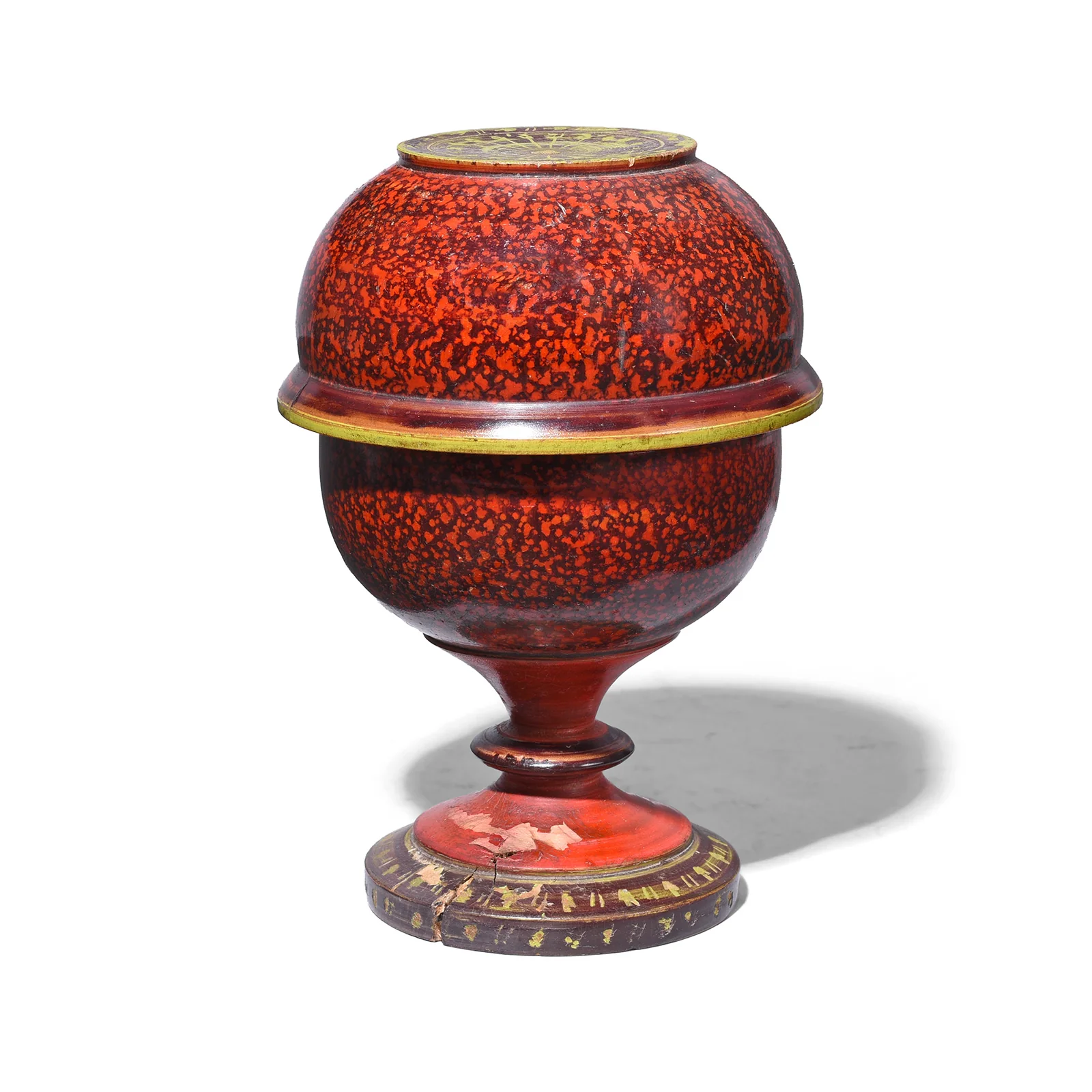
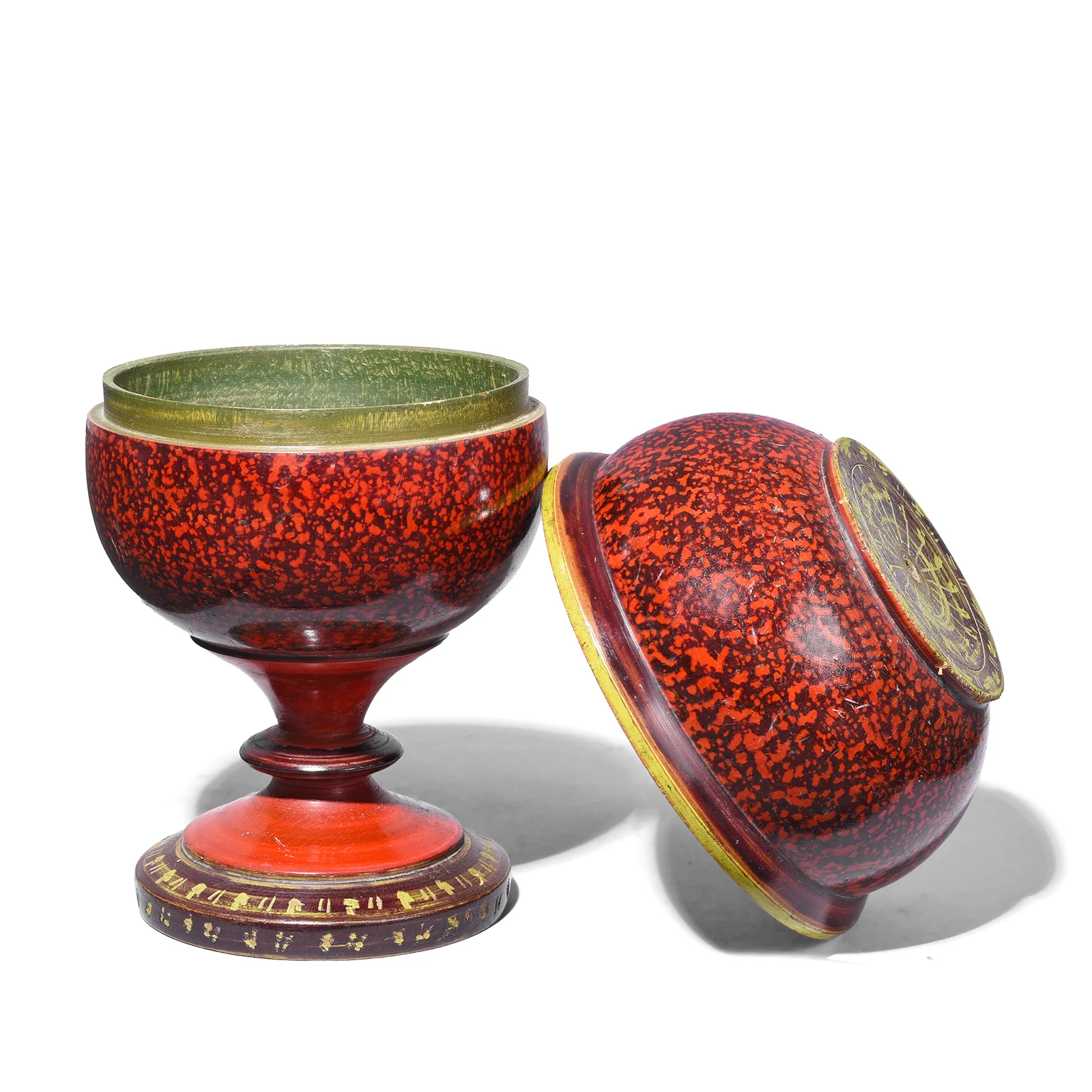
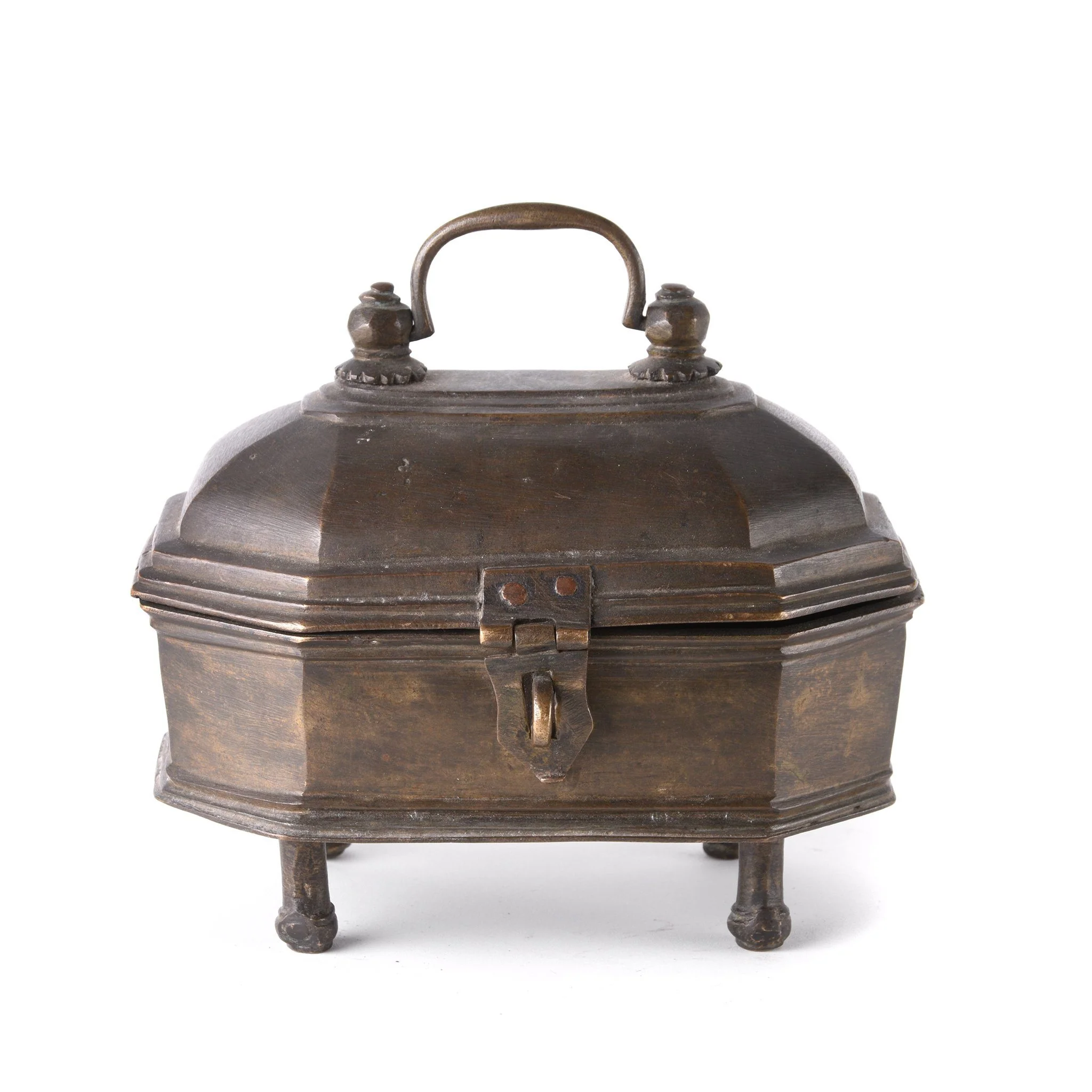
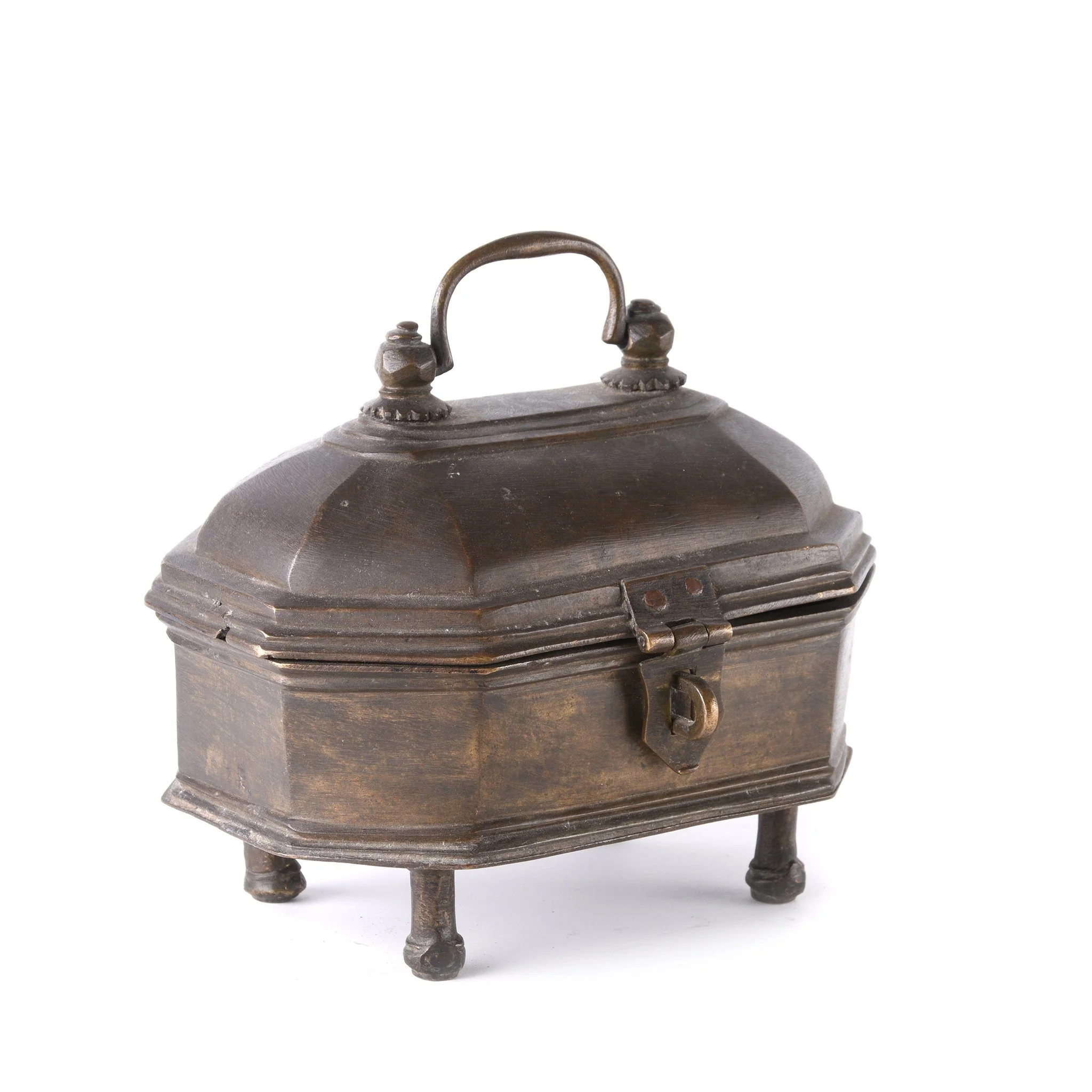
This exceptional late 19th century paan box from Kashmir, comes with its original contents - rare to find these days. Rich with intricate repoussé and pierced work decoration, this box is made from copper which has been tinned (a traditional local process called kalai). The kalai process is to avoid contents coming into contact with bare copper which can make food toxic. Hindus also believe that copper attracts a divine consciousness.
Traditionally used for the preparation and presentation of paan, these highly decorative containers formed an important part of social and ceremonial life throughout the Indian subcontinent. This example displays the distinctive repoussé craftsmanship associated with the Muslim metalworking traditions of Kashmir, featuring finely worked geometric and floral motifs across every surface.
The interior remains remarkably complete, with a removable preparation tray, a collection of individual lidded containers, trays and its original serving spoon.
Both functional and decorative, this rare survivor offers a fascinating glimpse into the rituals surrounding paan preparation while serving today as an outstanding display piece for collectors of Indian metalwork and domestic antiques.
- Origin: Kashmir, India
- Date: Late 19th Century
- Materials: Tin plated copper
- Features: Hand-worked repoussé decoration, original carrying handle, removable preparation tray, multiple lidded containers, original spoon, fitted interior
- Condition: Good antique condition with age-related wear, surface patination, oxidation and losses to the original tin plating consistent with age and use
- Dimensions: W29 x D27 x H16 cm
Similar examples can be found on page 70 & 71 of The Everyday Art of India by Robert F. Bussabarger & Betty Dashew Robins.
Product Information
Product Information
Shipping & Returns
Shipping & Returns


Kashmiri Tinned Copper Paan Box - Late 19th Century
Kashmiri Tinned Copper Paan Box - Late 19th Century
This exceptional late 19th century paan box from Kashmir, comes with its original contents - rare to find these days. Rich with intricate repoussé and pierced work decoration, this box is made from copper which has been tinned (a traditional local process called kalai). The kalai process is to avoid contents coming into contact with bare copper which can make food toxic. Hindus also believe that copper attracts a divine consciousness.
Traditionally used for the preparation and presentation of paan, these highly decorative containers formed an important part of social and ceremonial life throughout the Indian subcontinent. This example displays the distinctive repoussé craftsmanship associated with the Muslim metalworking traditions of Kashmir, featuring finely worked geometric and floral motifs across every surface.
The interior remains remarkably complete, with a removable preparation tray, a collection of individual lidded containers, trays and its original serving spoon.
Both functional and decorative, this rare survivor offers a fascinating glimpse into the rituals surrounding paan preparation while serving today as an outstanding display piece for collectors of Indian metalwork and domestic antiques.
- Origin: Kashmir, India
- Date: Late 19th Century
- Materials: Tin plated copper
- Features: Hand-worked repoussé decoration, original carrying handle, removable preparation tray, multiple lidded containers, original spoon, fitted interior
- Condition: Good antique condition with age-related wear, surface patination, oxidation and losses to the original tin plating consistent with age and use
- Dimensions: W29 x D27 x H16 cm
Similar examples can be found on page 70 & 71 of The Everyday Art of India by Robert F. Bussabarger & Betty Dashew Robins.
Product Information
Product Information
Shipping & Returns
Shipping & Returns
Description
This exceptional late 19th century paan box from Kashmir, comes with its original contents - rare to find these days. Rich with intricate repoussé and pierced work decoration, this box is made from copper which has been tinned (a traditional local process called kalai). The kalai process is to avoid contents coming into contact with bare copper which can make food toxic. Hindus also believe that copper attracts a divine consciousness.
Traditionally used for the preparation and presentation of paan, these highly decorative containers formed an important part of social and ceremonial life throughout the Indian subcontinent. This example displays the distinctive repoussé craftsmanship associated with the Muslim metalworking traditions of Kashmir, featuring finely worked geometric and floral motifs across every surface.
The interior remains remarkably complete, with a removable preparation tray, a collection of individual lidded containers, trays and its original serving spoon.
Both functional and decorative, this rare survivor offers a fascinating glimpse into the rituals surrounding paan preparation while serving today as an outstanding display piece for collectors of Indian metalwork and domestic antiques.
- Origin: Kashmir, India
- Date: Late 19th Century
- Materials: Tin plated copper
- Features: Hand-worked repoussé decoration, original carrying handle, removable preparation tray, multiple lidded containers, original spoon, fitted interior
- Condition: Good antique condition with age-related wear, surface patination, oxidation and losses to the original tin plating consistent with age and use
- Dimensions: W29 x D27 x H16 cm
Similar examples can be found on page 70 & 71 of The Everyday Art of India by Robert F. Bussabarger & Betty Dashew Robins.