Japanese Black Lacquer Shōnai Bo Dansu - 1904, Meiji Period
This Japanese isho bo-dansu (clothing chest with a bo locking bar) dates to the late Meiji period,1904 (Meiji 37), and was crafted in Sakata, Yamagata Prefecture, within the Shōnai plain, a region celebrated for producing some of Japan's finest lacquered tansu.
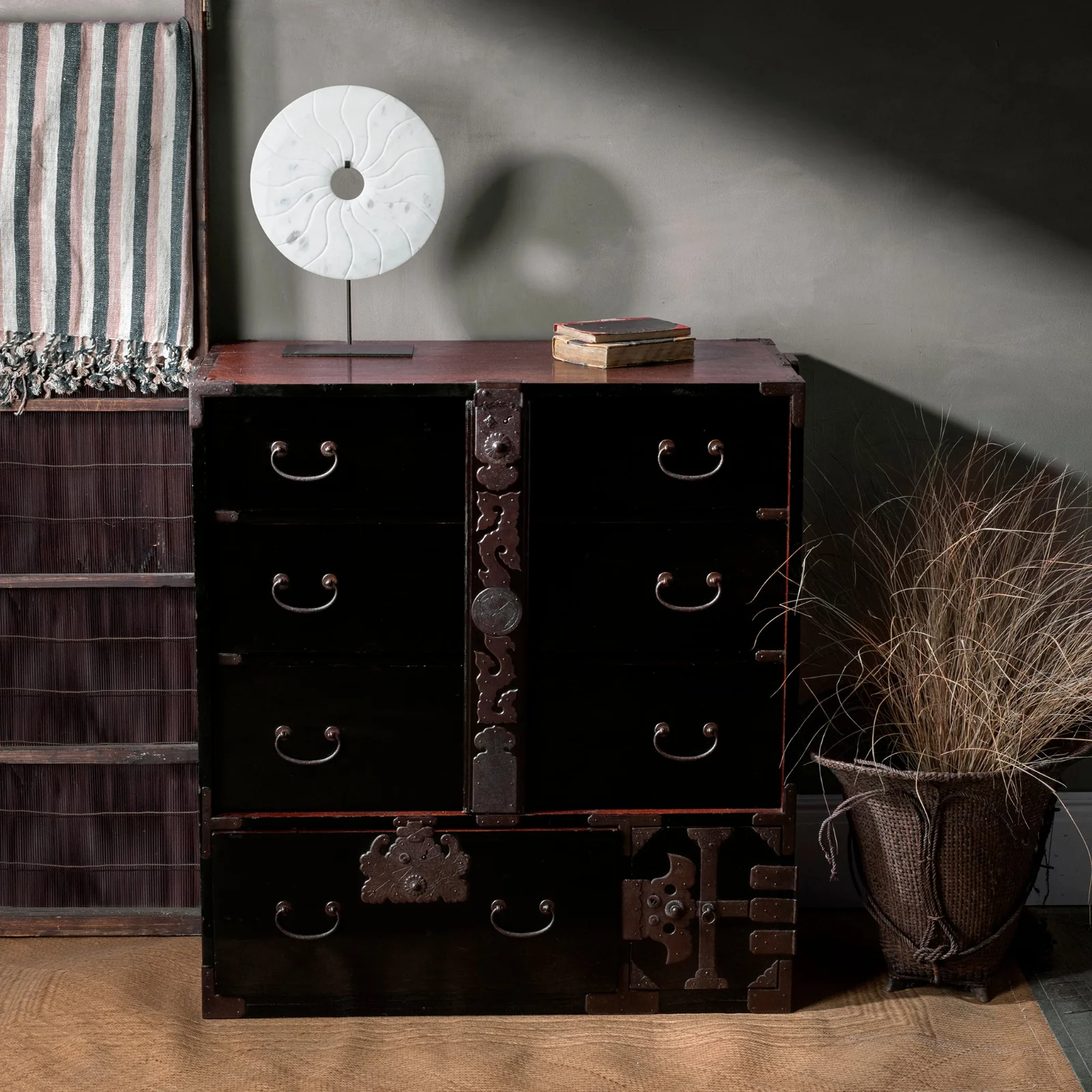
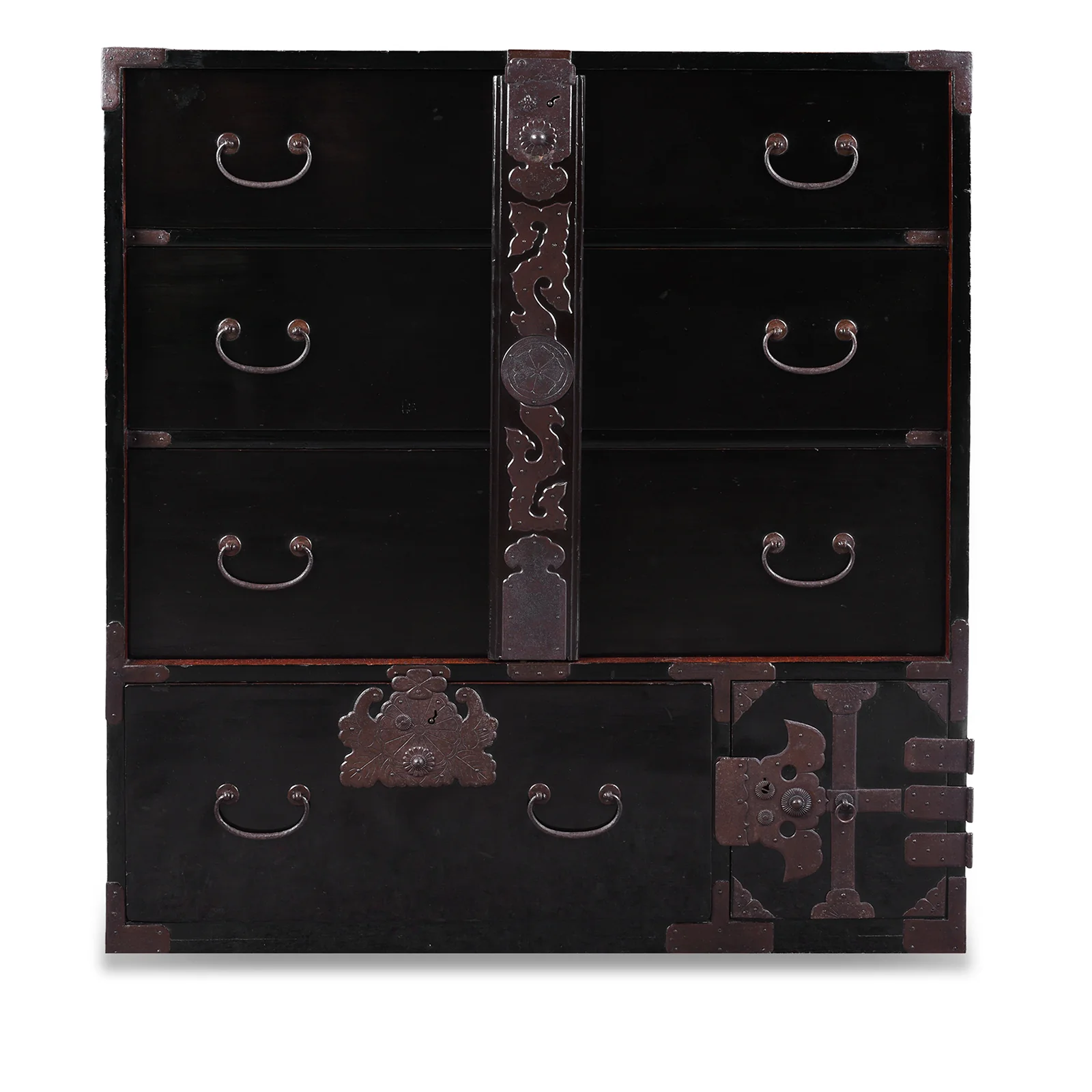
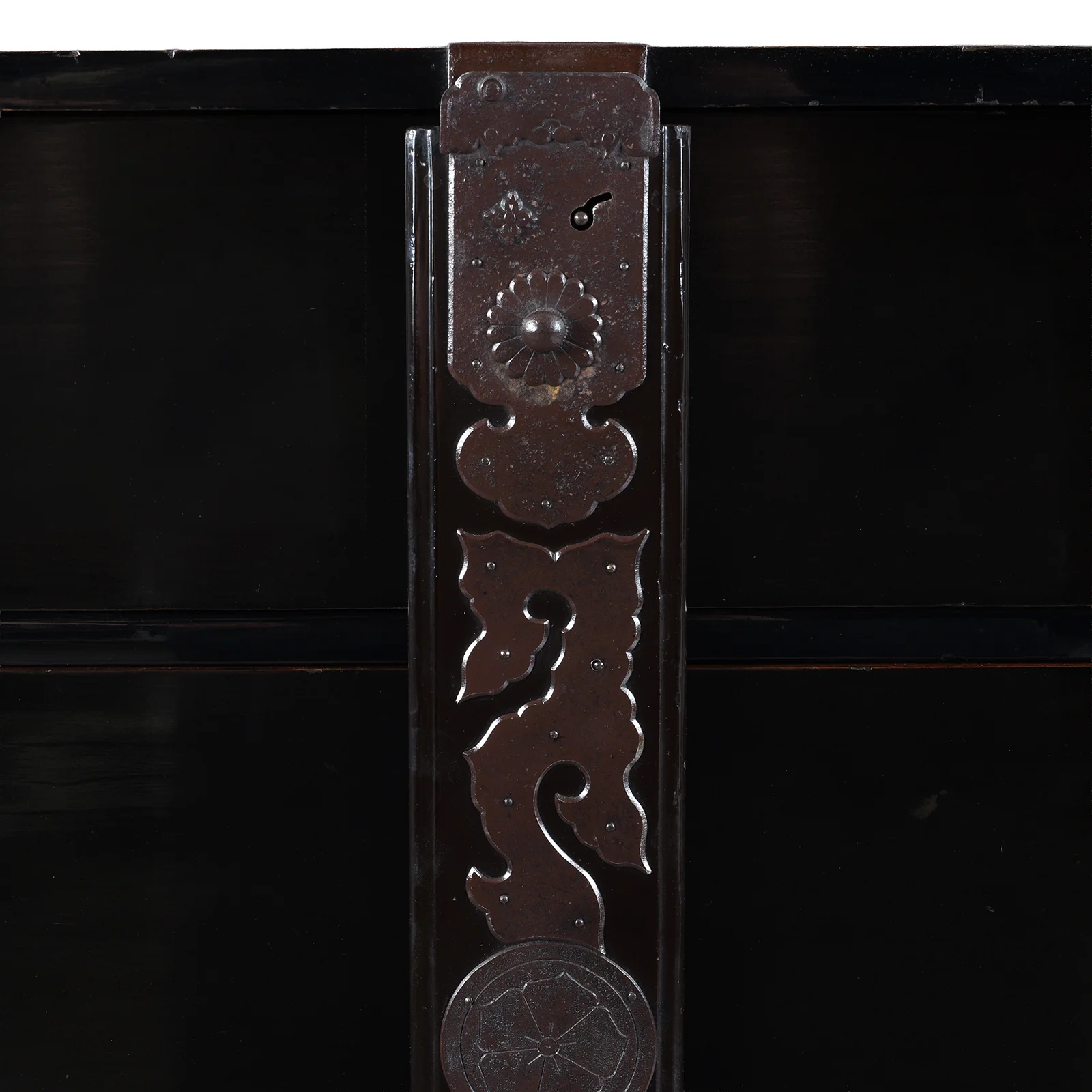
Constructed entirely from kiri (Paulownia tomentosa) and finished in a rich black lacquer with contrasting natural timber sides and interior, the chest exemplifies the restrained elegance and robust craftsmanship for which Shōnai furniture is renowned. The central bo bears the Maru ni Kikyō Family Mon (a bellflower / kikyō) enclosed within a solid circular border (maru). This crest was used by branches of the Akechi and Tachibana clans and became a favoured design amongst samurai families.
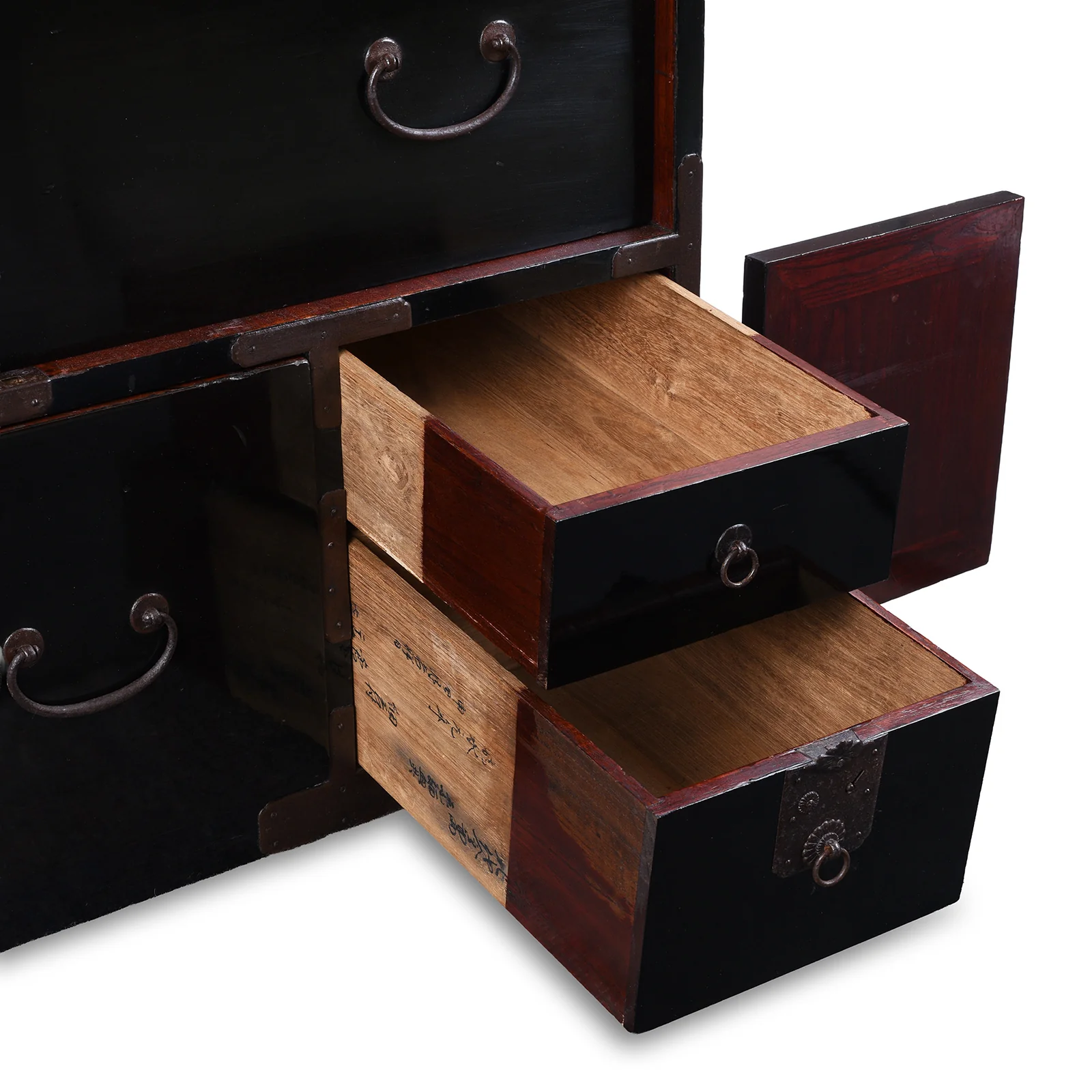
The interior of one concealed drawer retains original handwritten Japanese ink inscriptions. These include Kasai Kinen (火災記念), translating as "Fire Disaster Commemoration", together with the traditional date inscription Kōshin Kugatsu Kichijitsu (甲辰九月吉日), meaning "An auspicious day in the ninth month of the Kōshin year". In the context of this late Meiji Sakata chest, the date corresponds to 1904 (37th year of Meiji). Another inscription appears to read Kyōto Shimakō (京都島光), likely referring to a Kyoto merchant house, business, or owner associated with the chest, rather than its place of manufacture. Together, these inscriptions provide a fascinating insight into the chest's working life and provenance, suggesting a connection with a fire-related commemoration while preserving the identity of a historical owner or merchant.
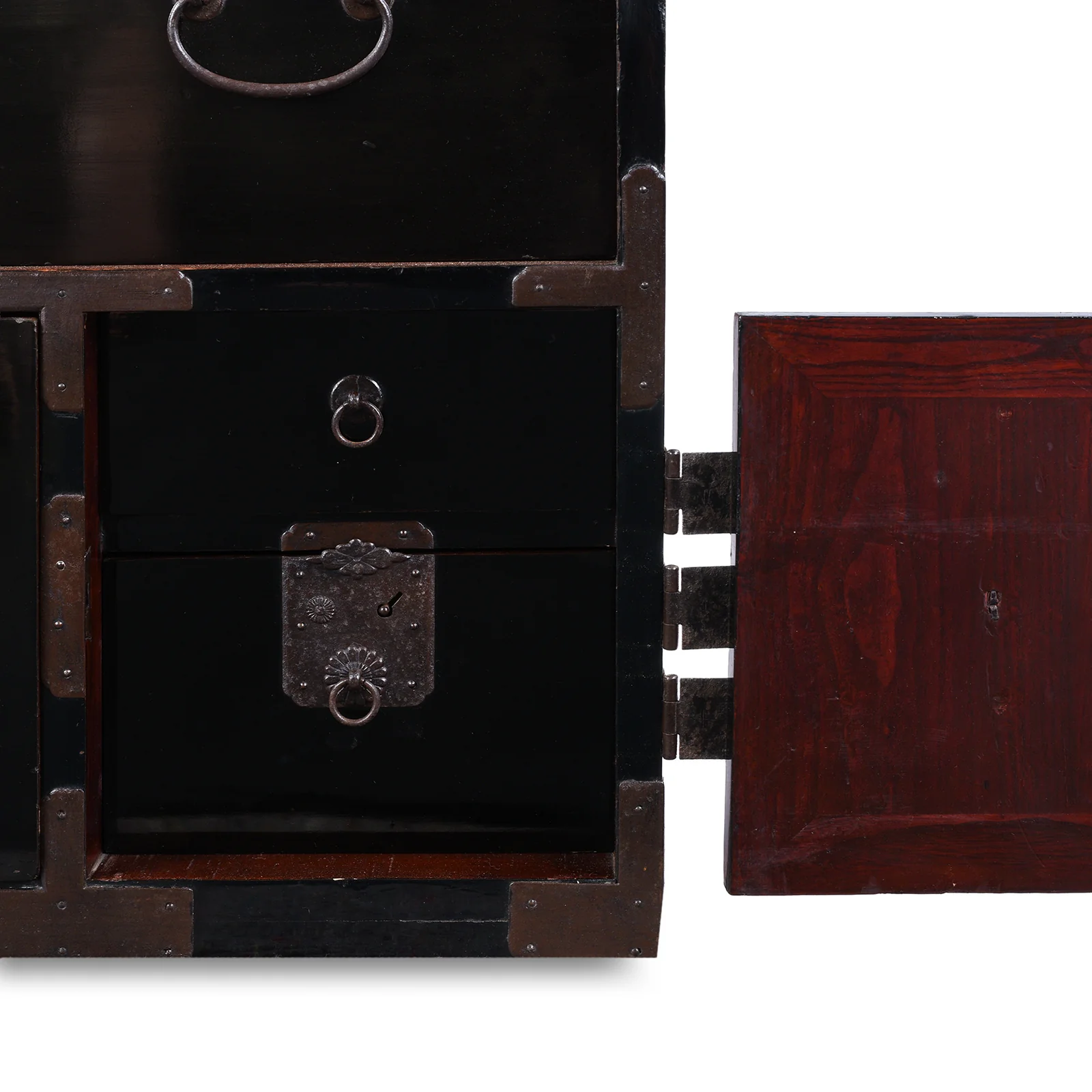
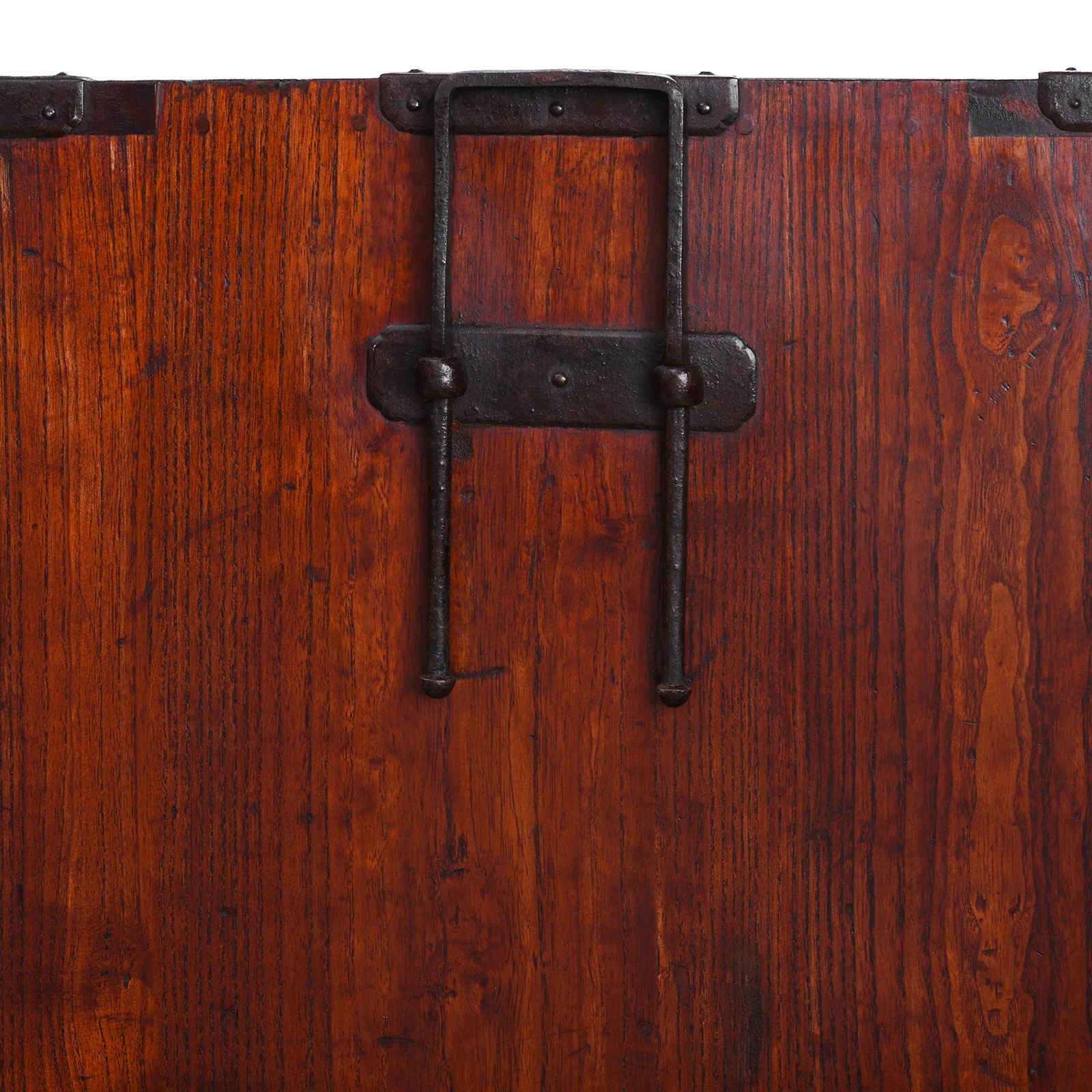
Designed as a secure clothing chest for the storage and transport of garments and valuable possessions, the tansu features three full-width drawers above a lockbox concealing two additional drawers. Heavy hand-forged iron fittings reinforce the corners and edges, while decorative repoussé lock plates and the original removable locking bar demonstrate the exceptional quality of Sakata metalwork. Folding iron carrying handles to the sides allowed the chest to be transported, reflecting its original function as both secure storage and a travelling strongbox.
Shōnai tansu from Sakata are particularly sought after for their deep burgundy-black lacquer finishes, finely forged ironwork and practical yet refined design. Today they make striking statement pieces, equally suited as collectors' furniture or functional storage in contemporary interiors.
- Origin: Sakata, Yamagata Prefecture, Japan
- Date: Late Meiji Period, circa 1904 (Meiji 37)
- Materials: Kiri (Paulownia tomentosa), Black Lacquer, Hand-Forged Iron
- Condition: Very good antique condition with age-related wear, patination and minor surface marks consistent with age and use. Original lacquer and ironwork with excellent character throughout.
- Dimensions: W89 x D44 x H97 cm
References:
For a near identical example, see page 189 of Japanese Cabinetry: The Art & Craft of Tansu by David Jackson & Dane Owen.
For further reading on Japanese tansu and regional cabinetmaking traditions, see Tansu: Traditional Japanese Cabinetry by Ty and Kiyoko Heineken with Charles Tuttle.
Product Information
Product Information
Shipping & Returns
Shipping & Returns




Japanese Black Lacquer Shōnai Bo Dansu - 1904, Meiji Period
Japanese Black Lacquer Shōnai Bo Dansu - 1904, Meiji Period
This Japanese isho bo-dansu (clothing chest with a bo locking bar) dates to the late Meiji period,1904 (Meiji 37), and was crafted in Sakata, Yamagata Prefecture, within the Shōnai plain, a region celebrated for producing some of Japan's finest lacquered tansu.
Constructed entirely from kiri (Paulownia tomentosa) and finished in a rich black lacquer with contrasting natural timber sides and interior, the chest exemplifies the restrained elegance and robust craftsmanship for which Shōnai furniture is renowned. The central bo bears the Maru ni Kikyō Family Mon (a bellflower / kikyō) enclosed within a solid circular border (maru). This crest was used by branches of the Akechi and Tachibana clans and became a favoured design amongst samurai families.
The interior of one concealed drawer retains original handwritten Japanese ink inscriptions. These include Kasai Kinen (火災記念), translating as "Fire Disaster Commemoration", together with the traditional date inscription Kōshin Kugatsu Kichijitsu (甲辰九月吉日), meaning "An auspicious day in the ninth month of the Kōshin year". In the context of this late Meiji Sakata chest, the date corresponds to 1904 (37th year of Meiji). Another inscription appears to read Kyōto Shimakō (京都島光), likely referring to a Kyoto merchant house, business, or owner associated with the chest, rather than its place of manufacture. Together, these inscriptions provide a fascinating insight into the chest's working life and provenance, suggesting a connection with a fire-related commemoration while preserving the identity of a historical owner or merchant.
Designed as a secure clothing chest for the storage and transport of garments and valuable possessions, the tansu features three full-width drawers above a lockbox concealing two additional drawers. Heavy hand-forged iron fittings reinforce the corners and edges, while decorative repoussé lock plates and the original removable locking bar demonstrate the exceptional quality of Sakata metalwork. Folding iron carrying handles to the sides allowed the chest to be transported, reflecting its original function as both secure storage and a travelling strongbox.
Shōnai tansu from Sakata are particularly sought after for their deep burgundy-black lacquer finishes, finely forged ironwork and practical yet refined design. Today they make striking statement pieces, equally suited as collectors' furniture or functional storage in contemporary interiors.
- Origin: Sakata, Yamagata Prefecture, Japan
- Date: Late Meiji Period, circa 1904 (Meiji 37)
- Materials: Kiri (Paulownia tomentosa), Black Lacquer, Hand-Forged Iron
- Condition: Very good antique condition with age-related wear, patination and minor surface marks consistent with age and use. Original lacquer and ironwork with excellent character throughout.
- Dimensions: W89 x D44 x H97 cm
References:
For a near identical example, see page 189 of Japanese Cabinetry: The Art & Craft of Tansu by David Jackson & Dane Owen.
For further reading on Japanese tansu and regional cabinetmaking traditions, see Tansu: Traditional Japanese Cabinetry by Ty and Kiyoko Heineken with Charles Tuttle.
Product Information
Product Information
Shipping & Returns
Shipping & Returns
Description
This Japanese isho bo-dansu (clothing chest with a bo locking bar) dates to the late Meiji period,1904 (Meiji 37), and was crafted in Sakata, Yamagata Prefecture, within the Shōnai plain, a region celebrated for producing some of Japan's finest lacquered tansu.
Constructed entirely from kiri (Paulownia tomentosa) and finished in a rich black lacquer with contrasting natural timber sides and interior, the chest exemplifies the restrained elegance and robust craftsmanship for which Shōnai furniture is renowned. The central bo bears the Maru ni Kikyō Family Mon (a bellflower / kikyō) enclosed within a solid circular border (maru). This crest was used by branches of the Akechi and Tachibana clans and became a favoured design amongst samurai families.
The interior of one concealed drawer retains original handwritten Japanese ink inscriptions. These include Kasai Kinen (火災記念), translating as "Fire Disaster Commemoration", together with the traditional date inscription Kōshin Kugatsu Kichijitsu (甲辰九月吉日), meaning "An auspicious day in the ninth month of the Kōshin year". In the context of this late Meiji Sakata chest, the date corresponds to 1904 (37th year of Meiji). Another inscription appears to read Kyōto Shimakō (京都島光), likely referring to a Kyoto merchant house, business, or owner associated with the chest, rather than its place of manufacture. Together, these inscriptions provide a fascinating insight into the chest's working life and provenance, suggesting a connection with a fire-related commemoration while preserving the identity of a historical owner or merchant.
Designed as a secure clothing chest for the storage and transport of garments and valuable possessions, the tansu features three full-width drawers above a lockbox concealing two additional drawers. Heavy hand-forged iron fittings reinforce the corners and edges, while decorative repoussé lock plates and the original removable locking bar demonstrate the exceptional quality of Sakata metalwork. Folding iron carrying handles to the sides allowed the chest to be transported, reflecting its original function as both secure storage and a travelling strongbox.
Shōnai tansu from Sakata are particularly sought after for their deep burgundy-black lacquer finishes, finely forged ironwork and practical yet refined design. Today they make striking statement pieces, equally suited as collectors' furniture or functional storage in contemporary interiors.
- Origin: Sakata, Yamagata Prefecture, Japan
- Date: Late Meiji Period, circa 1904 (Meiji 37)
- Materials: Kiri (Paulownia tomentosa), Black Lacquer, Hand-Forged Iron
- Condition: Very good antique condition with age-related wear, patination and minor surface marks consistent with age and use. Original lacquer and ironwork with excellent character throughout.
- Dimensions: W89 x D44 x H97 cm
References:
For a near identical example, see page 189 of Japanese Cabinetry: The Art & Craft of Tansu by David Jackson & Dane Owen.
For further reading on Japanese tansu and regional cabinetmaking traditions, see Tansu: Traditional Japanese Cabinetry by Ty and Kiyoko Heineken with Charles Tuttle.