Painted Tibetan Torgam Cabinet - 19th Century
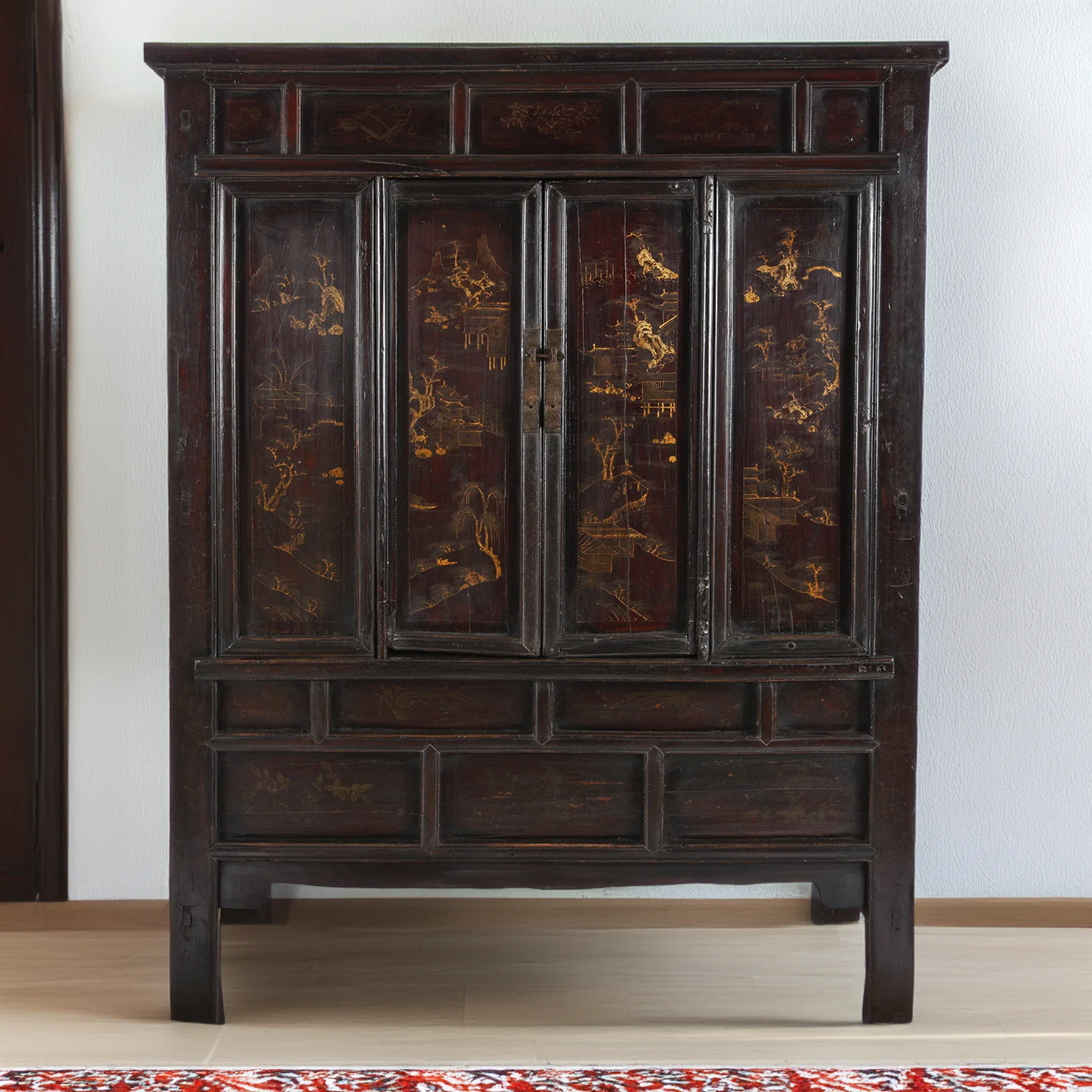
This 19th century Tibetan Torgam cabinet is from the Kham region of Eastern Tibet. Original polychrome Tibetan Torgam cabinets are rare to find. They were used for storing offerings to Mahakala (a wrathful & compassionate protector deity in Tibetan Buddhism). Torgams (also known as Torkham cabinets) were found in monasteries and the homes of wealthy Tibetan families, where they were used to store torma - ritual offering cakes made from butter and roasted barley flour that played an important role in Buddhist ceremonies, particularly during Losar, the Tibetan New Year. Within monasteries they were often housed in the Gokhang, or Protectors' Chapel, where sacred ritual objects and offerings were kept.
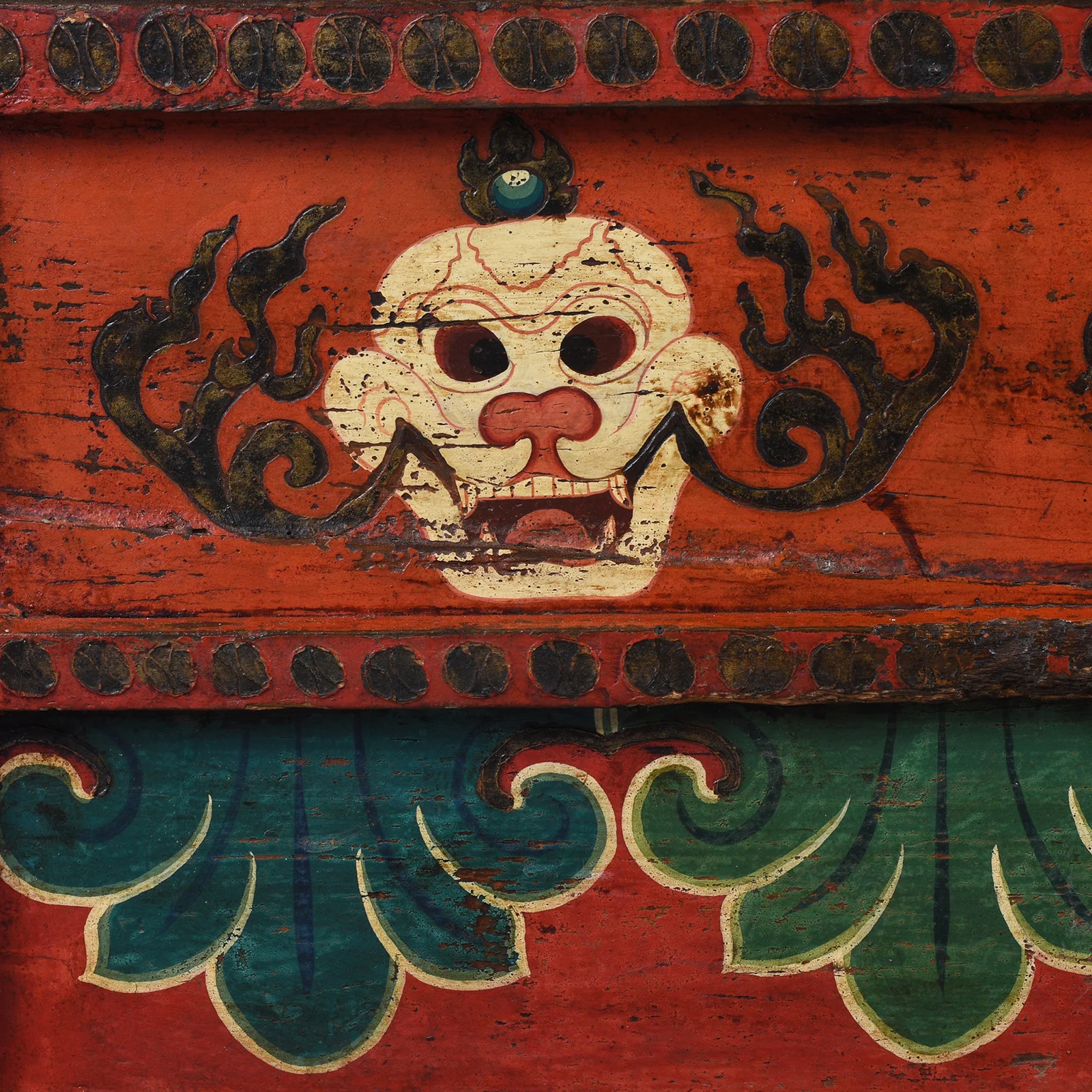
This cabinet features two skulls, disembodied with the eyes, tongues and heart falling from them. The skull (thod-tshal, piece of skull) is a symbolic receptacle for 'The Wrathful Offering of the Five Senses' (khro-bo'i dbang-po lnga-tshogs) known as torma. Uniquely, the skull is not inverted, but it does hold all five sense organs; torn out eyes on long optic nerves, heart, tongue, nose, & ears.
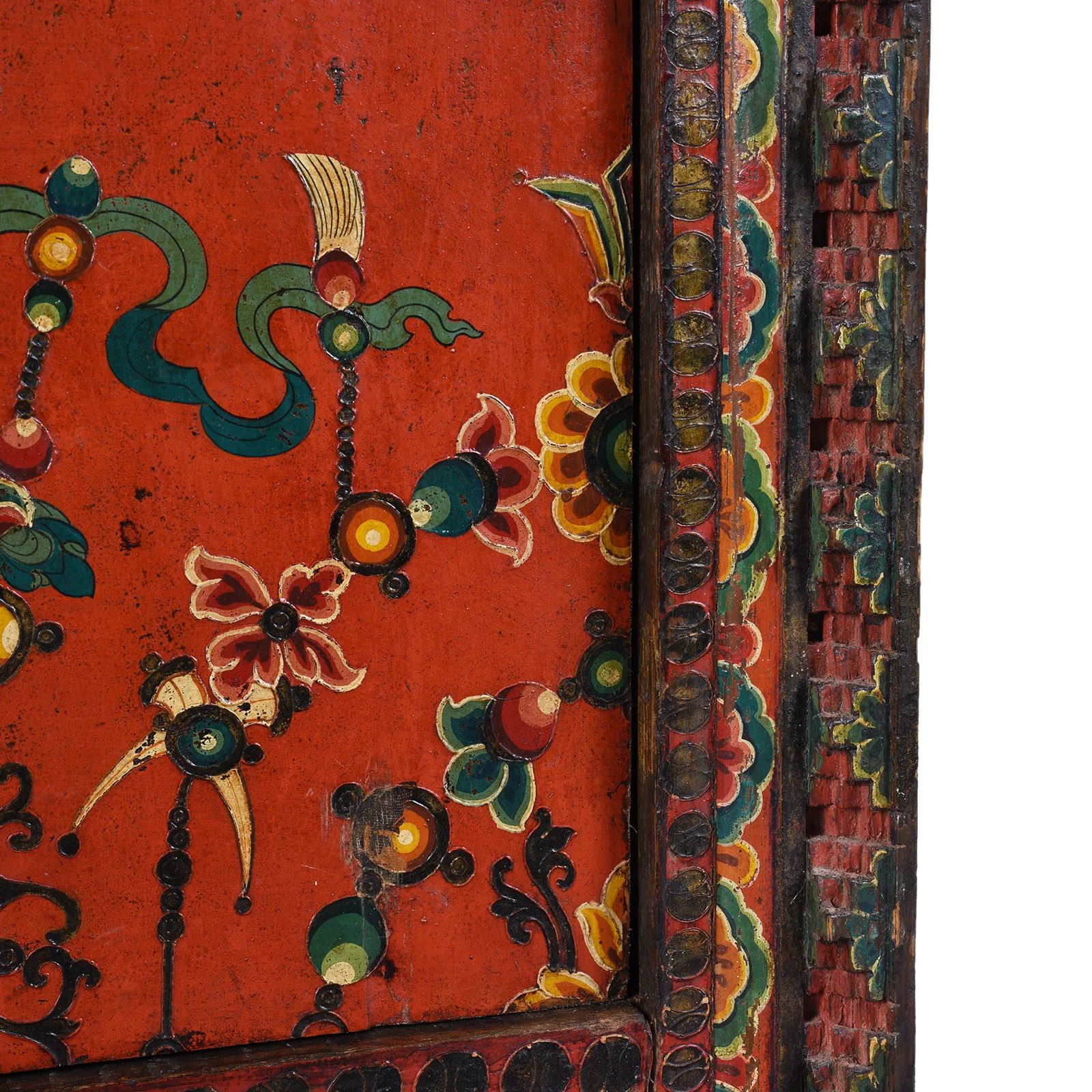
The jewels beneath the skulls are 'The Seven Jewel Insignia Of The Chakravartin' (universal monarch). Not all seven are visible on this cabinet, but the crossed elephant tusks, jewels and ribbons are visible.
Across the lower frieze, two painted skulls flank a striking green protective mask. In Tibetan Vajrayana Buddhism, skull imagery serves as a reminder of impermanence and the transcendence of the ego rather than mortality alone. The central green face is Kīrtimukha (also called Zeeba / Zipak) or "Face of Glory", an ancient protective motif originating in India that symbolises the devouring of negativity and the protection of sacred spaces.
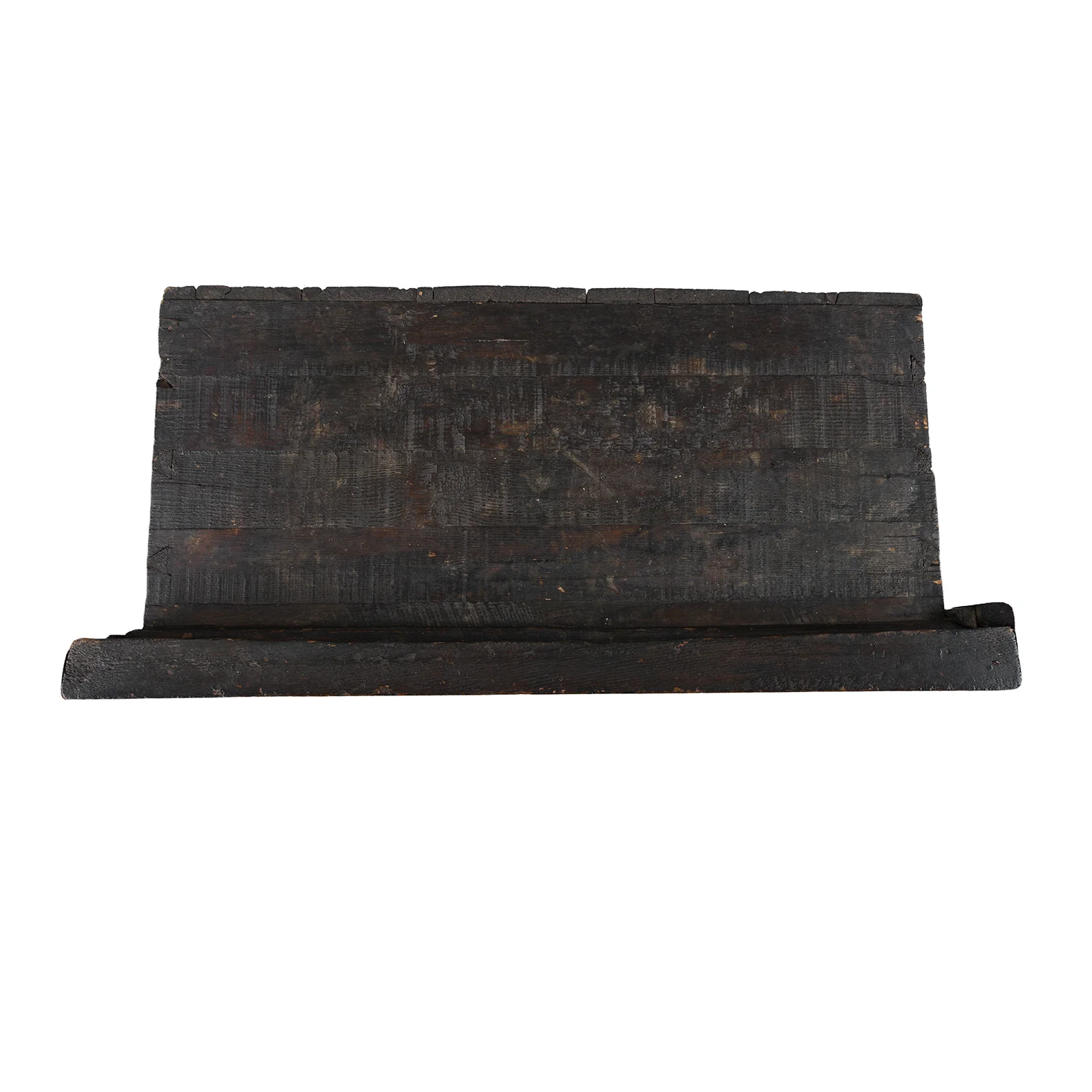
Inside, the cabinet reveals a spacious interior fitted with a full-width shelf, making it equally practical today as a storage cabinet for dining, living or hallway spaces. The contrast between the richly decorated exterior and the beautifully aged timber interior highlights the exceptional craftsmanship of the piece, while over a century of gentle wear has given the painted surfaces remarkable depth and authenticity.
- Origin: Eastern Tibet
- Date: 19th Century
- Materials: Painted pine with original mineral pigments
- Features: Original hand-painted decoration, twin opening doors, internal full-width shelf, traditional Tibetan construction
- Condition: Good antique condition with age-related wear, losses and patina consistent with age and use. Restored and conserved in our workshops.
- Weight: 35 kg
- Dimensions: W96 x D44 x H123 cm
References:
For a similar example, see figure 127 of Wooden Wonders by David Kamansky, 41, 42 & 104 of 'Tibetan Furniture: Identifying, Appreciating, Collecting' by Chris Buckley.
For further reading see The Handbook of Tibetan Buddhist Symbols by Robert Beer.
Product Information
Product Information
Shipping & Returns
Shipping & Returns


Painted Tibetan Torgam Cabinet - 19th Century
Painted Tibetan Torgam Cabinet - 19th Century
This 19th century Tibetan Torgam cabinet is from the Kham region of Eastern Tibet. Original polychrome Tibetan Torgam cabinets are rare to find. They were used for storing offerings to Mahakala (a wrathful & compassionate protector deity in Tibetan Buddhism). Torgams (also known as Torkham cabinets) were found in monasteries and the homes of wealthy Tibetan families, where they were used to store torma - ritual offering cakes made from butter and roasted barley flour that played an important role in Buddhist ceremonies, particularly during Losar, the Tibetan New Year. Within monasteries they were often housed in the Gokhang, or Protectors' Chapel, where sacred ritual objects and offerings were kept.
This cabinet features two skulls, disembodied with the eyes, tongues and heart falling from them. The skull (thod-tshal, piece of skull) is a symbolic receptacle for 'The Wrathful Offering of the Five Senses' (khro-bo'i dbang-po lnga-tshogs) known as torma. Uniquely, the skull is not inverted, but it does hold all five sense organs; torn out eyes on long optic nerves, heart, tongue, nose, & ears.
The jewels beneath the skulls are 'The Seven Jewel Insignia Of The Chakravartin' (universal monarch). Not all seven are visible on this cabinet, but the crossed elephant tusks, jewels and ribbons are visible.
Across the lower frieze, two painted skulls flank a striking green protective mask. In Tibetan Vajrayana Buddhism, skull imagery serves as a reminder of impermanence and the transcendence of the ego rather than mortality alone. The central green face is Kīrtimukha (also called Zeeba / Zipak) or "Face of Glory", an ancient protective motif originating in India that symbolises the devouring of negativity and the protection of sacred spaces.
Inside, the cabinet reveals a spacious interior fitted with a full-width shelf, making it equally practical today as a storage cabinet for dining, living or hallway spaces. The contrast between the richly decorated exterior and the beautifully aged timber interior highlights the exceptional craftsmanship of the piece, while over a century of gentle wear has given the painted surfaces remarkable depth and authenticity.
- Origin: Eastern Tibet
- Date: 19th Century
- Materials: Painted pine with original mineral pigments
- Features: Original hand-painted decoration, twin opening doors, internal full-width shelf, traditional Tibetan construction
- Condition: Good antique condition with age-related wear, losses and patina consistent with age and use. Restored and conserved in our workshops.
- Weight: 35 kg
- Dimensions: W96 x D44 x H123 cm
References:
For a similar example, see figure 127 of Wooden Wonders by David Kamansky, 41, 42 & 104 of 'Tibetan Furniture: Identifying, Appreciating, Collecting' by Chris Buckley.
For further reading see The Handbook of Tibetan Buddhist Symbols by Robert Beer.
Product Information
Product Information
Shipping & Returns
Shipping & Returns
Description
This 19th century Tibetan Torgam cabinet is from the Kham region of Eastern Tibet. Original polychrome Tibetan Torgam cabinets are rare to find. They were used for storing offerings to Mahakala (a wrathful & compassionate protector deity in Tibetan Buddhism). Torgams (also known as Torkham cabinets) were found in monasteries and the homes of wealthy Tibetan families, where they were used to store torma - ritual offering cakes made from butter and roasted barley flour that played an important role in Buddhist ceremonies, particularly during Losar, the Tibetan New Year. Within monasteries they were often housed in the Gokhang, or Protectors' Chapel, where sacred ritual objects and offerings were kept.
This cabinet features two skulls, disembodied with the eyes, tongues and heart falling from them. The skull (thod-tshal, piece of skull) is a symbolic receptacle for 'The Wrathful Offering of the Five Senses' (khro-bo'i dbang-po lnga-tshogs) known as torma. Uniquely, the skull is not inverted, but it does hold all five sense organs; torn out eyes on long optic nerves, heart, tongue, nose, & ears.
The jewels beneath the skulls are 'The Seven Jewel Insignia Of The Chakravartin' (universal monarch). Not all seven are visible on this cabinet, but the crossed elephant tusks, jewels and ribbons are visible.
Across the lower frieze, two painted skulls flank a striking green protective mask. In Tibetan Vajrayana Buddhism, skull imagery serves as a reminder of impermanence and the transcendence of the ego rather than mortality alone. The central green face is Kīrtimukha (also called Zeeba / Zipak) or "Face of Glory", an ancient protective motif originating in India that symbolises the devouring of negativity and the protection of sacred spaces.
Inside, the cabinet reveals a spacious interior fitted with a full-width shelf, making it equally practical today as a storage cabinet for dining, living or hallway spaces. The contrast between the richly decorated exterior and the beautifully aged timber interior highlights the exceptional craftsmanship of the piece, while over a century of gentle wear has given the painted surfaces remarkable depth and authenticity.
- Origin: Eastern Tibet
- Date: 19th Century
- Materials: Painted pine with original mineral pigments
- Features: Original hand-painted decoration, twin opening doors, internal full-width shelf, traditional Tibetan construction
- Condition: Good antique condition with age-related wear, losses and patina consistent with age and use. Restored and conserved in our workshops.
- Weight: 35 kg
- Dimensions: W96 x D44 x H123 cm
References:
For a similar example, see figure 127 of Wooden Wonders by David Kamansky, 41, 42 & 104 of 'Tibetan Furniture: Identifying, Appreciating, Collecting' by Chris Buckley.
For further reading see The Handbook of Tibetan Buddhist Symbols by Robert Beer.