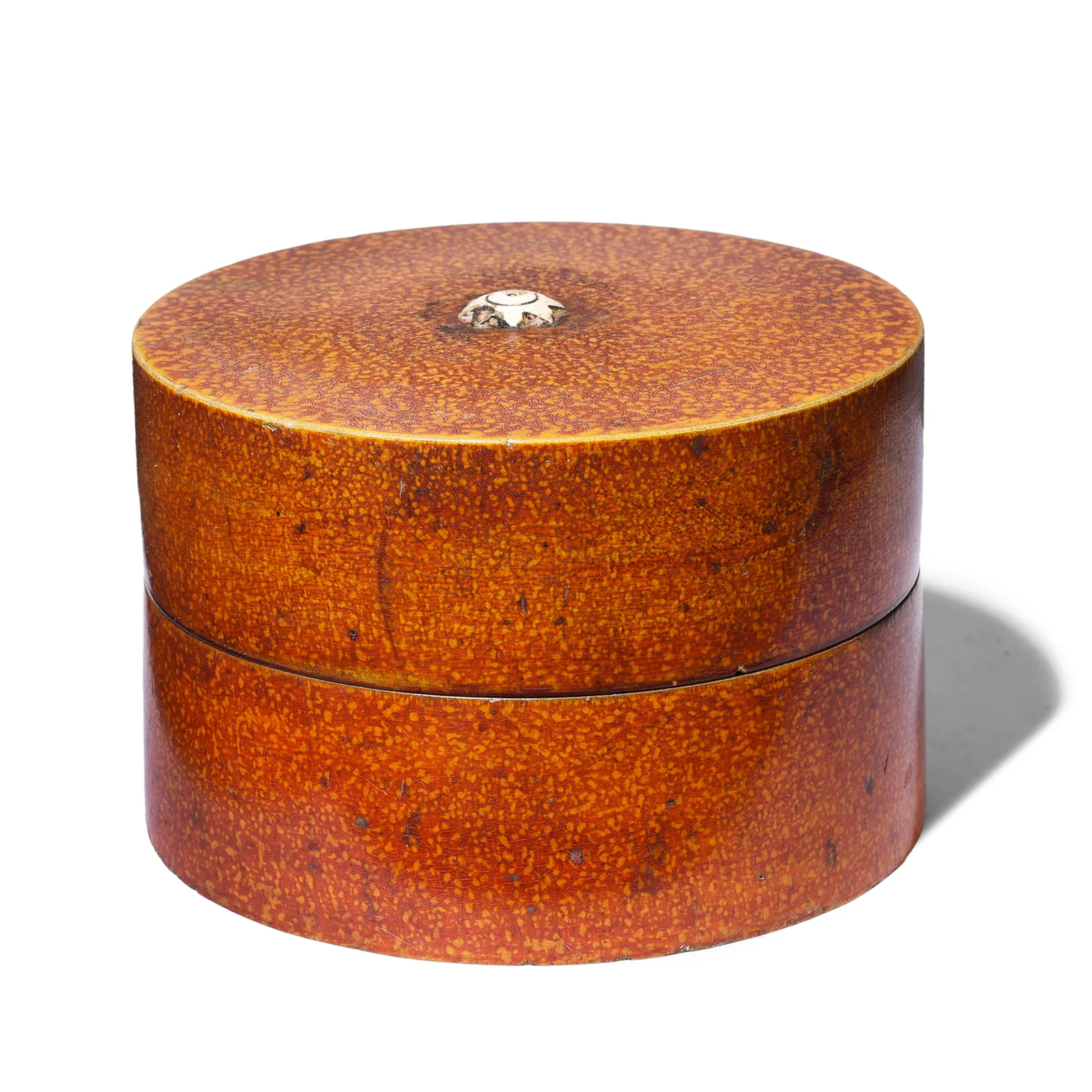
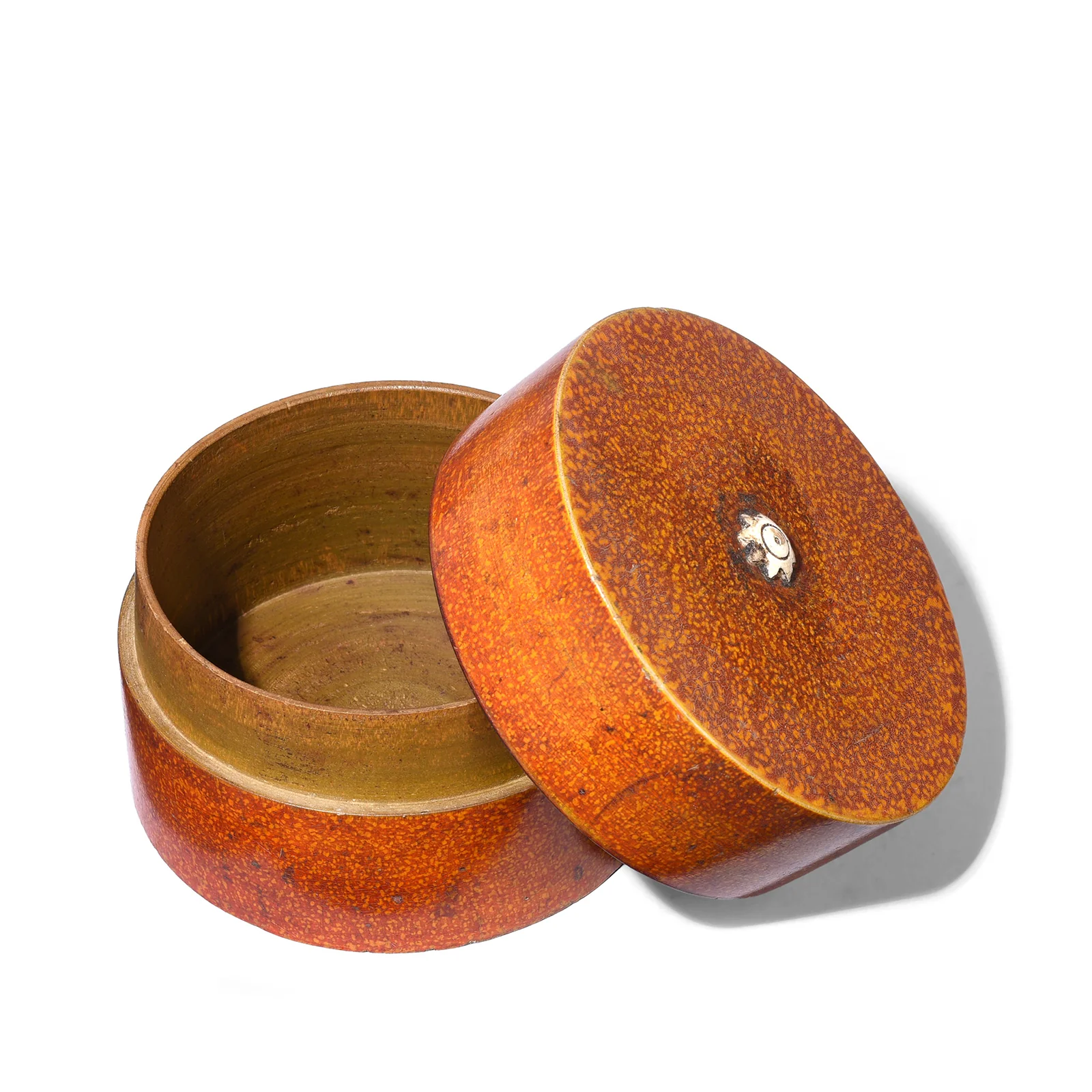
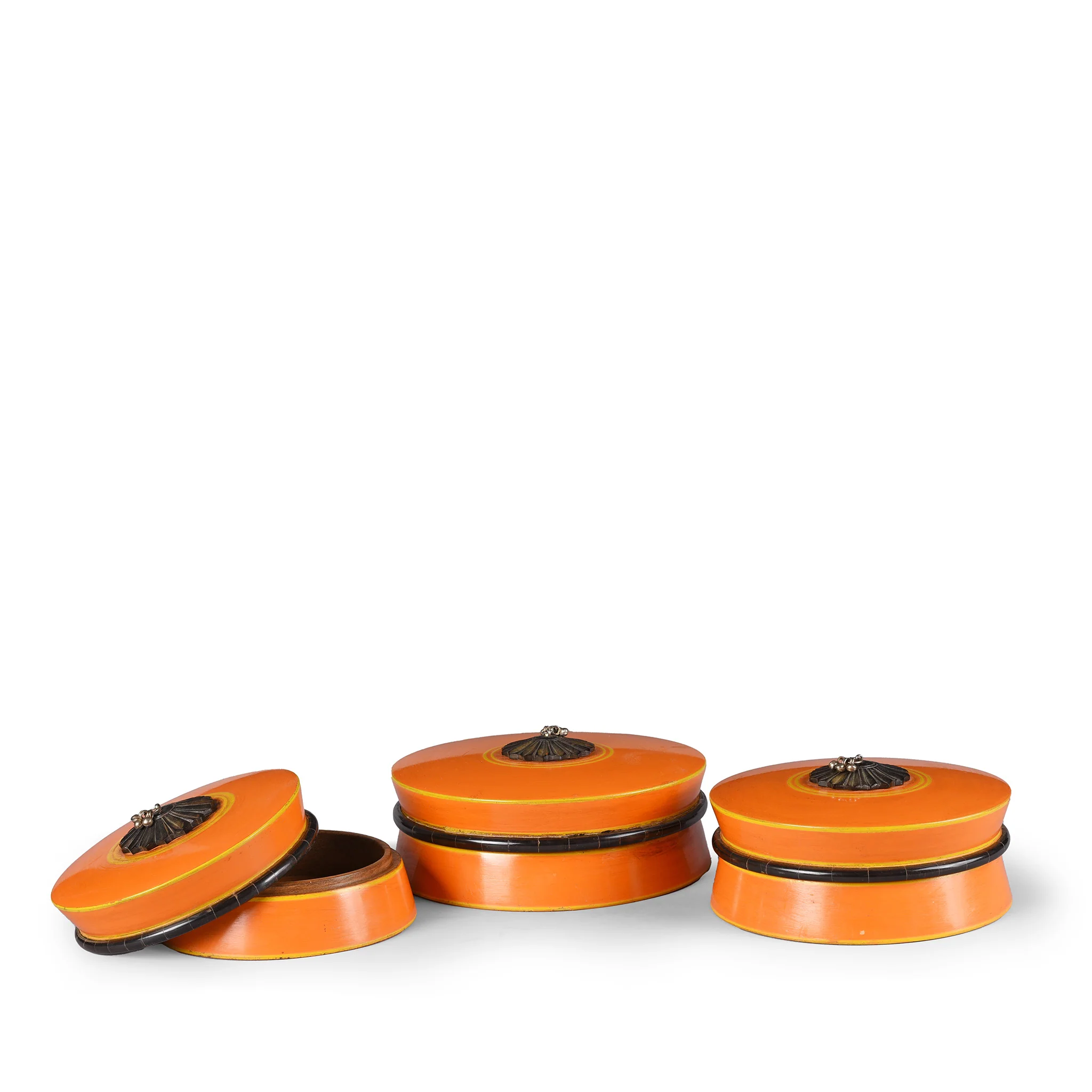
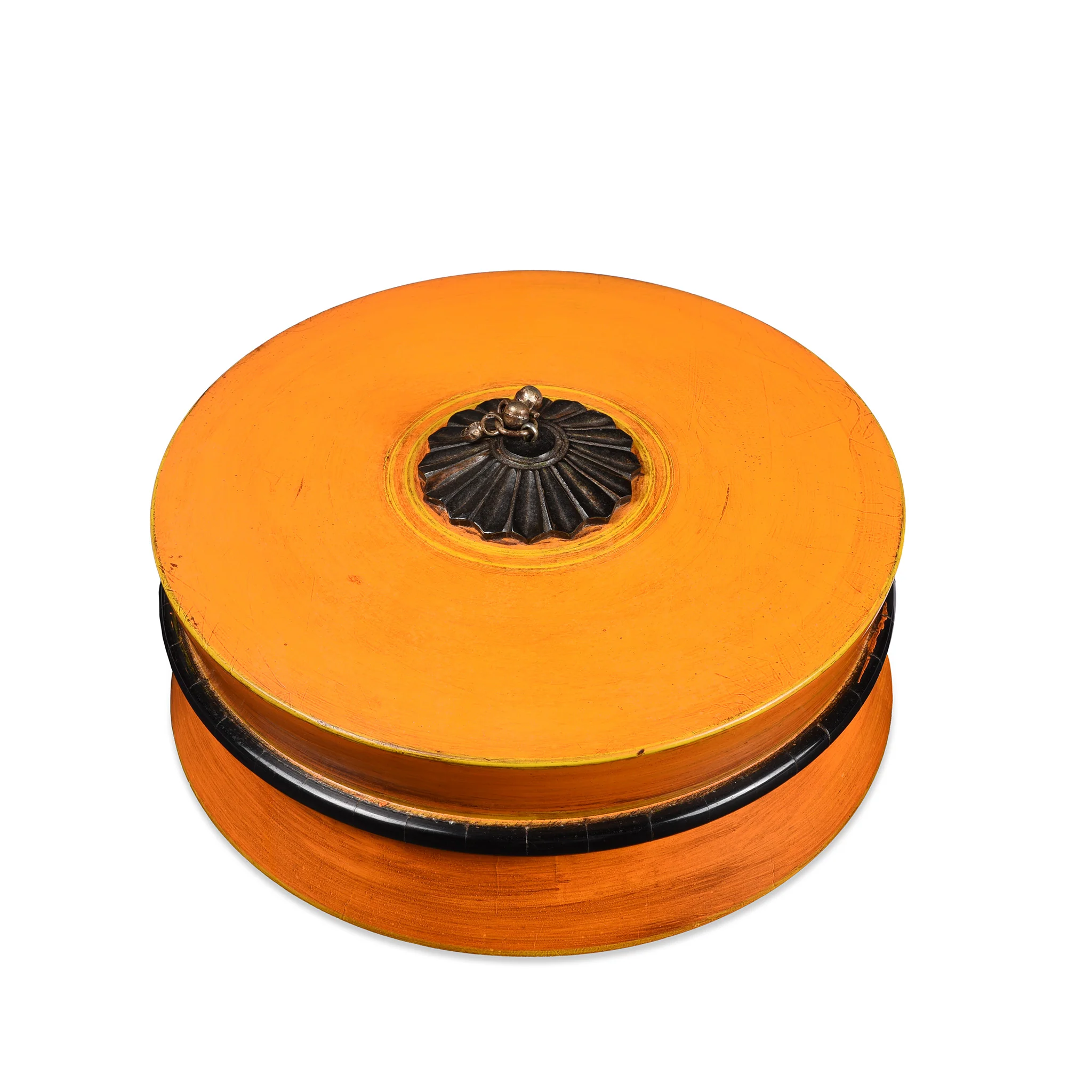
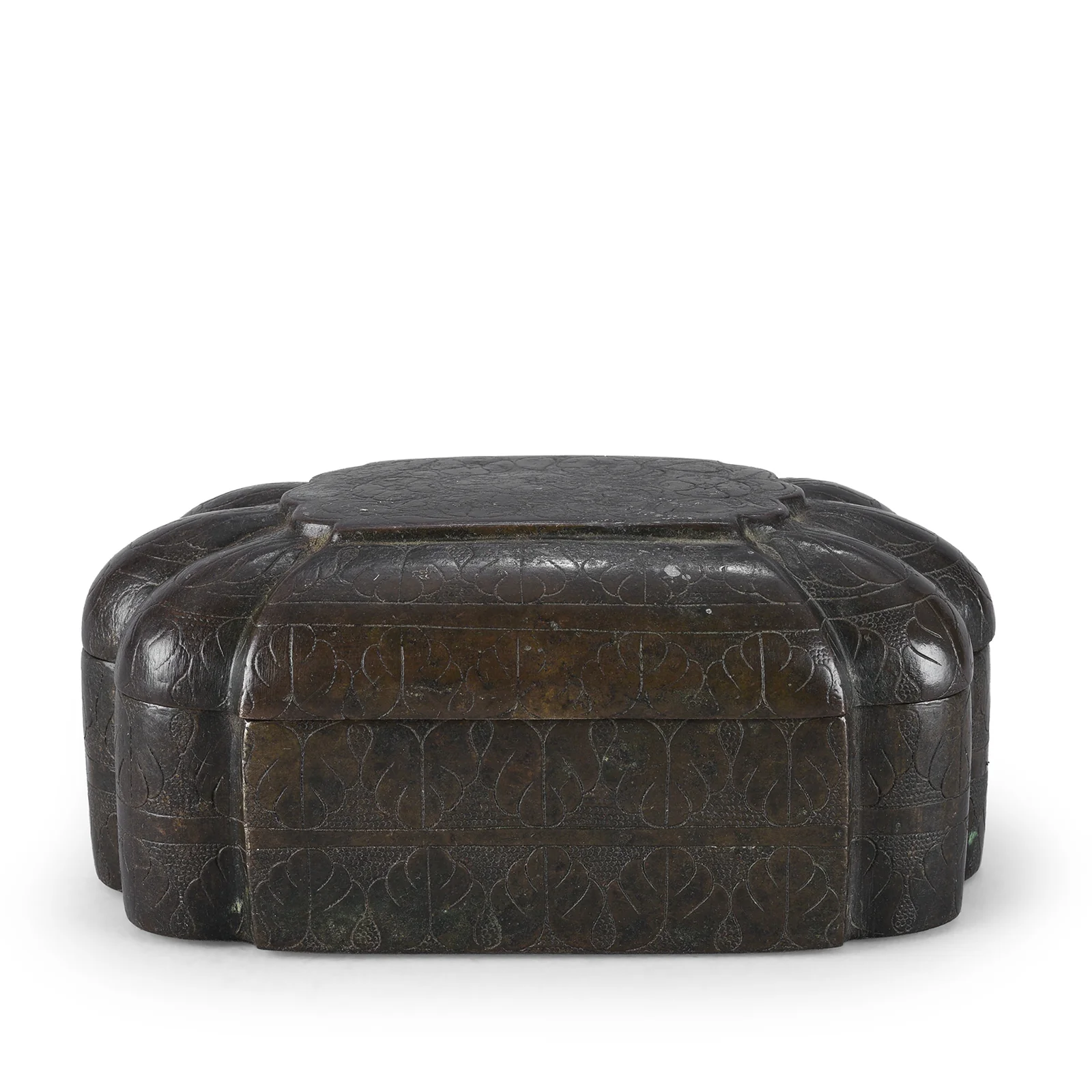
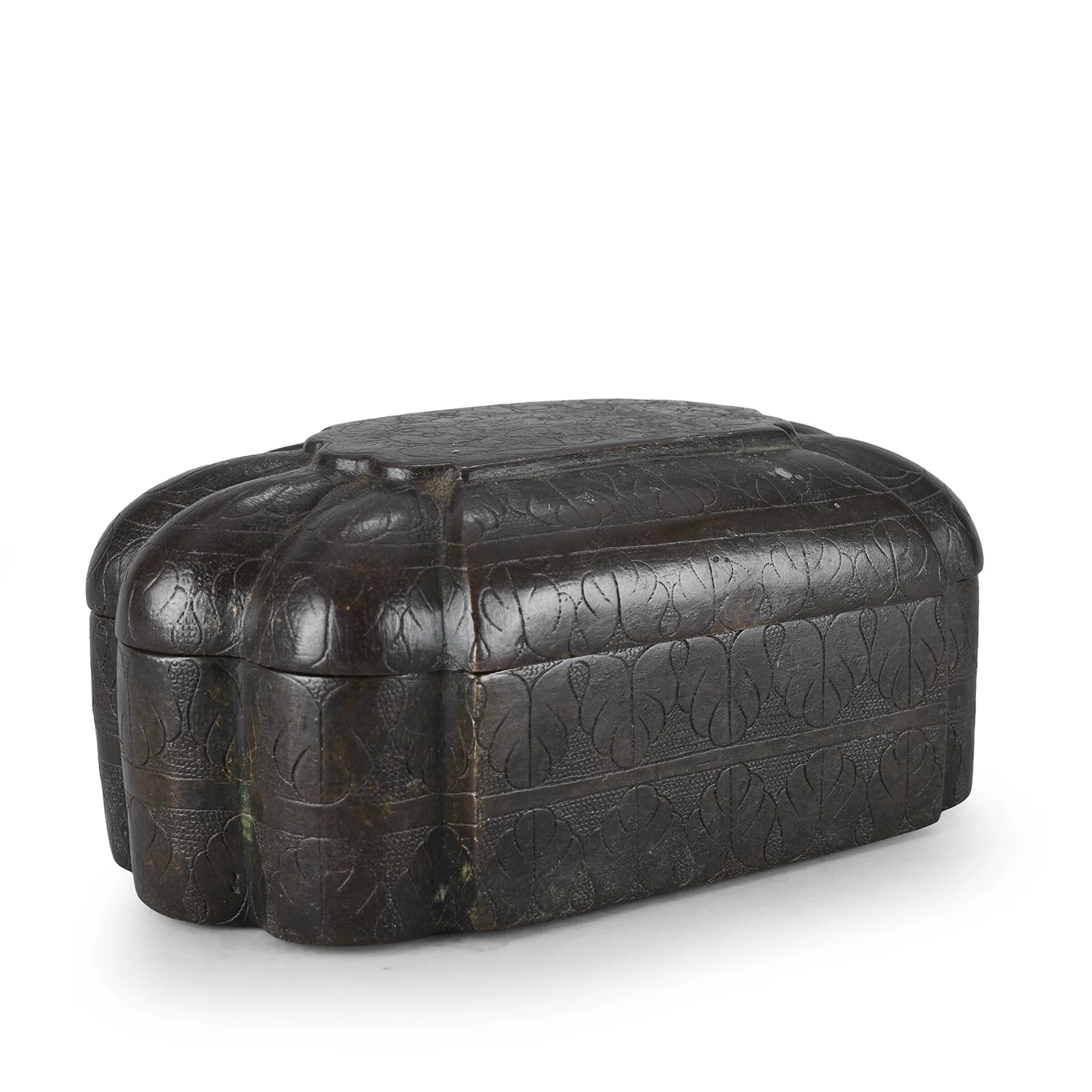
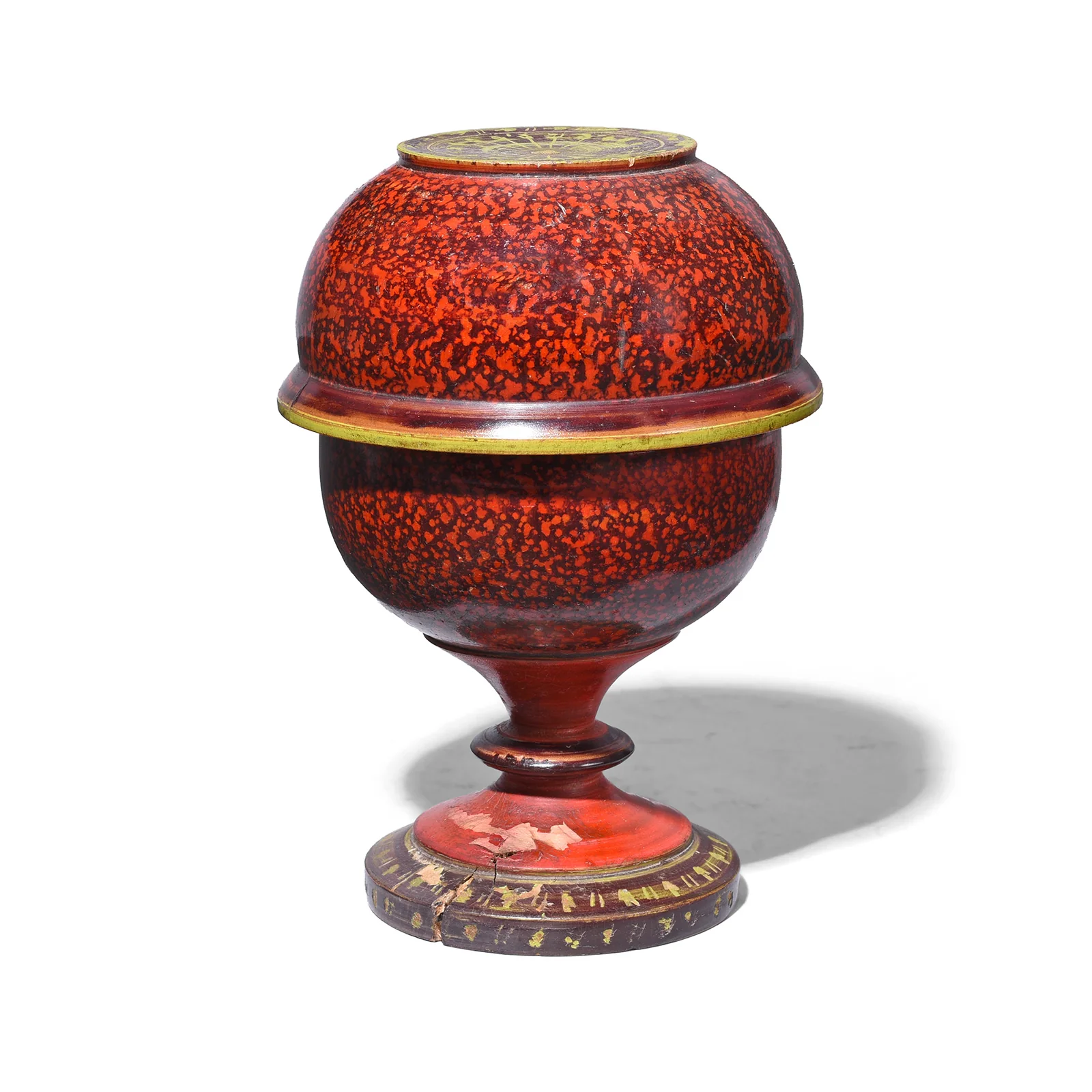
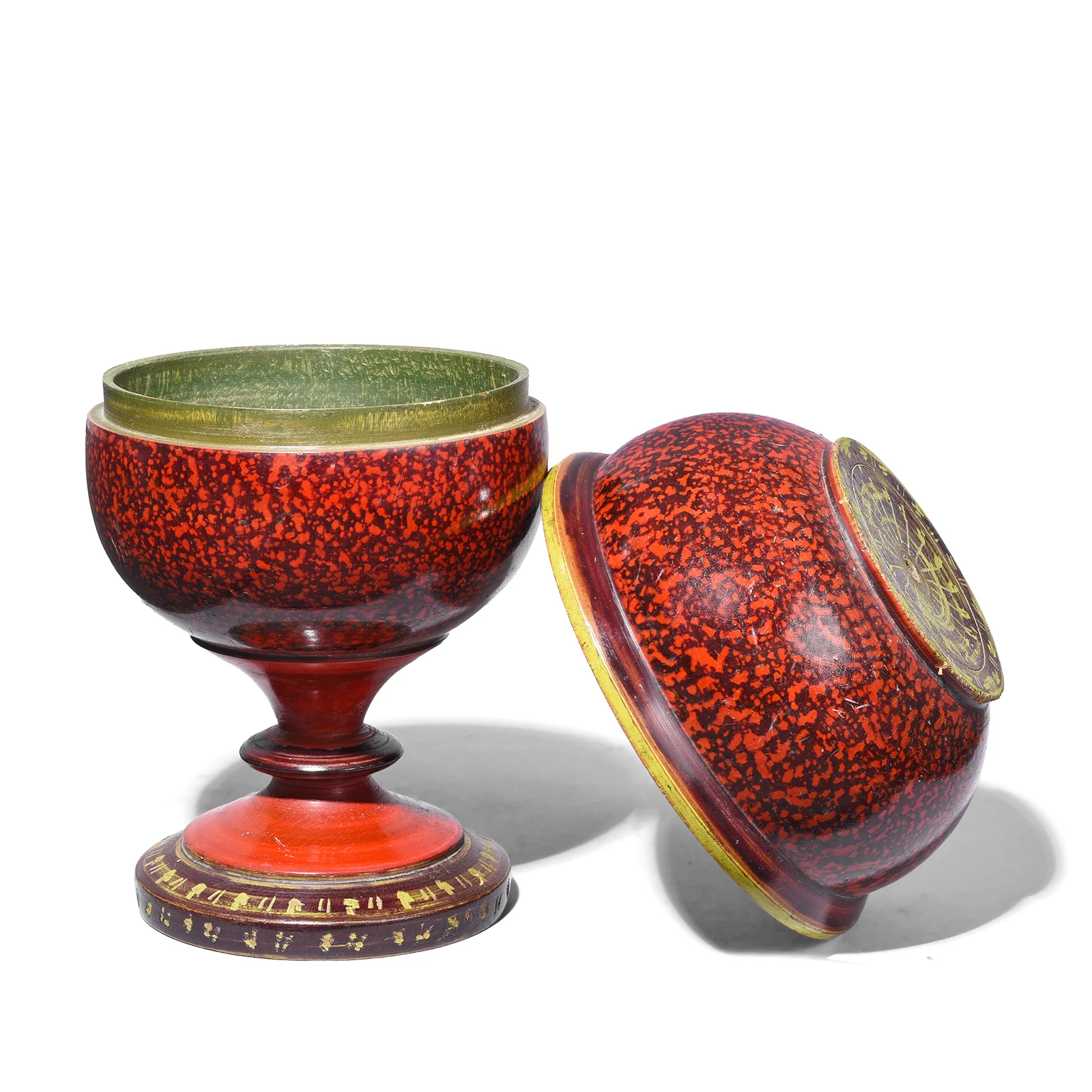
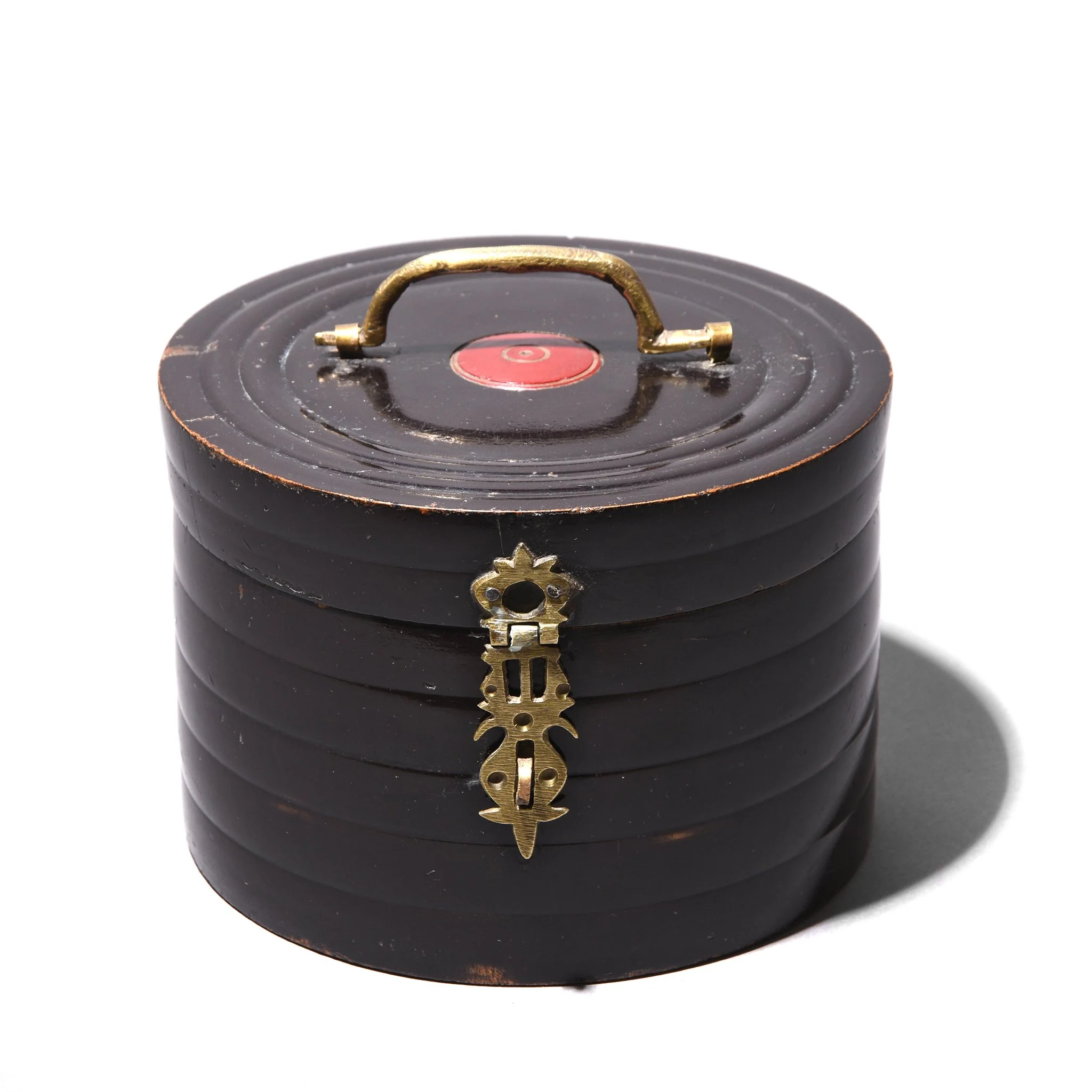
Antique Kerala Nettoor Petti (Malabar Wedding Box), India, 19th Century
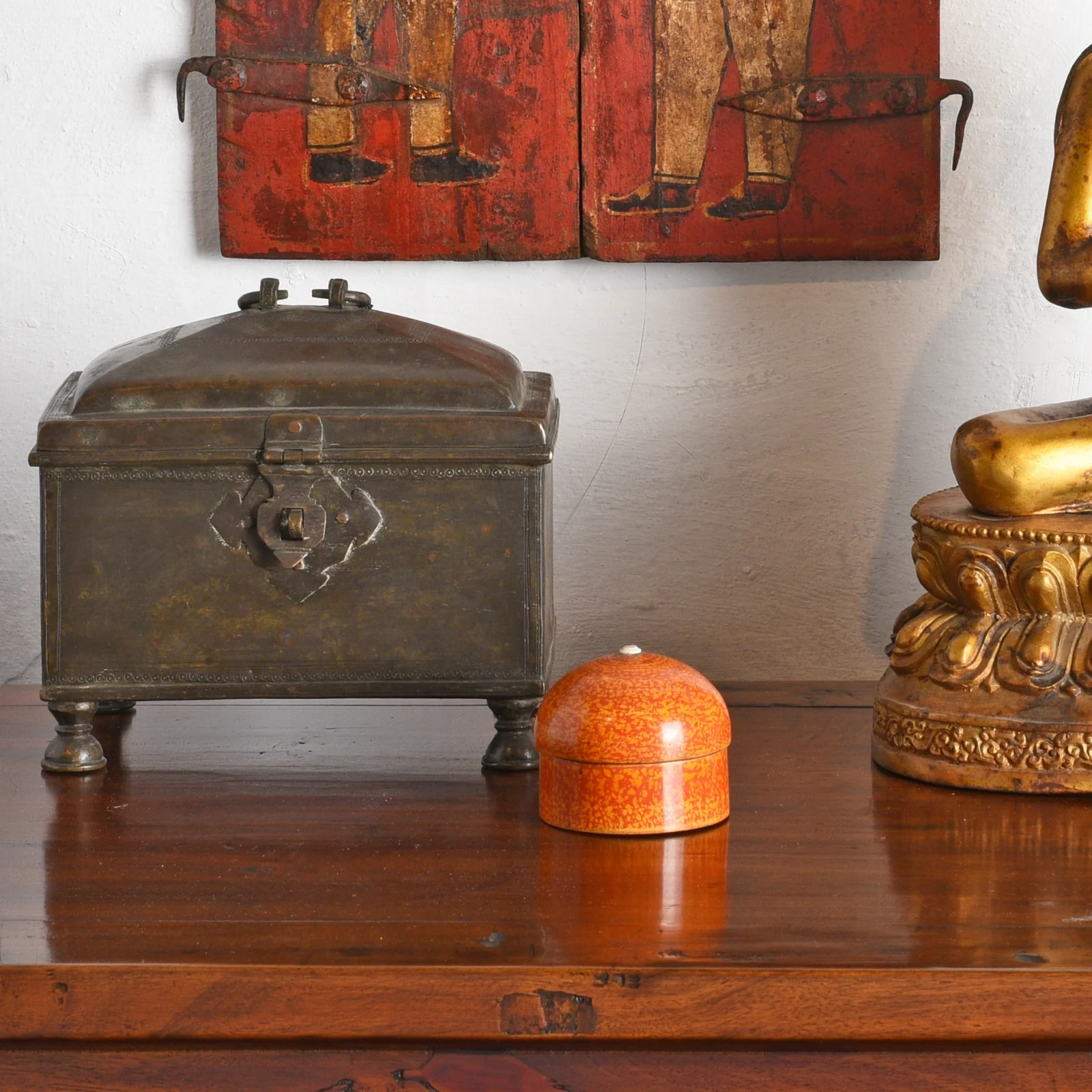
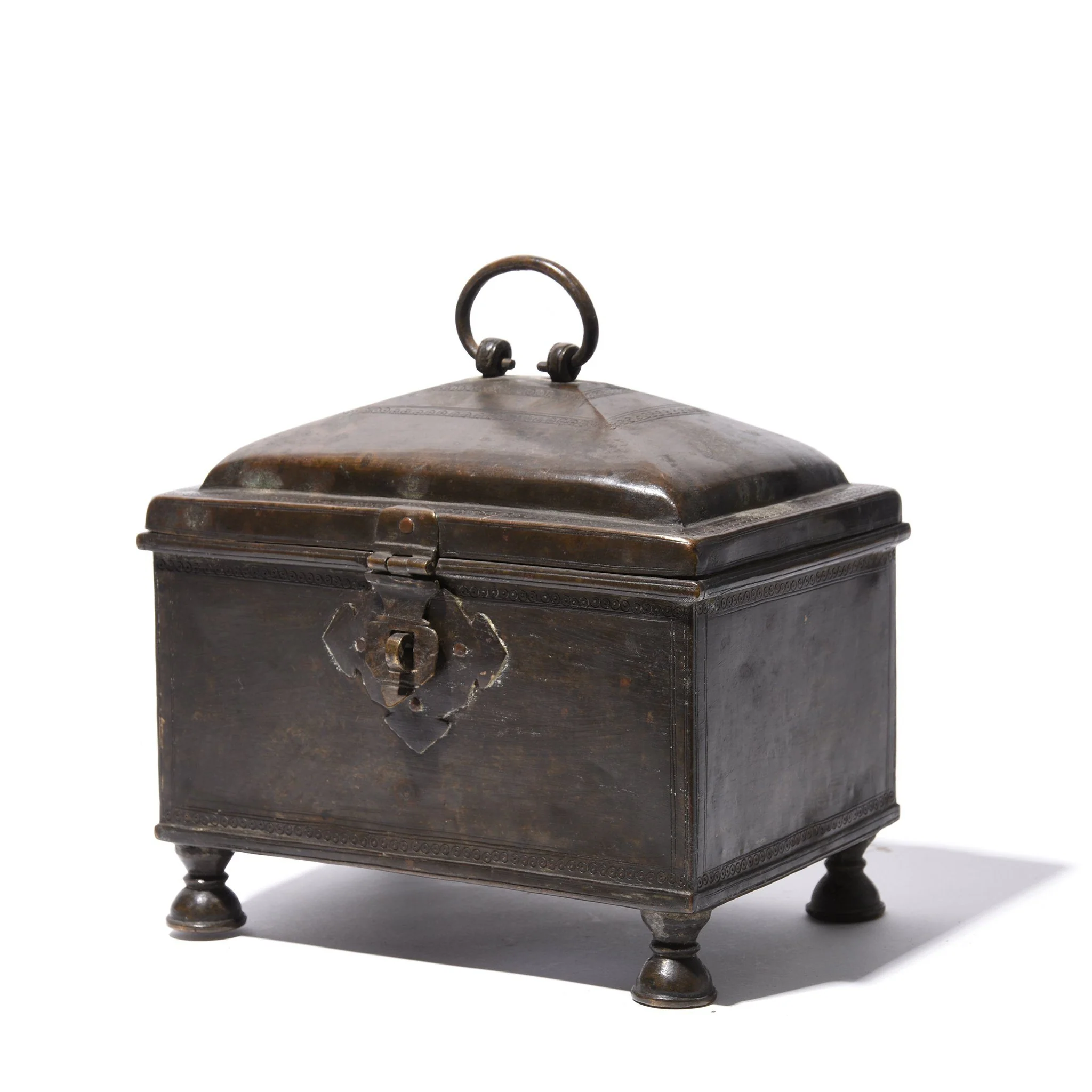
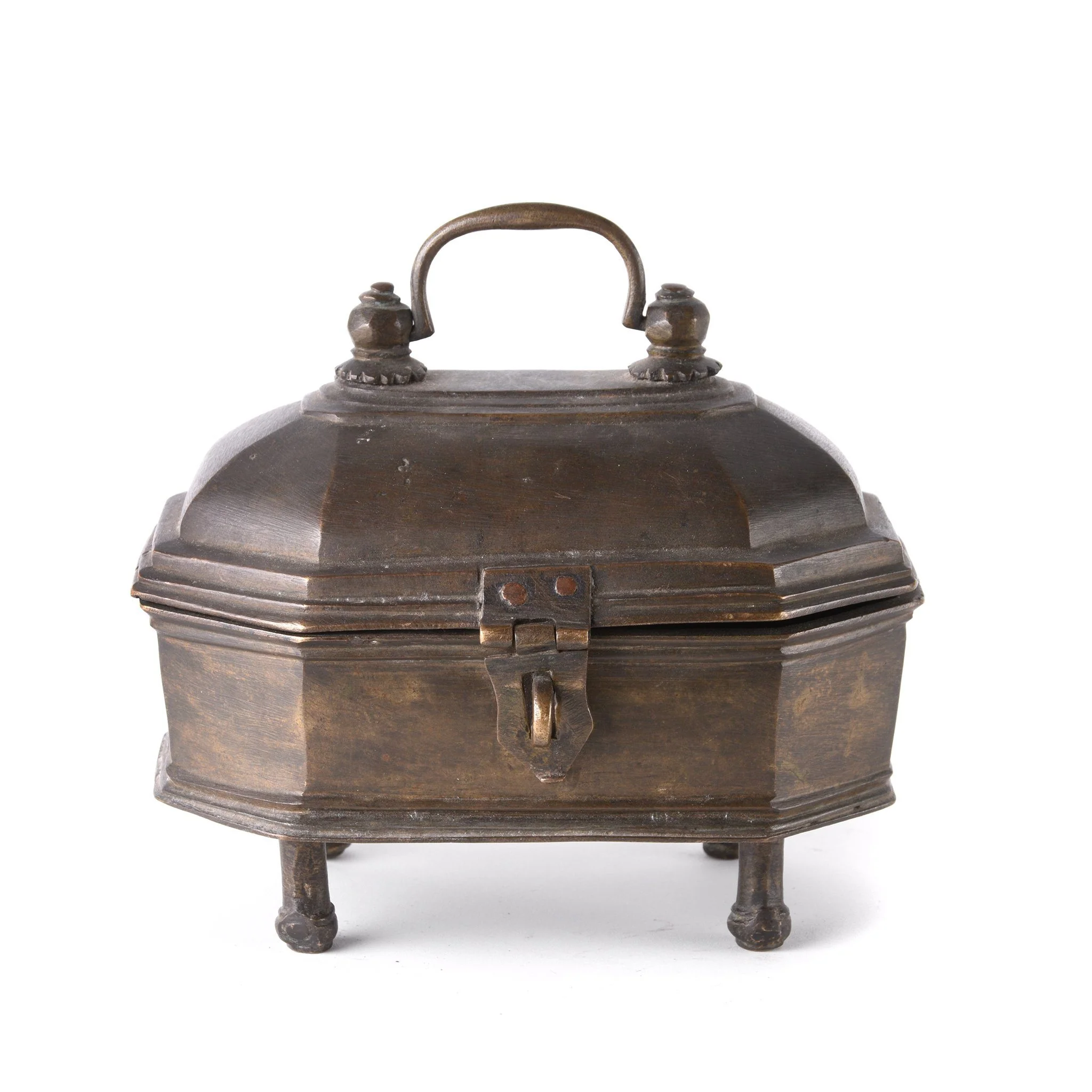
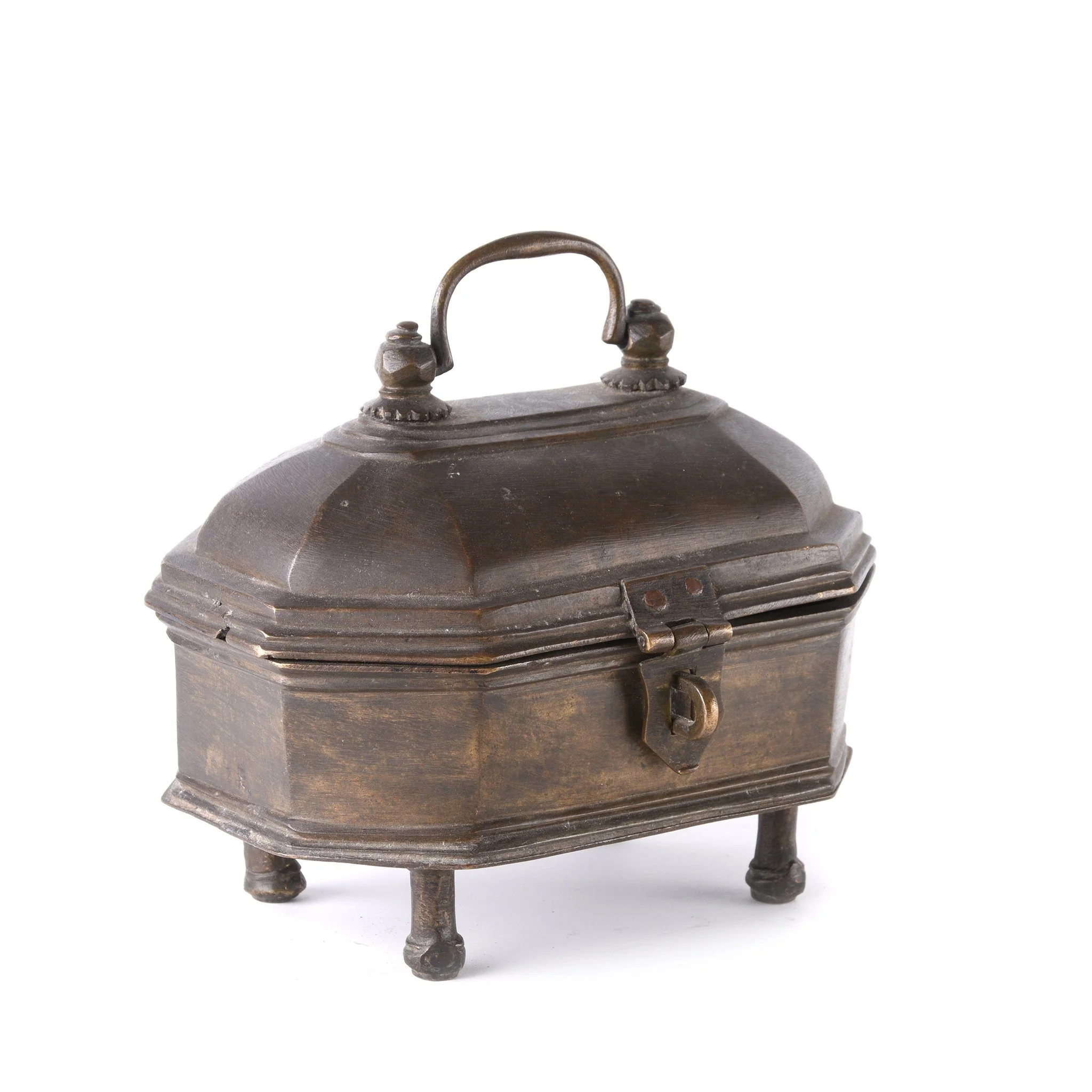
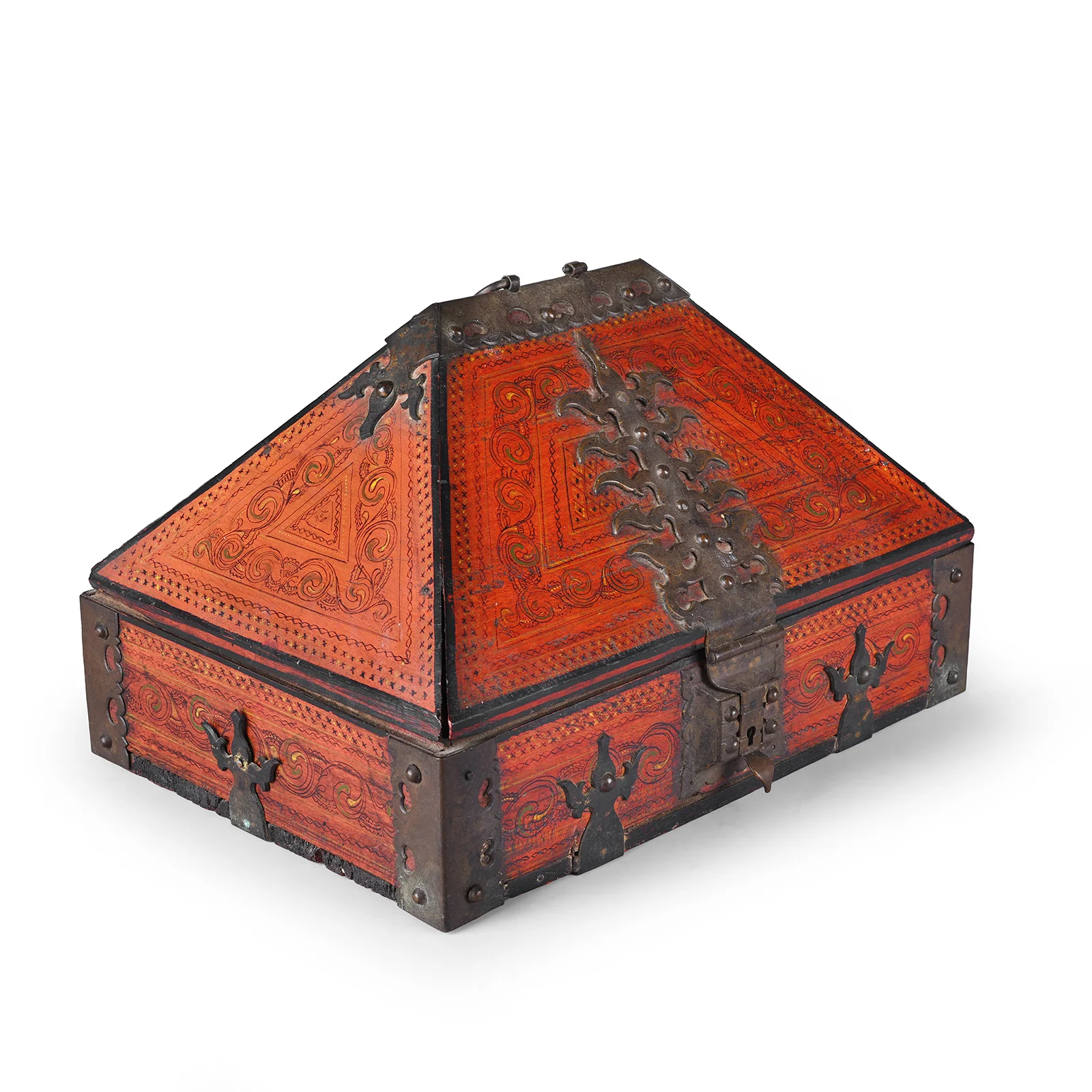
Handcrafted in Kerala during the 19th century, this striking Nettoor Petti, also known as a Malabar Box, is a fine example of traditional South Indian craftsmanship. Carved from jackfruit wood and richly decorated with hand-painted geometric and scrolling motifs, the box is enhanced by elaborate hand-forged iron mounts and locking hardware. Its distinctive pitched-roof form echoes the architecture of traditional Kerala houses, symbolising the bride's future home and making these boxes an important part of wedding and dowry traditions.
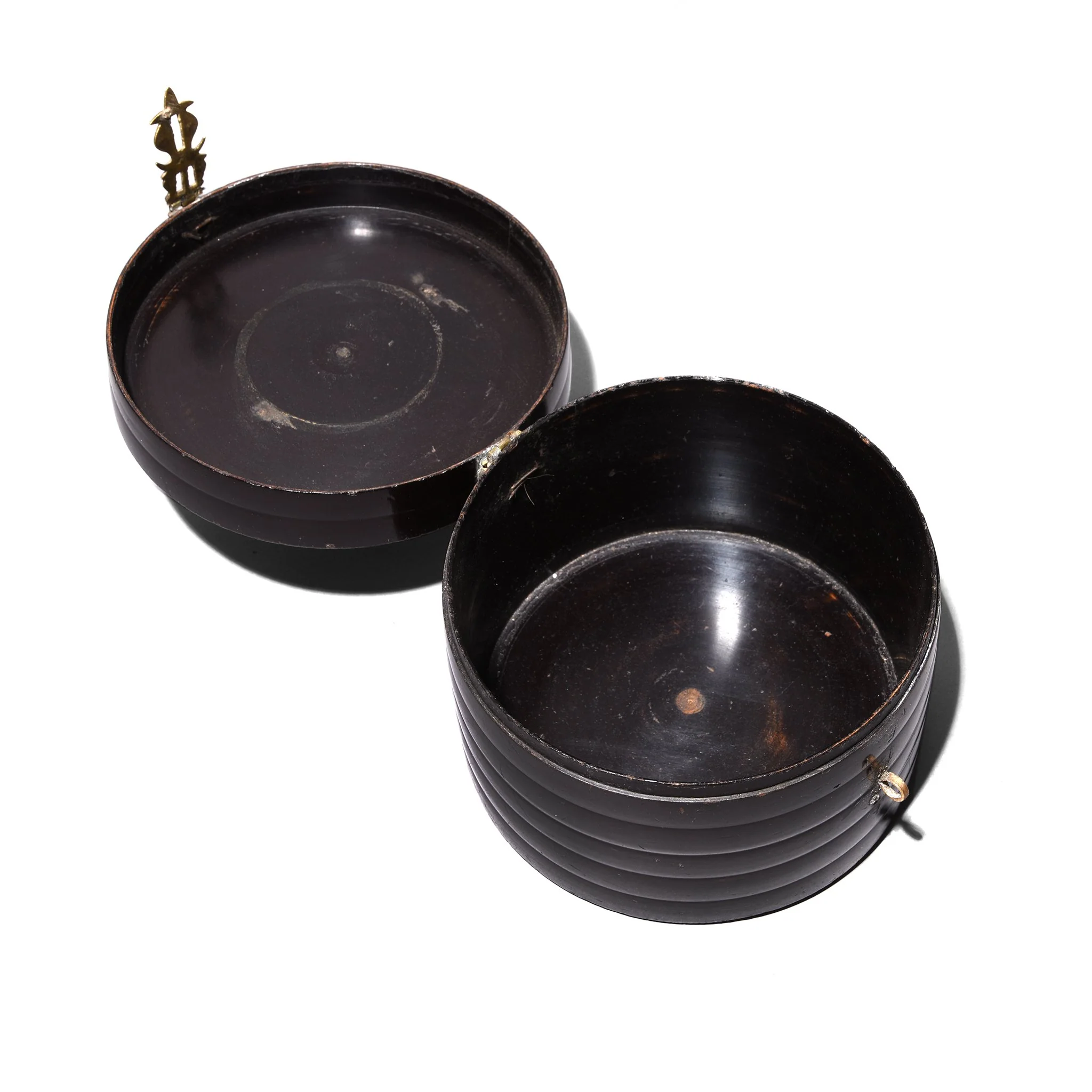
Named after the village of Nettoor in Kerala where the craft is believed to have originated, these highly decorative boxes were owned by affluent families and used for storing jewellery, precious textiles, documents, betel nut, and dowry items. The vibrant painted surface, combined with the sculptural iron fittings, creates a striking decorative object that remains one of the most recognisable forms of Keralan folk art. The interior retains its original compartment, designed to separate and protect valuable contents.
Examples of Nettoor Pettis can be found in museum collections and are illustrated in Arts & Crafts of India by Ilay Cooper and John Gillow (Figure 39, p.52), highlighting their importance within the decorative arts traditions of Kerala.
- Origin: Kerala, South India
- Date: 19th Century
- Materials: Jackfruit Wood, Iron Fittings, Pigmented Decoration
- Features: Traditional Nettoor Petti (Malabar Box) Form, Hand-Painted Decoration, Hand-Forged Iron Mounts, Original Internal Compartment, Working Lock Plate
- Condition: Good antique condition with age-related wear, surface rubbing and patination consistent with age and use
- Dimensions: W36 x D25 x H24 cm
Product Information
Product Information
Shipping & Returns
Shipping & Returns




Antique Kerala Nettoor Petti (Malabar Wedding Box), India, 19th Century
Antique Kerala Nettoor Petti (Malabar Wedding Box), India, 19th Century
Handcrafted in Kerala during the 19th century, this striking Nettoor Petti, also known as a Malabar Box, is a fine example of traditional South Indian craftsmanship. Carved from jackfruit wood and richly decorated with hand-painted geometric and scrolling motifs, the box is enhanced by elaborate hand-forged iron mounts and locking hardware. Its distinctive pitched-roof form echoes the architecture of traditional Kerala houses, symbolising the bride's future home and making these boxes an important part of wedding and dowry traditions.
Named after the village of Nettoor in Kerala where the craft is believed to have originated, these highly decorative boxes were owned by affluent families and used for storing jewellery, precious textiles, documents, betel nut, and dowry items. The vibrant painted surface, combined with the sculptural iron fittings, creates a striking decorative object that remains one of the most recognisable forms of Keralan folk art. The interior retains its original compartment, designed to separate and protect valuable contents.
Examples of Nettoor Pettis can be found in museum collections and are illustrated in Arts & Crafts of India by Ilay Cooper and John Gillow (Figure 39, p.52), highlighting their importance within the decorative arts traditions of Kerala.
- Origin: Kerala, South India
- Date: 19th Century
- Materials: Jackfruit Wood, Iron Fittings, Pigmented Decoration
- Features: Traditional Nettoor Petti (Malabar Box) Form, Hand-Painted Decoration, Hand-Forged Iron Mounts, Original Internal Compartment, Working Lock Plate
- Condition: Good antique condition with age-related wear, surface rubbing and patination consistent with age and use
- Dimensions: W36 x D25 x H24 cm
Product Information
Product Information
Shipping & Returns
Shipping & Returns
Description
Handcrafted in Kerala during the 19th century, this striking Nettoor Petti, also known as a Malabar Box, is a fine example of traditional South Indian craftsmanship. Carved from jackfruit wood and richly decorated with hand-painted geometric and scrolling motifs, the box is enhanced by elaborate hand-forged iron mounts and locking hardware. Its distinctive pitched-roof form echoes the architecture of traditional Kerala houses, symbolising the bride's future home and making these boxes an important part of wedding and dowry traditions.
Named after the village of Nettoor in Kerala where the craft is believed to have originated, these highly decorative boxes were owned by affluent families and used for storing jewellery, precious textiles, documents, betel nut, and dowry items. The vibrant painted surface, combined with the sculptural iron fittings, creates a striking decorative object that remains one of the most recognisable forms of Keralan folk art. The interior retains its original compartment, designed to separate and protect valuable contents.
Examples of Nettoor Pettis can be found in museum collections and are illustrated in Arts & Crafts of India by Ilay Cooper and John Gillow (Figure 39, p.52), highlighting their importance within the decorative arts traditions of Kerala.
- Origin: Kerala, South India
- Date: 19th Century
- Materials: Jackfruit Wood, Iron Fittings, Pigmented Decoration
- Features: Traditional Nettoor Petti (Malabar Box) Form, Hand-Painted Decoration, Hand-Forged Iron Mounts, Original Internal Compartment, Working Lock Plate
- Condition: Good antique condition with age-related wear, surface rubbing and patination consistent with age and use
- Dimensions: W36 x D25 x H24 cm