Painted Zeeba Table from Central Tibet - 18th Century
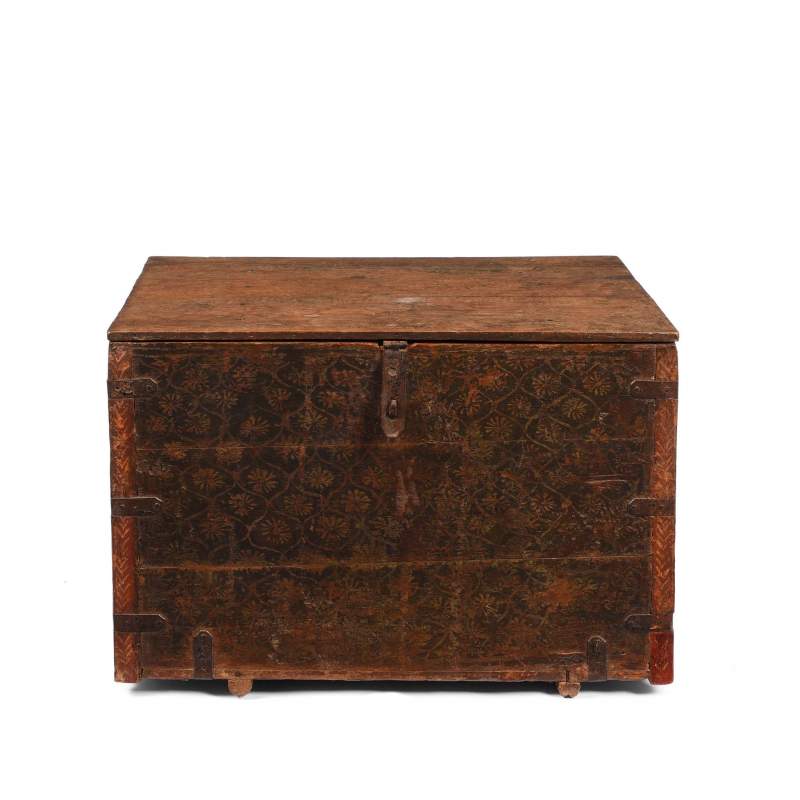
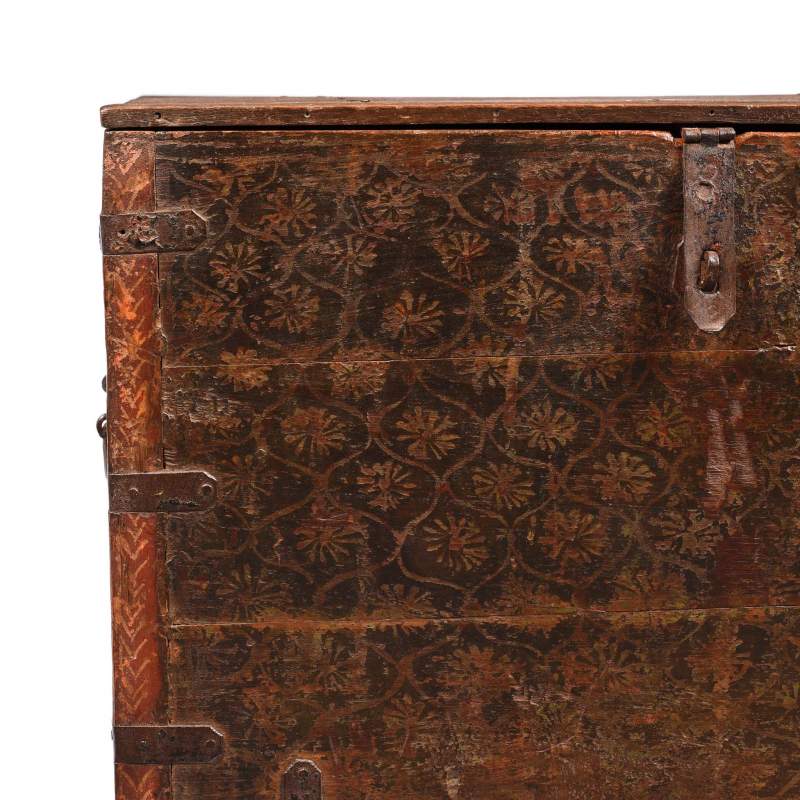
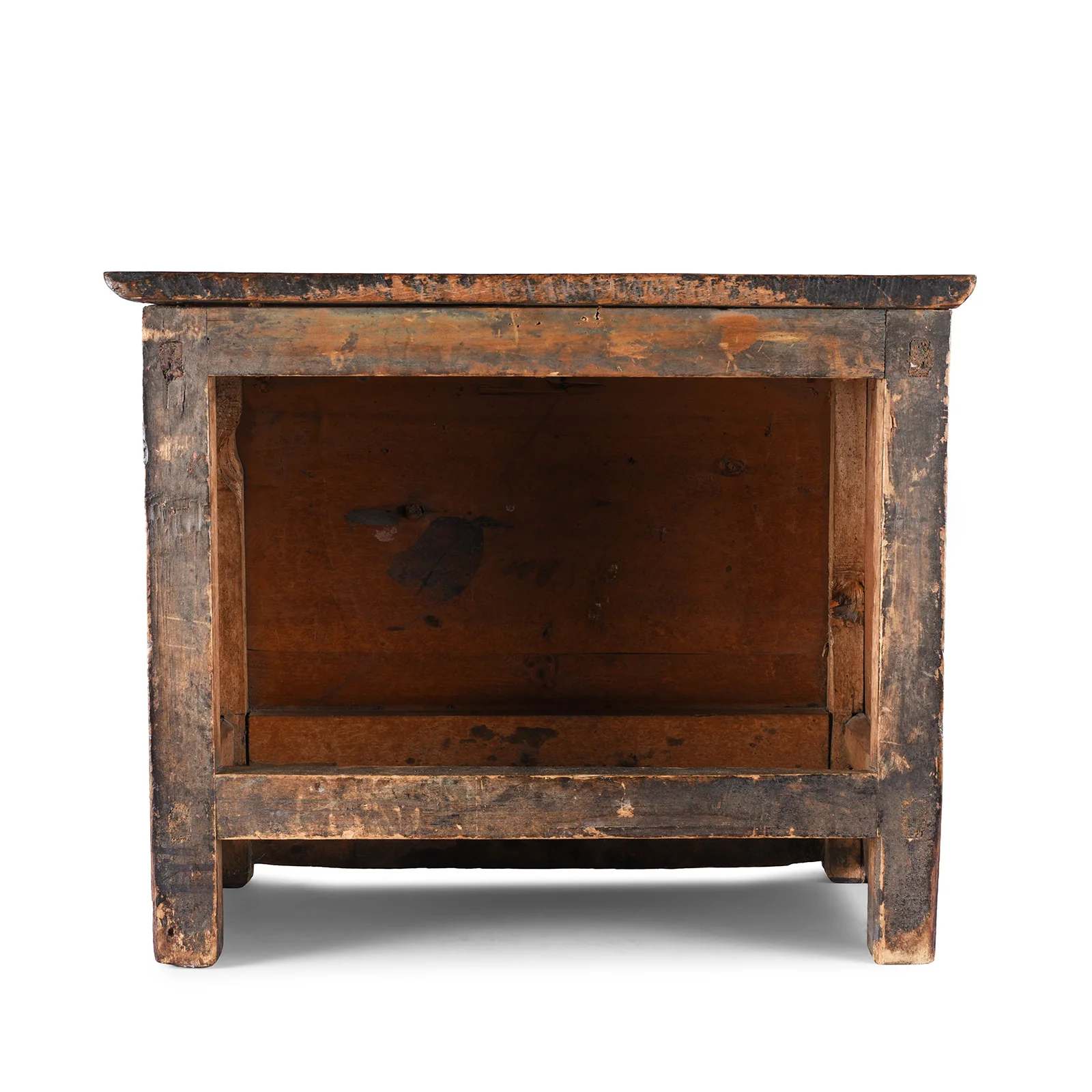
This rare painted side table from Central Tibet is called a thrichok. These tables were made for a lama (spiritual leader in Tibetan Buddhism) and would have supported ritual objects, scriptures, butter lamps, or devotional offerings. This particular table dates to the 18th century and features a striking depiction of Zeeba, often called Kirtimukha (meaning the face of majesty) (also named / Ziba / Zipak). He is a monstrous creature whose symbol is frequently found across China, Tibet & India. Also known as the 'Monster of Greed' (T'ao t'ieh in Chinese), 'Creature Without a Name' or 'Face of Glory'. The story of Skhanda Purana states that the Kirtimukha was a demon born from the blaze of Shiva's third eye to hunt Rahu. When his prey, Rahu repented and was forgiven for his sins, Zeeba was ravenous and devoured its own body leaving just the head and hands remaining. Shiva henceforth requested he remain as a guardian to his doors for all eternity. He has been present in Asian art since 500 AD.
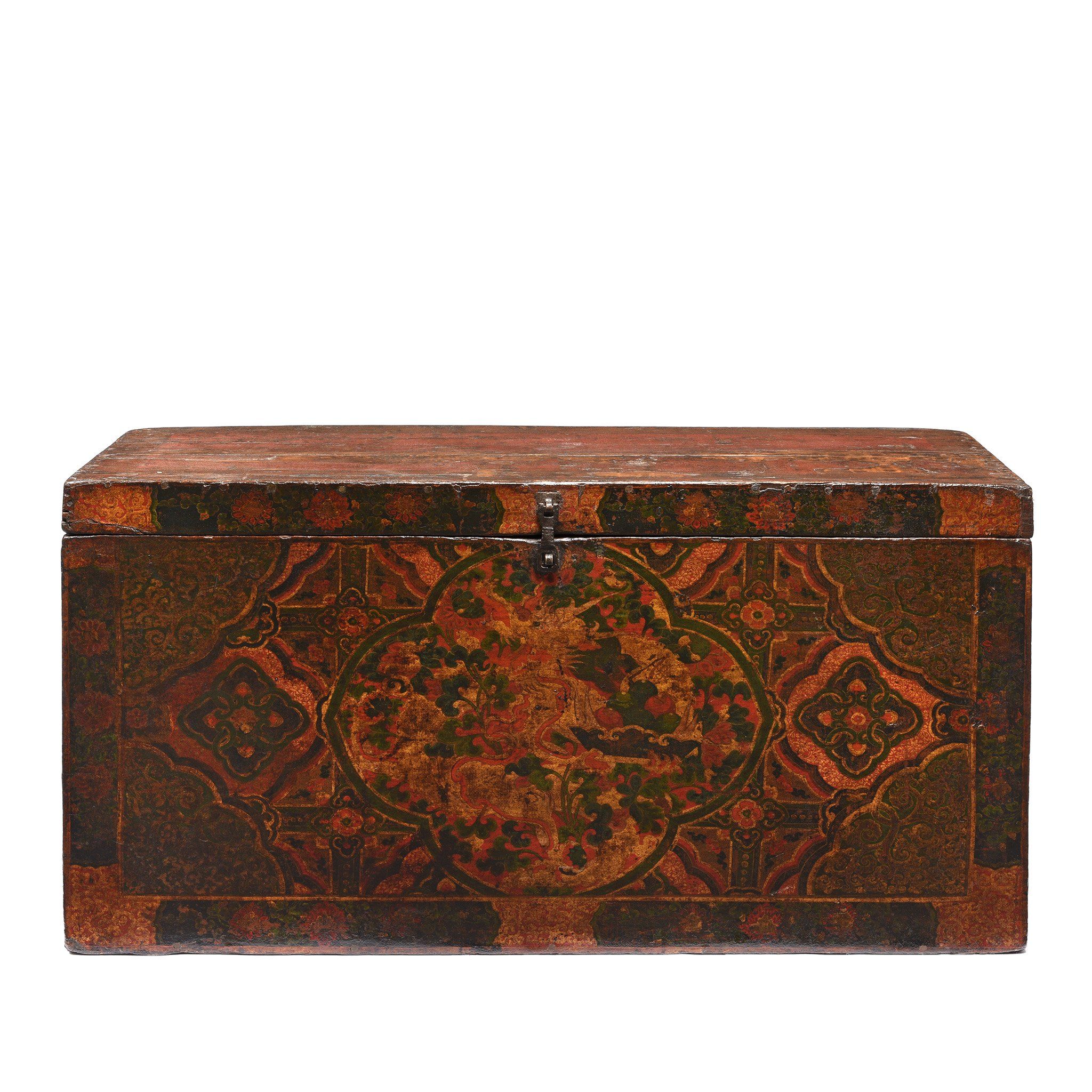
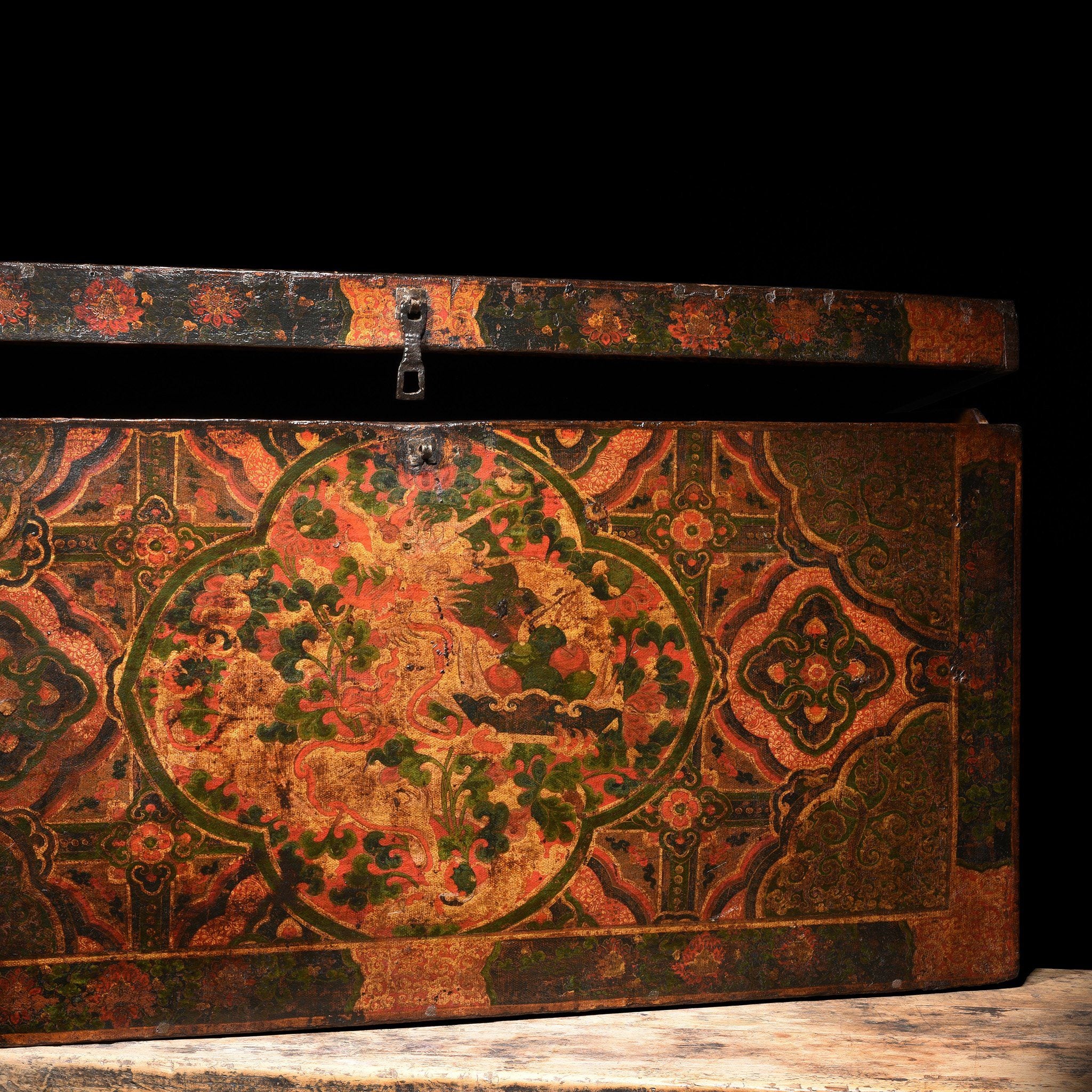
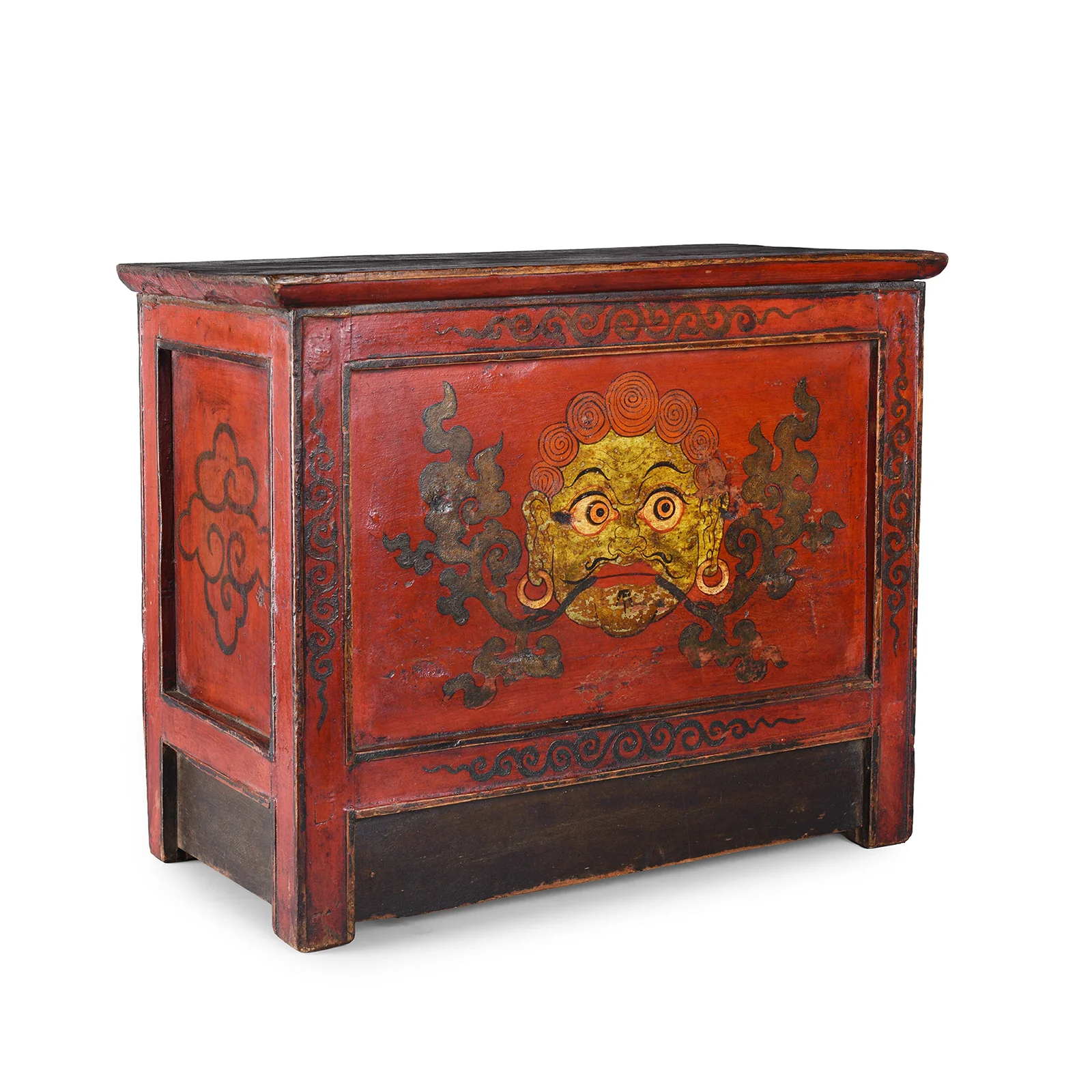
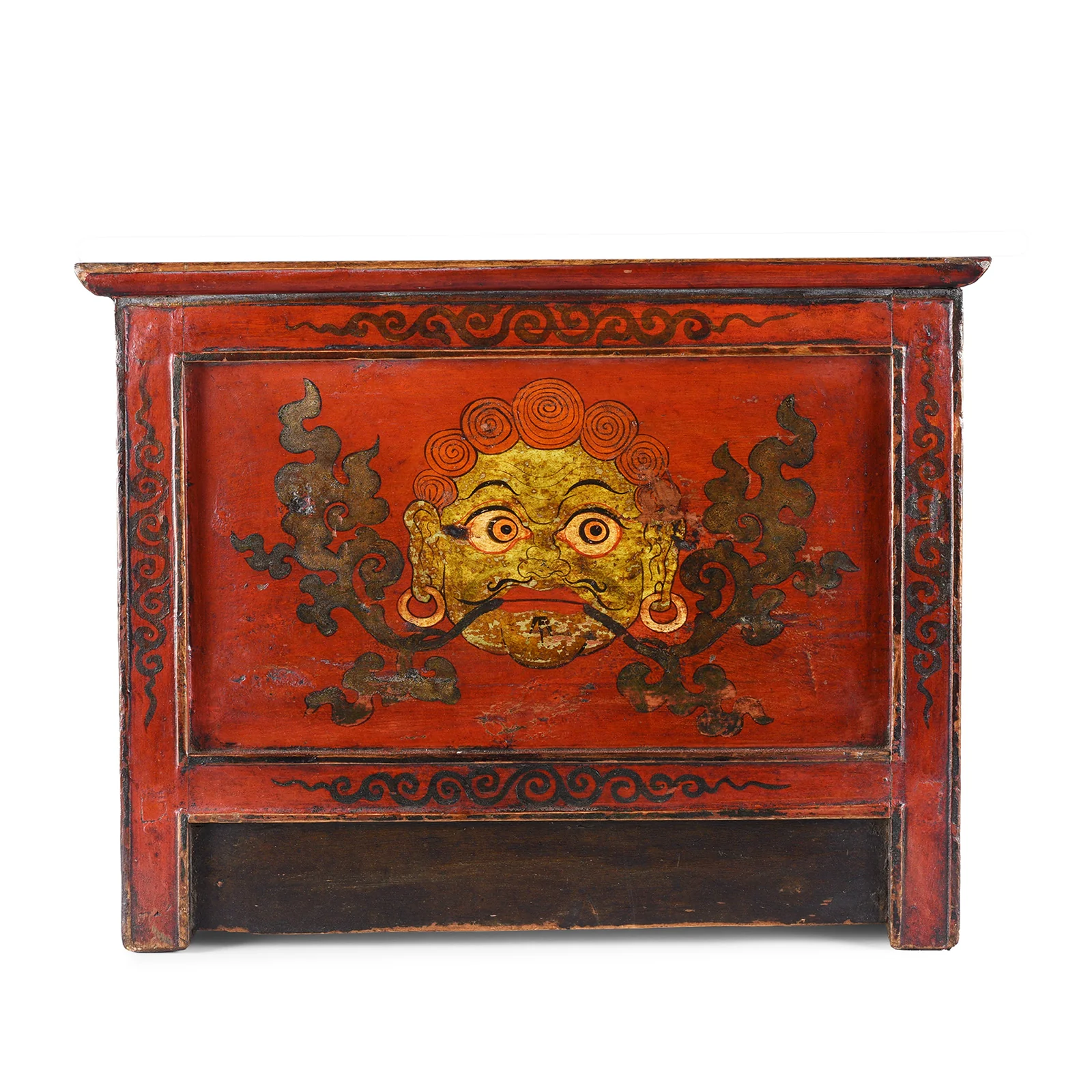
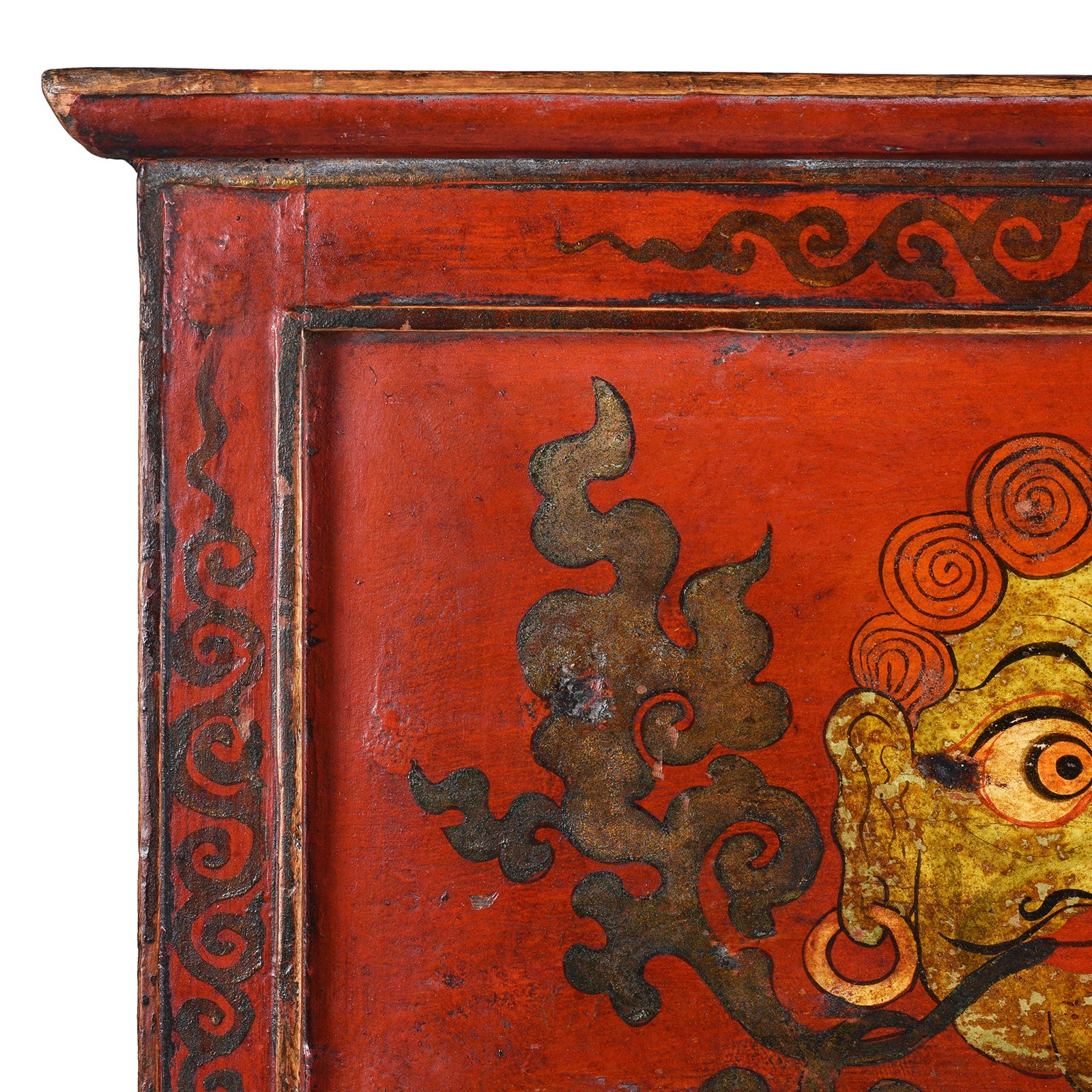
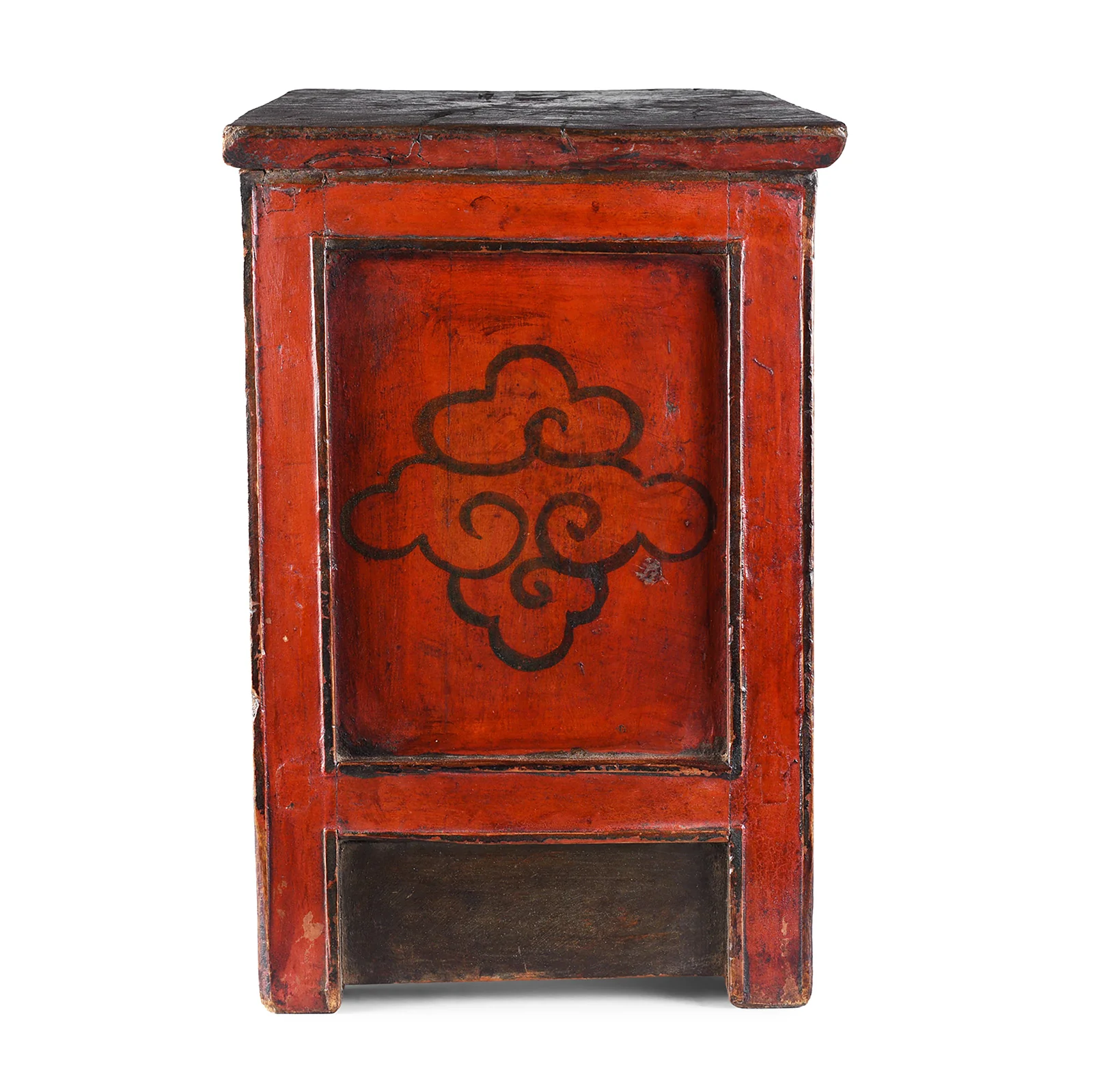
Painted in rich red pigment with black scrolling cloud motifs, the front panel is centred by Zeeba’s expressive face, shown issuing stylised flames from the mouth. This particular depiction of Zeeba has similarities with the Rajasthani depictions of Surya, the Hindu sun god. The vivid painted decoration reflects the close relationship between Tibetan furniture and religious art, where even functional objects were imbued with symbolic meaning and protective imagery.
Adding to its importance, the table comes from the collection of Mr Nicholas Squire (1949–2024), Suffolk, and was purchased from Spink & Son Ltd., accompanied by a copy of an invoice dated 8 January 1993. It is also published in Tibetan Art at Spink (1992), catalogue number 51.
- Origin: Central Tibet
- Date: 18th Century
- Materials: Painted wood
- Type: Altar table / prayer table
- Decoration: Zeeba deity issuing flames from the mouth, with scrolling cloud motifs
- Condition: Wear, surface rubbing and patination consistent with age and use
- Weight: 6.1 kg
-
Dimensions: W57 x D32 x H46 cm
References: For a similar Zeeba thrichok table, see Tibetan Furniture: Identifying · Appreciating · Collecting by Chris Buckley, figure 158.
Published: Tibetan Art at Spink (1992), Catalogue No. 51
Provenance: Purchased on the UK art market, 2026, from the Collection of Mr Nicholas Squire (1949–2024), Suffolk. Nicholas Squire originally purchased this piece from Spink & Son Ltd, 8 January 1993.
Product Information
Product Information
Shipping & Returns
Shipping & Returns

Painted Zeeba Table from Central Tibet - 18th Century
Painted Zeeba Table from Central Tibet - 18th Century
This rare painted side table from Central Tibet is called a thrichok. These tables were made for a lama (spiritual leader in Tibetan Buddhism) and would have supported ritual objects, scriptures, butter lamps, or devotional offerings. This particular table dates to the 18th century and features a striking depiction of Zeeba, often called Kirtimukha (meaning the face of majesty) (also named / Ziba / Zipak). He is a monstrous creature whose symbol is frequently found across China, Tibet & India. Also known as the 'Monster of Greed' (T'ao t'ieh in Chinese), 'Creature Without a Name' or 'Face of Glory'. The story of Skhanda Purana states that the Kirtimukha was a demon born from the blaze of Shiva's third eye to hunt Rahu. When his prey, Rahu repented and was forgiven for his sins, Zeeba was ravenous and devoured its own body leaving just the head and hands remaining. Shiva henceforth requested he remain as a guardian to his doors for all eternity. He has been present in Asian art since 500 AD.
Painted in rich red pigment with black scrolling cloud motifs, the front panel is centred by Zeeba’s expressive face, shown issuing stylised flames from the mouth. This particular depiction of Zeeba has similarities with the Rajasthani depictions of Surya, the Hindu sun god. The vivid painted decoration reflects the close relationship between Tibetan furniture and religious art, where even functional objects were imbued with symbolic meaning and protective imagery.
Adding to its importance, the table comes from the collection of Mr Nicholas Squire (1949–2024), Suffolk, and was purchased from Spink & Son Ltd., accompanied by a copy of an invoice dated 8 January 1993. It is also published in Tibetan Art at Spink (1992), catalogue number 51.
- Origin: Central Tibet
- Date: 18th Century
- Materials: Painted wood
- Type: Altar table / prayer table
- Decoration: Zeeba deity issuing flames from the mouth, with scrolling cloud motifs
- Condition: Wear, surface rubbing and patination consistent with age and use
- Weight: 6.1 kg
-
Dimensions: W57 x D32 x H46 cm
References: For a similar Zeeba thrichok table, see Tibetan Furniture: Identifying · Appreciating · Collecting by Chris Buckley, figure 158.
Published: Tibetan Art at Spink (1992), Catalogue No. 51
Provenance: Purchased on the UK art market, 2026, from the Collection of Mr Nicholas Squire (1949–2024), Suffolk. Nicholas Squire originally purchased this piece from Spink & Son Ltd, 8 January 1993.
Product Information
Product Information
Shipping & Returns
Shipping & Returns
Description
This rare painted side table from Central Tibet is called a thrichok. These tables were made for a lama (spiritual leader in Tibetan Buddhism) and would have supported ritual objects, scriptures, butter lamps, or devotional offerings. This particular table dates to the 18th century and features a striking depiction of Zeeba, often called Kirtimukha (meaning the face of majesty) (also named / Ziba / Zipak). He is a monstrous creature whose symbol is frequently found across China, Tibet & India. Also known as the 'Monster of Greed' (T'ao t'ieh in Chinese), 'Creature Without a Name' or 'Face of Glory'. The story of Skhanda Purana states that the Kirtimukha was a demon born from the blaze of Shiva's third eye to hunt Rahu. When his prey, Rahu repented and was forgiven for his sins, Zeeba was ravenous and devoured its own body leaving just the head and hands remaining. Shiva henceforth requested he remain as a guardian to his doors for all eternity. He has been present in Asian art since 500 AD.
Painted in rich red pigment with black scrolling cloud motifs, the front panel is centred by Zeeba’s expressive face, shown issuing stylised flames from the mouth. This particular depiction of Zeeba has similarities with the Rajasthani depictions of Surya, the Hindu sun god. The vivid painted decoration reflects the close relationship between Tibetan furniture and religious art, where even functional objects were imbued with symbolic meaning and protective imagery.
Adding to its importance, the table comes from the collection of Mr Nicholas Squire (1949–2024), Suffolk, and was purchased from Spink & Son Ltd., accompanied by a copy of an invoice dated 8 January 1993. It is also published in Tibetan Art at Spink (1992), catalogue number 51.
- Origin: Central Tibet
- Date: 18th Century
- Materials: Painted wood
- Type: Altar table / prayer table
- Decoration: Zeeba deity issuing flames from the mouth, with scrolling cloud motifs
- Condition: Wear, surface rubbing and patination consistent with age and use
- Weight: 6.1 kg
-
Dimensions: W57 x D32 x H46 cm
References: For a similar Zeeba thrichok table, see Tibetan Furniture: Identifying · Appreciating · Collecting by Chris Buckley, figure 158.
Published: Tibetan Art at Spink (1992), Catalogue No. 51
Provenance: Purchased on the UK art market, 2026, from the Collection of Mr Nicholas Squire (1949–2024), Suffolk. Nicholas Squire originally purchased this piece from Spink & Son Ltd, 8 January 1993.