Japanese Black Lacquer Bo Dansu From Tsuruoka, Yamagata - Meiji Period
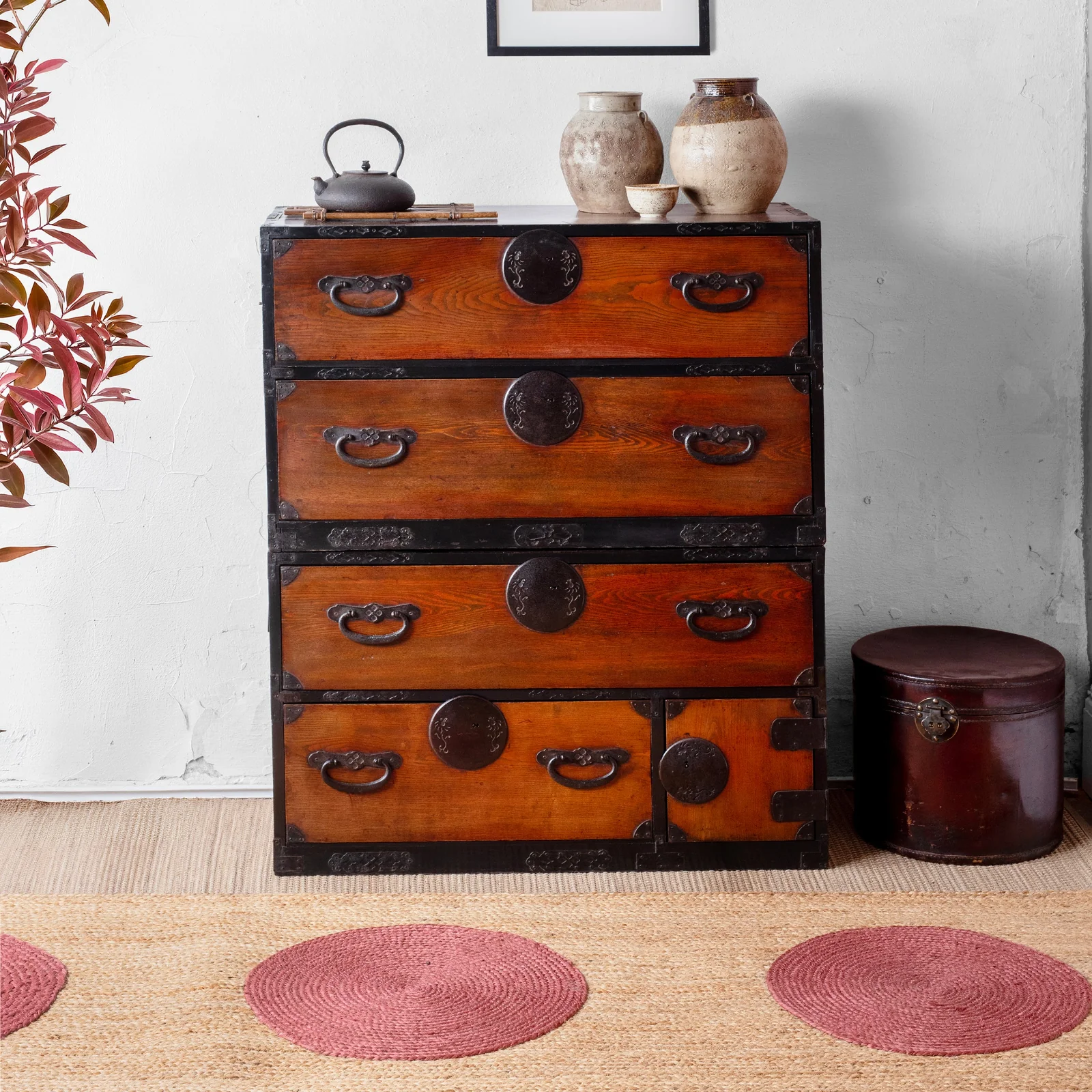
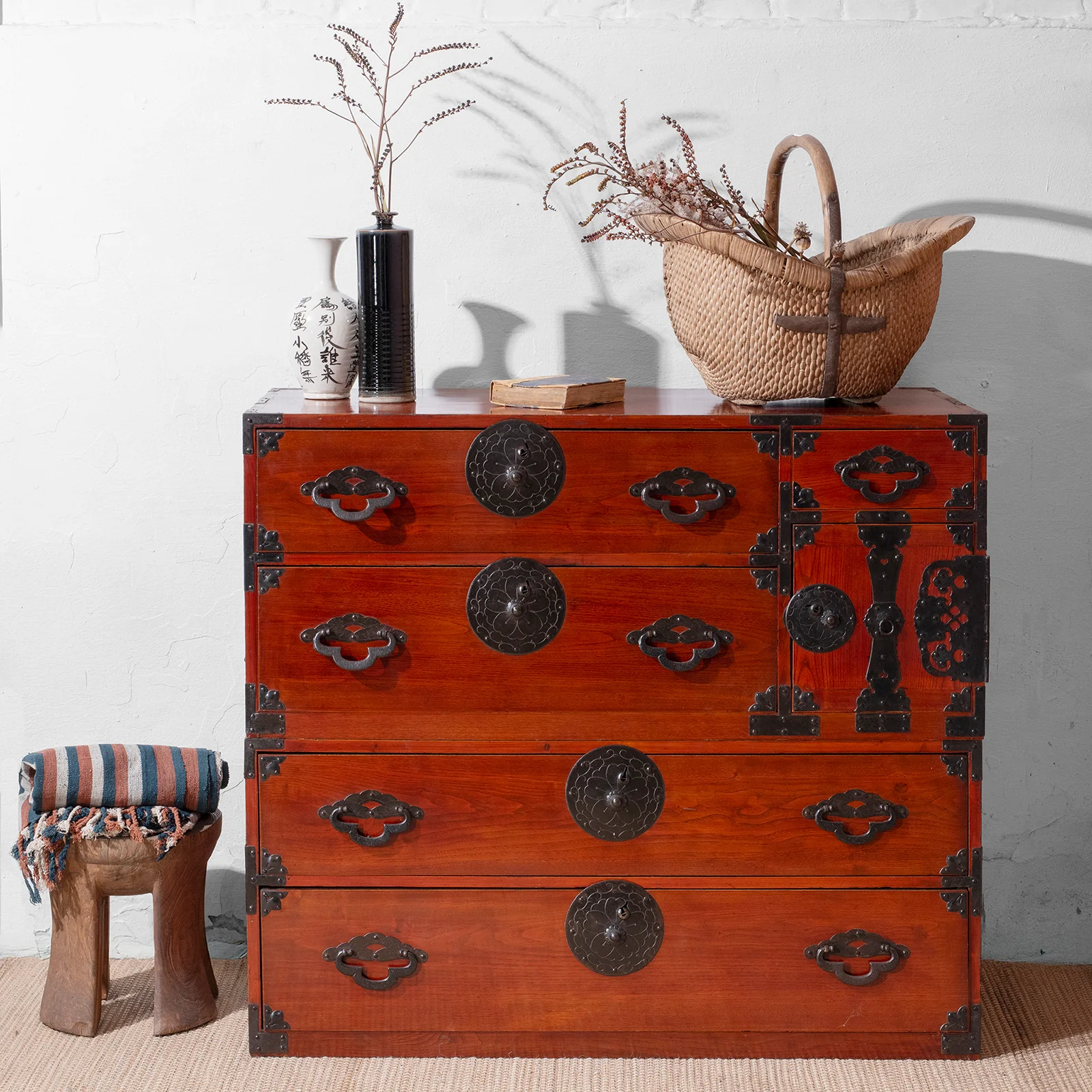
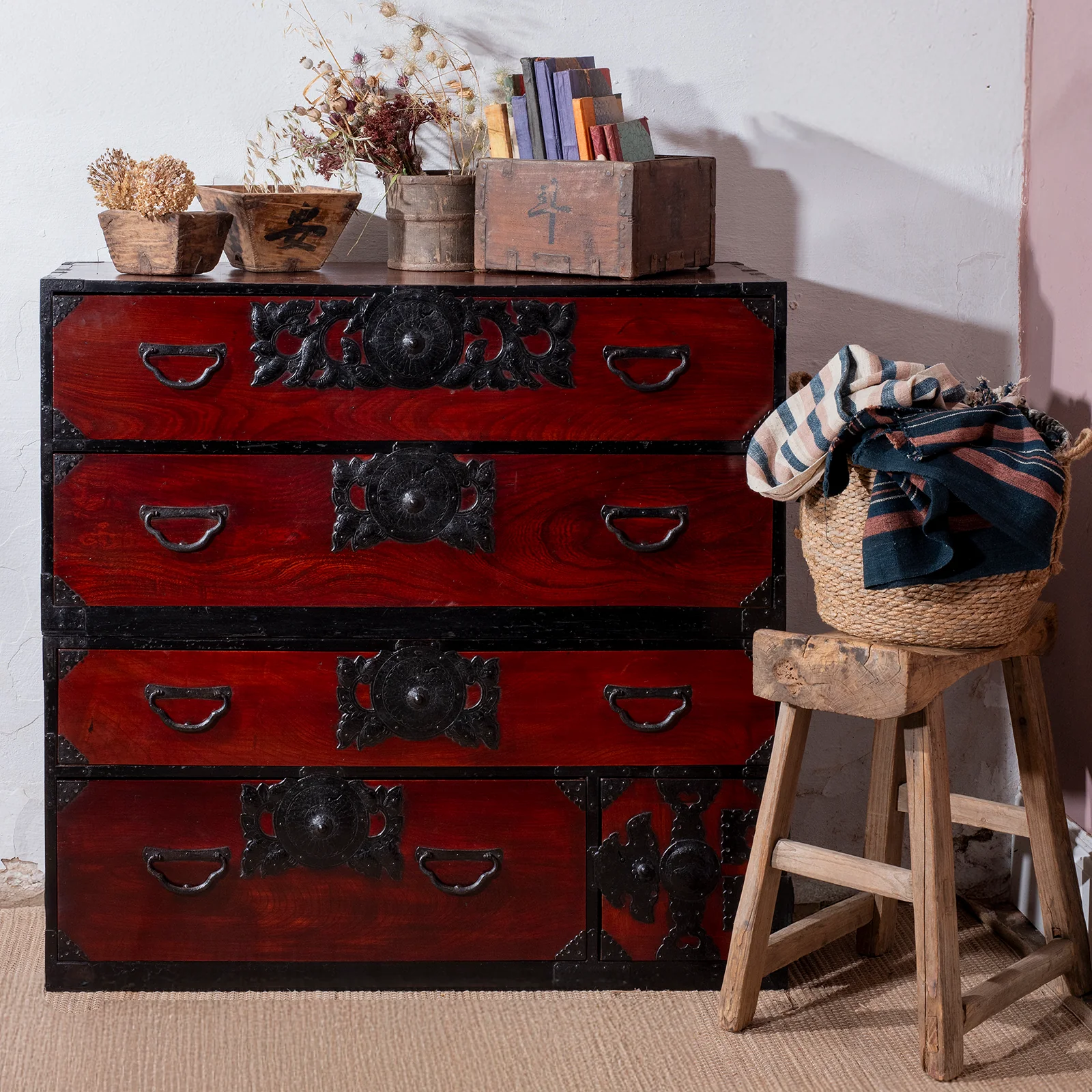
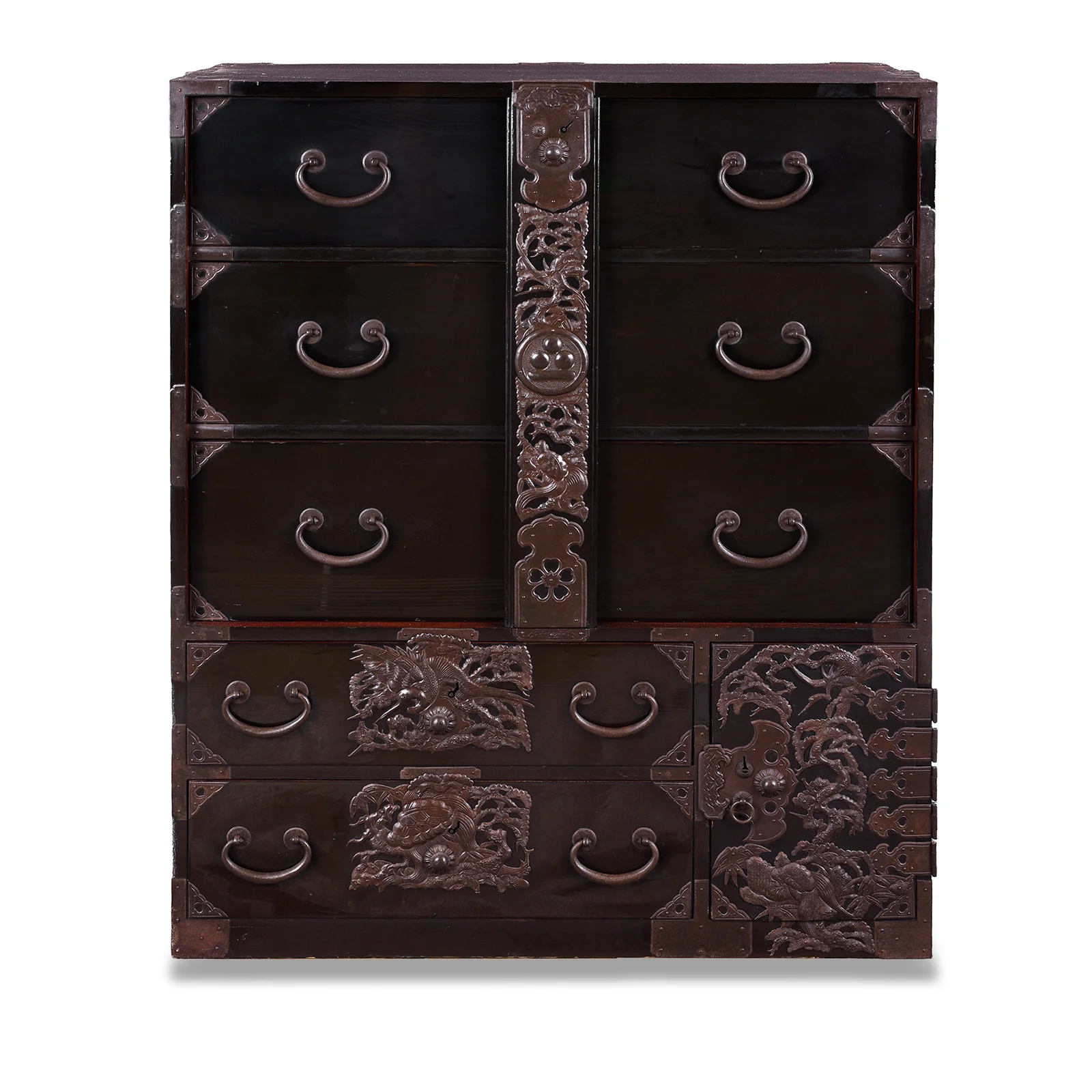
This exceptional Japanese Bo Dansu chest dates from the late Meiji period and originates from Tsuruoka in Yamagata Prefecture, a region celebrated for producing some of Japan's finest lacquered tansu. Finished in rich black lacquer over cryptomeria wood, the chest is distinguished by its elaborate repoussé ironwork, a hallmark of Tsuruoka craftsmanship. The finely worked metal fittings depict intricate ivy motifs, floral forms, and a captivating array of creatures, cranes & turtles, reflecting the symbolic richness of Japanese decorative arts.
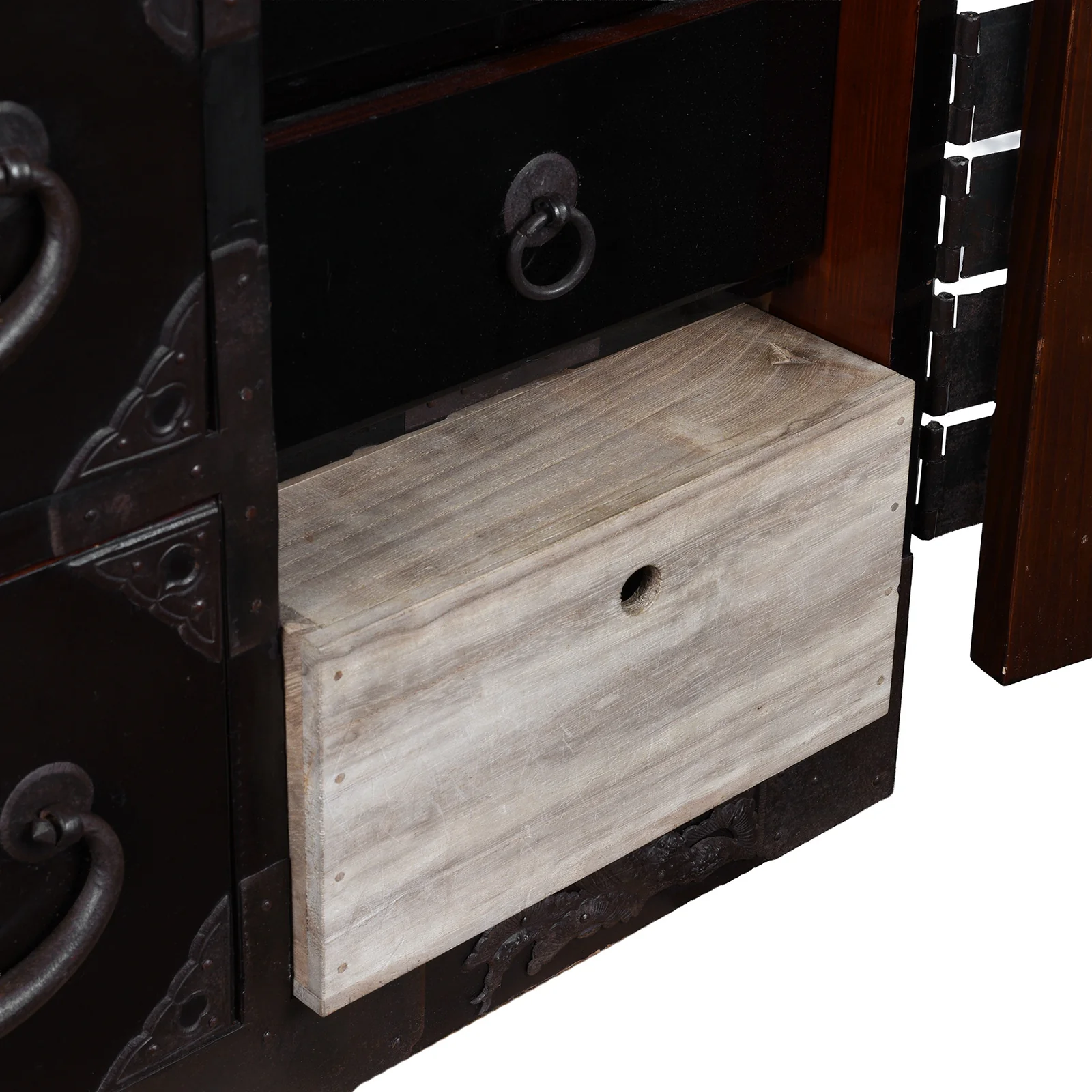
Designed as both a practical storage chest and a statement of status, the bo dansu takes its name from the central locking bar (bo), which secures the upper drawers. Behind the removable locking panel are three large drawers, while the lower section contains additional drawers and a concealed compartment. A hidden false back to the lockbox reveals a secret storage space, demonstrating the ingenuity and security features for which Japanese merchant chests are renowned. The chest retains its original key and lock mechanisms, further enhancing its authenticity and appeal.
The central locking bar features a Kamon (crest), most likely the 渡辺星 / Watanabe-boshi family emblem - three round 'stars' above as horizontal stroke below. Decorative ironwork includes stylised ivy vines and a dramatic scene depicting a crane flying above a turtle, symbols traditionally associated with longevity, strength, and good fortune. Such lacquered tansu were often presented as part of a bride's dowry, making them both functional furnishings and treasured family heirlooms.
- Origin: Tsuruoka, Yamagata Prefecture, Japan
- Date: Meiji Period, Late 19th Century (1868–1912)
- Materials: Cryptomeria wood, black lacquer, repoussé iron fittings
- Features: Central locking bar (bo), original key, secret compartment with false back, lockbox compartment, elaborate repoussé ironwork, Tsuta Kamon crest, crane and dragon motifs, fern-shaped (warabite) drawer pulls
- Condition: Good antique condition with age-related wear, surface marks, and patina consistent with age and use
- Dimensions: W90 x D43 x H107 cm
References:
For a similar example and trading on the difference between Sakata & Tsuroka tansu, see Traditional Japanese Chests: A Definitive Guide by Kazuko Koizumi page 37. A smaller near identical version can be found in Traditional Japanese Cabinetry: Tansu by Ty & Kiyoko Heineken - figure 156 which can also be found in the Tokyo Furniture Museum.
Product Information
Product Information
Shipping & Returns
Shipping & Returns



Japanese Black Lacquer Bo Dansu From Tsuruoka, Yamagata - Meiji Period
Japanese Black Lacquer Bo Dansu From Tsuruoka, Yamagata - Meiji Period
This exceptional Japanese Bo Dansu chest dates from the late Meiji period and originates from Tsuruoka in Yamagata Prefecture, a region celebrated for producing some of Japan's finest lacquered tansu. Finished in rich black lacquer over cryptomeria wood, the chest is distinguished by its elaborate repoussé ironwork, a hallmark of Tsuruoka craftsmanship. The finely worked metal fittings depict intricate ivy motifs, floral forms, and a captivating array of creatures, cranes & turtles, reflecting the symbolic richness of Japanese decorative arts.
Designed as both a practical storage chest and a statement of status, the bo dansu takes its name from the central locking bar (bo), which secures the upper drawers. Behind the removable locking panel are three large drawers, while the lower section contains additional drawers and a concealed compartment. A hidden false back to the lockbox reveals a secret storage space, demonstrating the ingenuity and security features for which Japanese merchant chests are renowned. The chest retains its original key and lock mechanisms, further enhancing its authenticity and appeal.
The central locking bar features a Kamon (crest), most likely the 渡辺星 / Watanabe-boshi family emblem - three round 'stars' above as horizontal stroke below. Decorative ironwork includes stylised ivy vines and a dramatic scene depicting a crane flying above a turtle, symbols traditionally associated with longevity, strength, and good fortune. Such lacquered tansu were often presented as part of a bride's dowry, making them both functional furnishings and treasured family heirlooms.
- Origin: Tsuruoka, Yamagata Prefecture, Japan
- Date: Meiji Period, Late 19th Century (1868–1912)
- Materials: Cryptomeria wood, black lacquer, repoussé iron fittings
- Features: Central locking bar (bo), original key, secret compartment with false back, lockbox compartment, elaborate repoussé ironwork, Tsuta Kamon crest, crane and dragon motifs, fern-shaped (warabite) drawer pulls
- Condition: Good antique condition with age-related wear, surface marks, and patina consistent with age and use
- Dimensions: W90 x D43 x H107 cm
References:
For a similar example and trading on the difference between Sakata & Tsuroka tansu, see Traditional Japanese Chests: A Definitive Guide by Kazuko Koizumi page 37. A smaller near identical version can be found in Traditional Japanese Cabinetry: Tansu by Ty & Kiyoko Heineken - figure 156 which can also be found in the Tokyo Furniture Museum.
Original: $4,844.78
-65%$4,844.78
$1,695.67Product Information
Product Information
Shipping & Returns
Shipping & Returns
Description
This exceptional Japanese Bo Dansu chest dates from the late Meiji period and originates from Tsuruoka in Yamagata Prefecture, a region celebrated for producing some of Japan's finest lacquered tansu. Finished in rich black lacquer over cryptomeria wood, the chest is distinguished by its elaborate repoussé ironwork, a hallmark of Tsuruoka craftsmanship. The finely worked metal fittings depict intricate ivy motifs, floral forms, and a captivating array of creatures, cranes & turtles, reflecting the symbolic richness of Japanese decorative arts.
Designed as both a practical storage chest and a statement of status, the bo dansu takes its name from the central locking bar (bo), which secures the upper drawers. Behind the removable locking panel are three large drawers, while the lower section contains additional drawers and a concealed compartment. A hidden false back to the lockbox reveals a secret storage space, demonstrating the ingenuity and security features for which Japanese merchant chests are renowned. The chest retains its original key and lock mechanisms, further enhancing its authenticity and appeal.
The central locking bar features a Kamon (crest), most likely the 渡辺星 / Watanabe-boshi family emblem - three round 'stars' above as horizontal stroke below. Decorative ironwork includes stylised ivy vines and a dramatic scene depicting a crane flying above a turtle, symbols traditionally associated with longevity, strength, and good fortune. Such lacquered tansu were often presented as part of a bride's dowry, making them both functional furnishings and treasured family heirlooms.
- Origin: Tsuruoka, Yamagata Prefecture, Japan
- Date: Meiji Period, Late 19th Century (1868–1912)
- Materials: Cryptomeria wood, black lacquer, repoussé iron fittings
- Features: Central locking bar (bo), original key, secret compartment with false back, lockbox compartment, elaborate repoussé ironwork, Tsuta Kamon crest, crane and dragon motifs, fern-shaped (warabite) drawer pulls
- Condition: Good antique condition with age-related wear, surface marks, and patina consistent with age and use
- Dimensions: W90 x D43 x H107 cm
References:
For a similar example and trading on the difference between Sakata & Tsuroka tansu, see Traditional Japanese Chests: A Definitive Guide by Kazuko Koizumi page 37. A smaller near identical version can be found in Traditional Japanese Cabinetry: Tansu by Ty & Kiyoko Heineken - figure 156 which can also be found in the Tokyo Furniture Museum.