Painted Tibetan Storage Chest - 17th Century
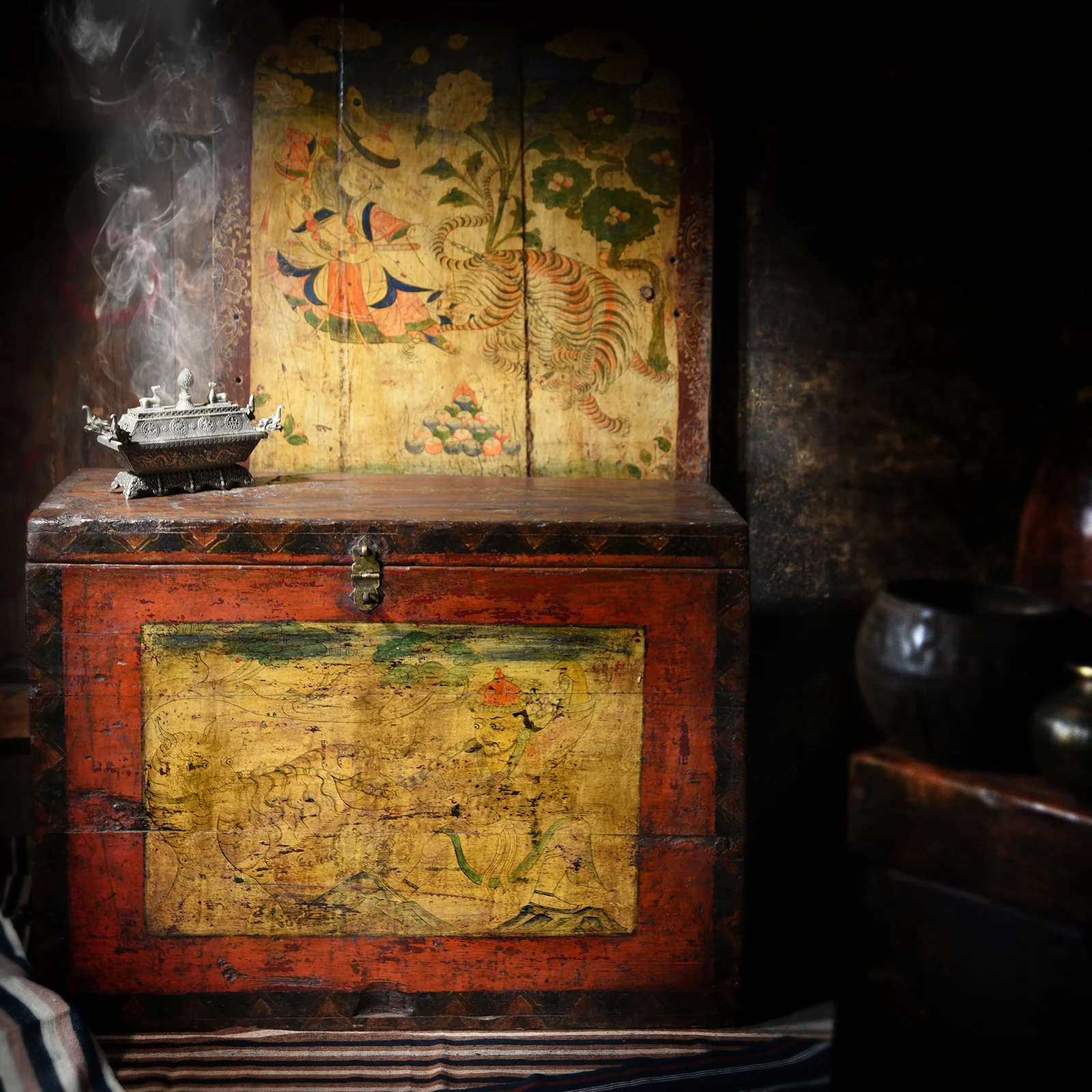
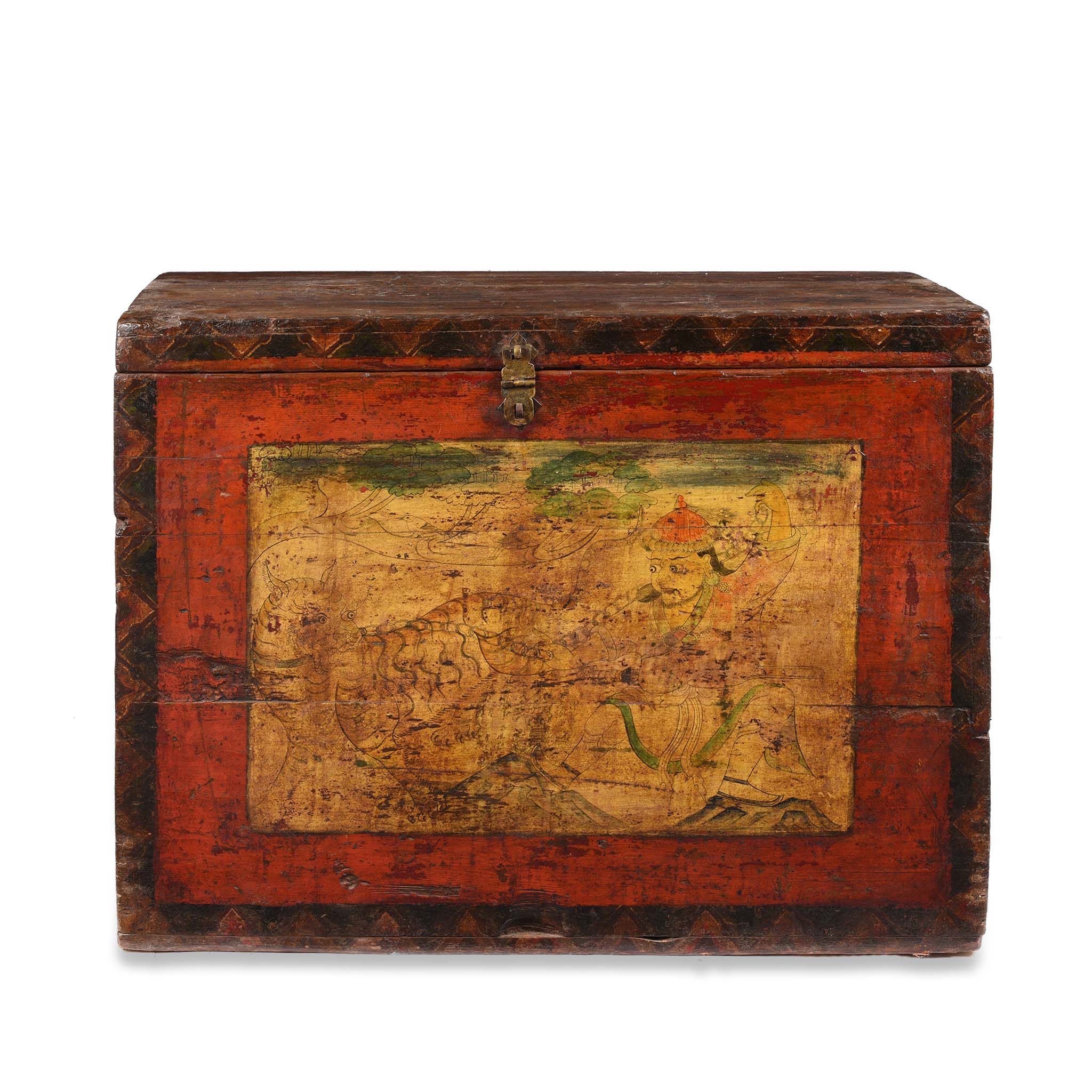
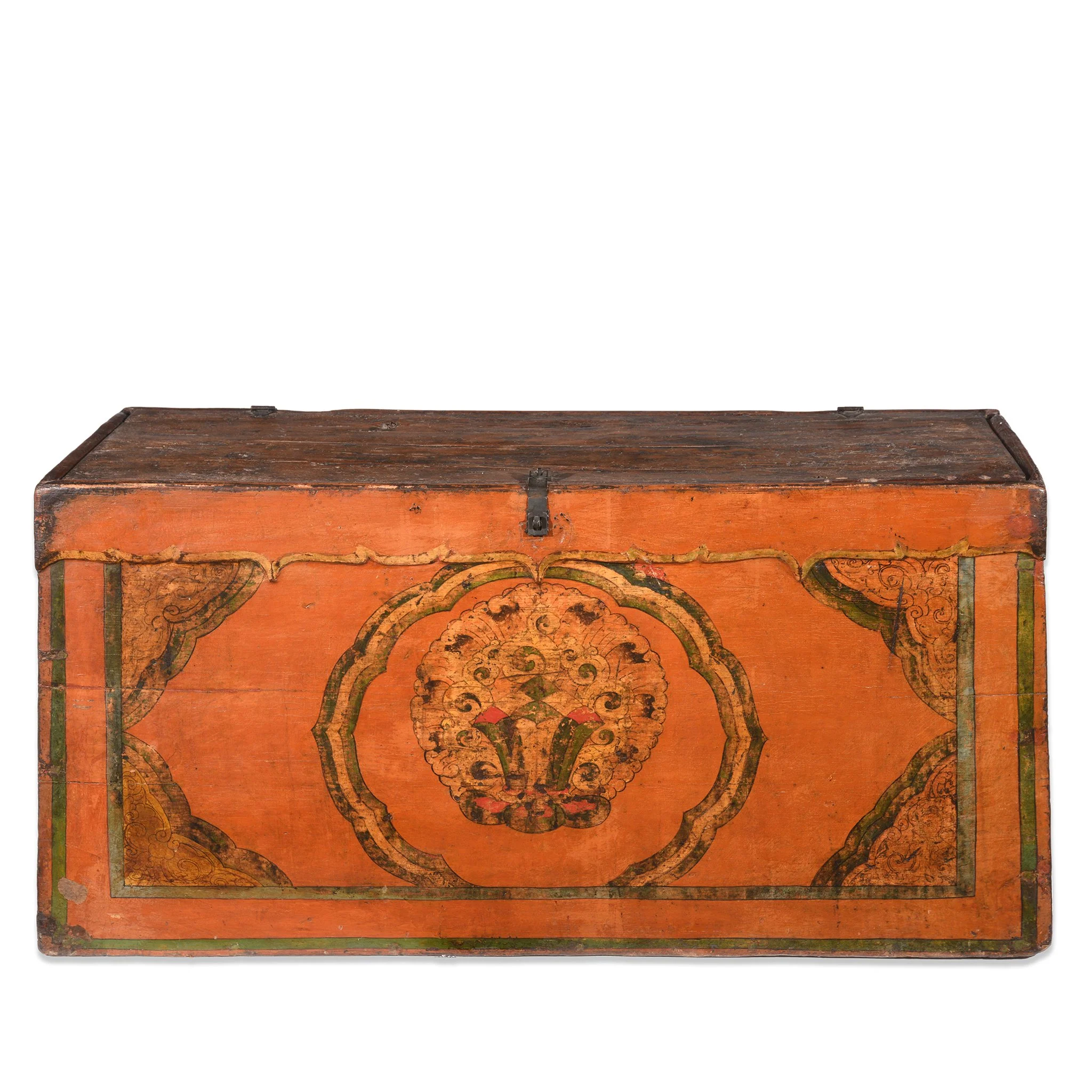
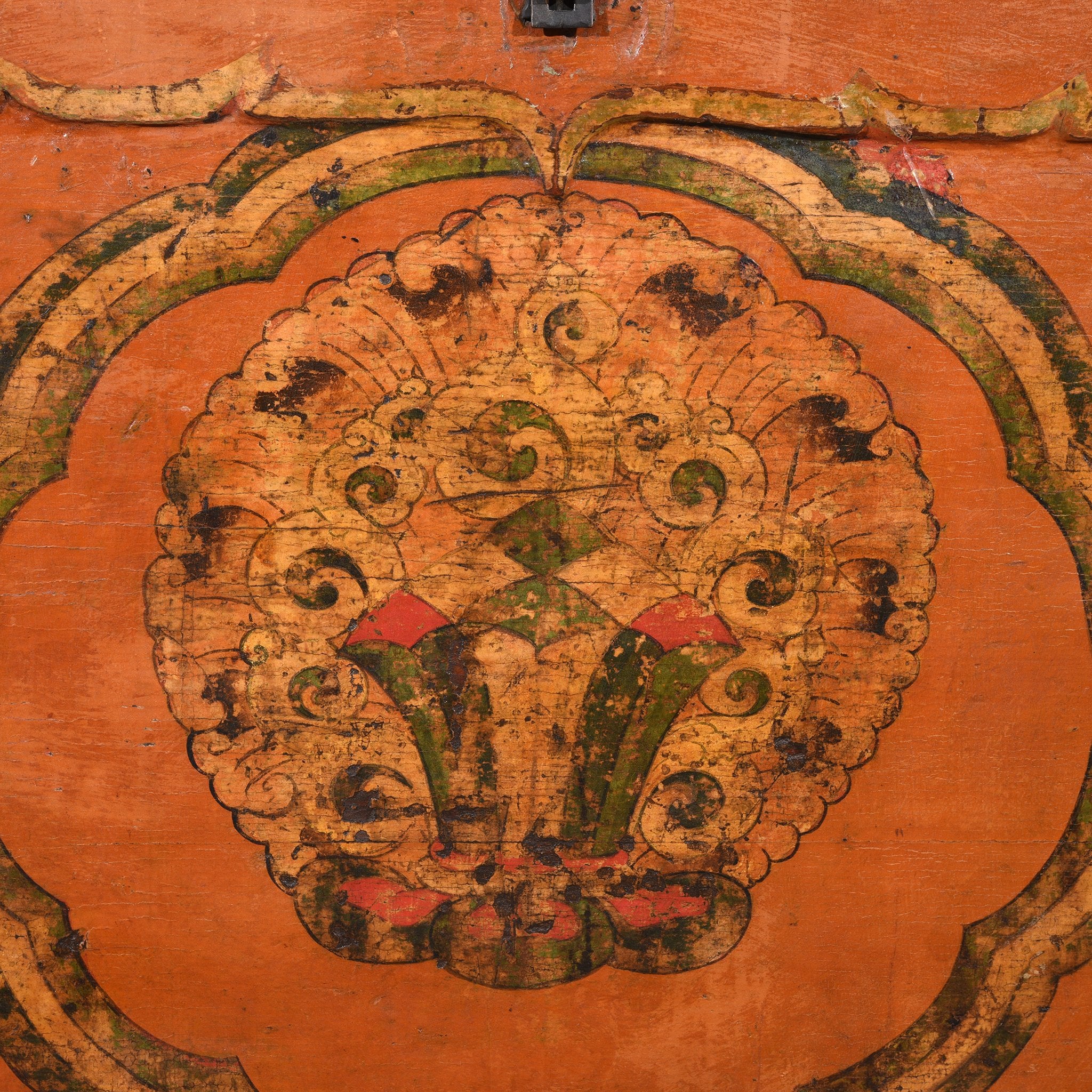
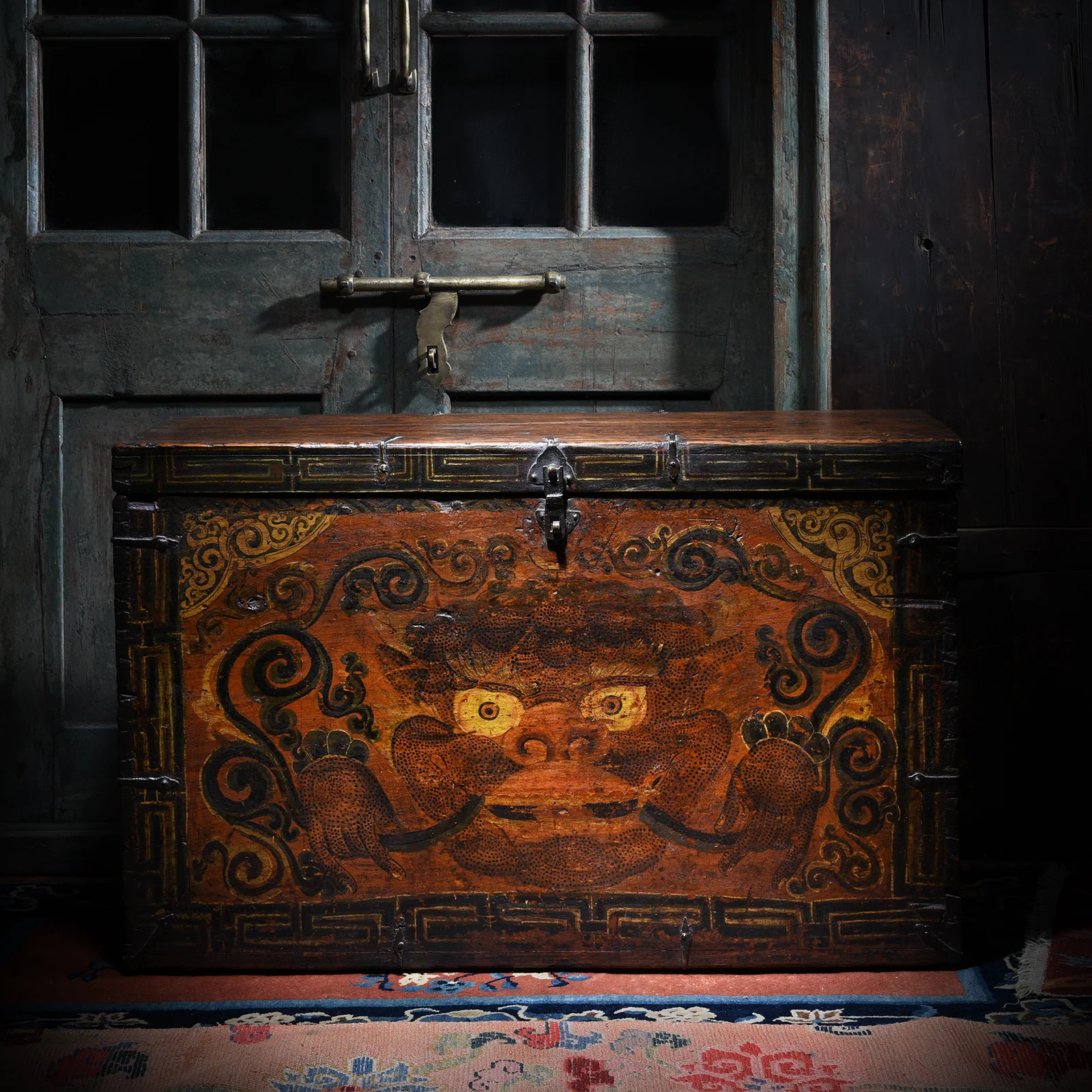
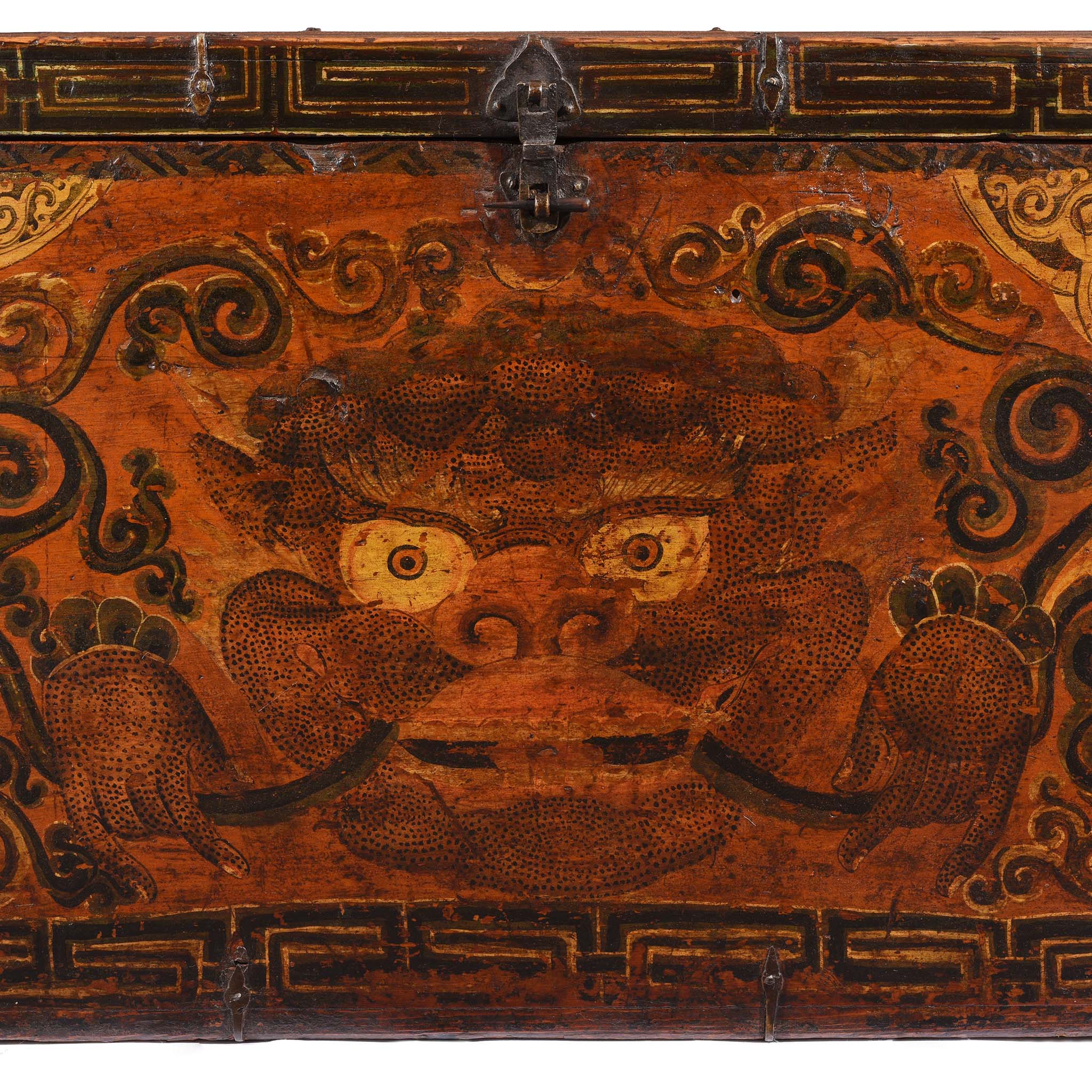
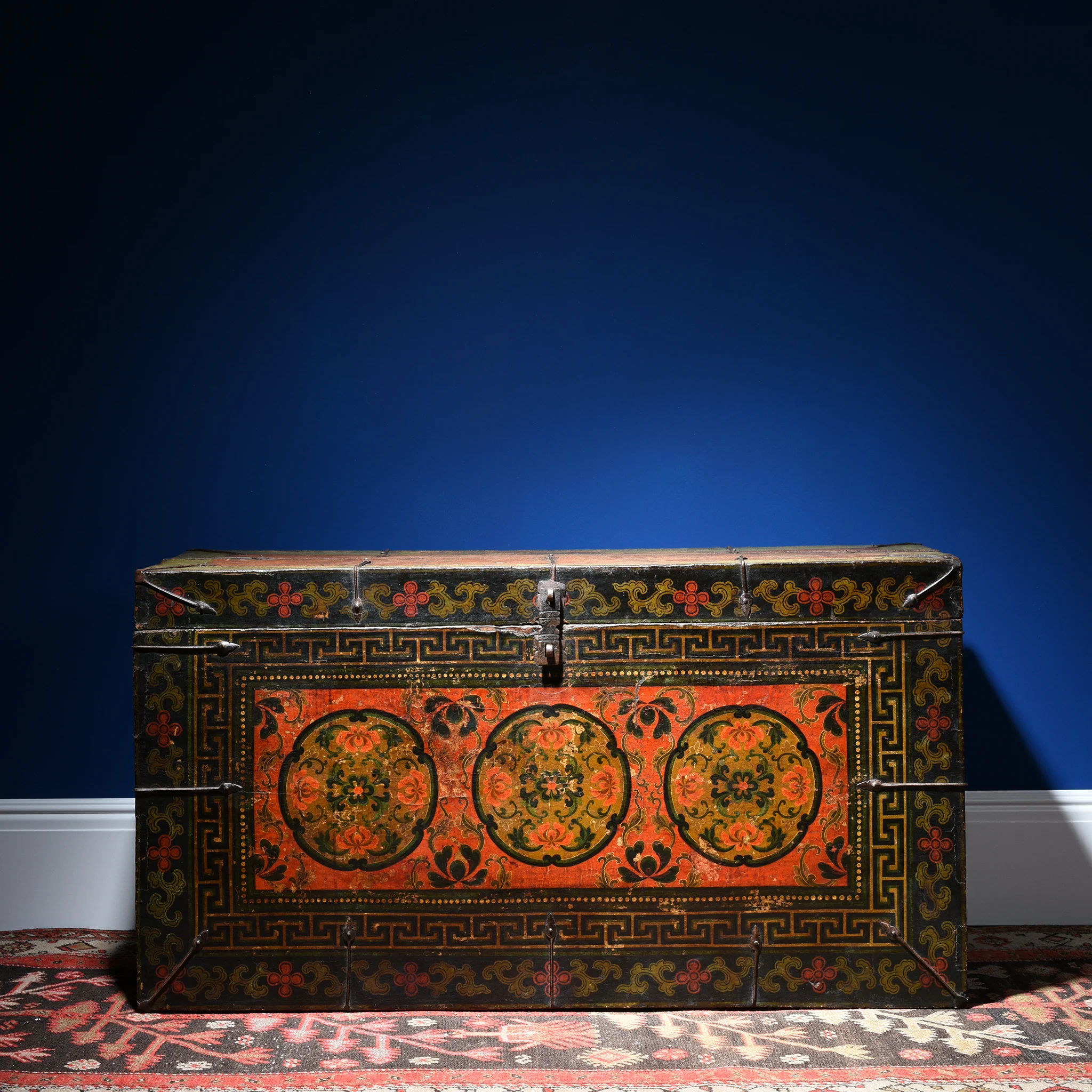
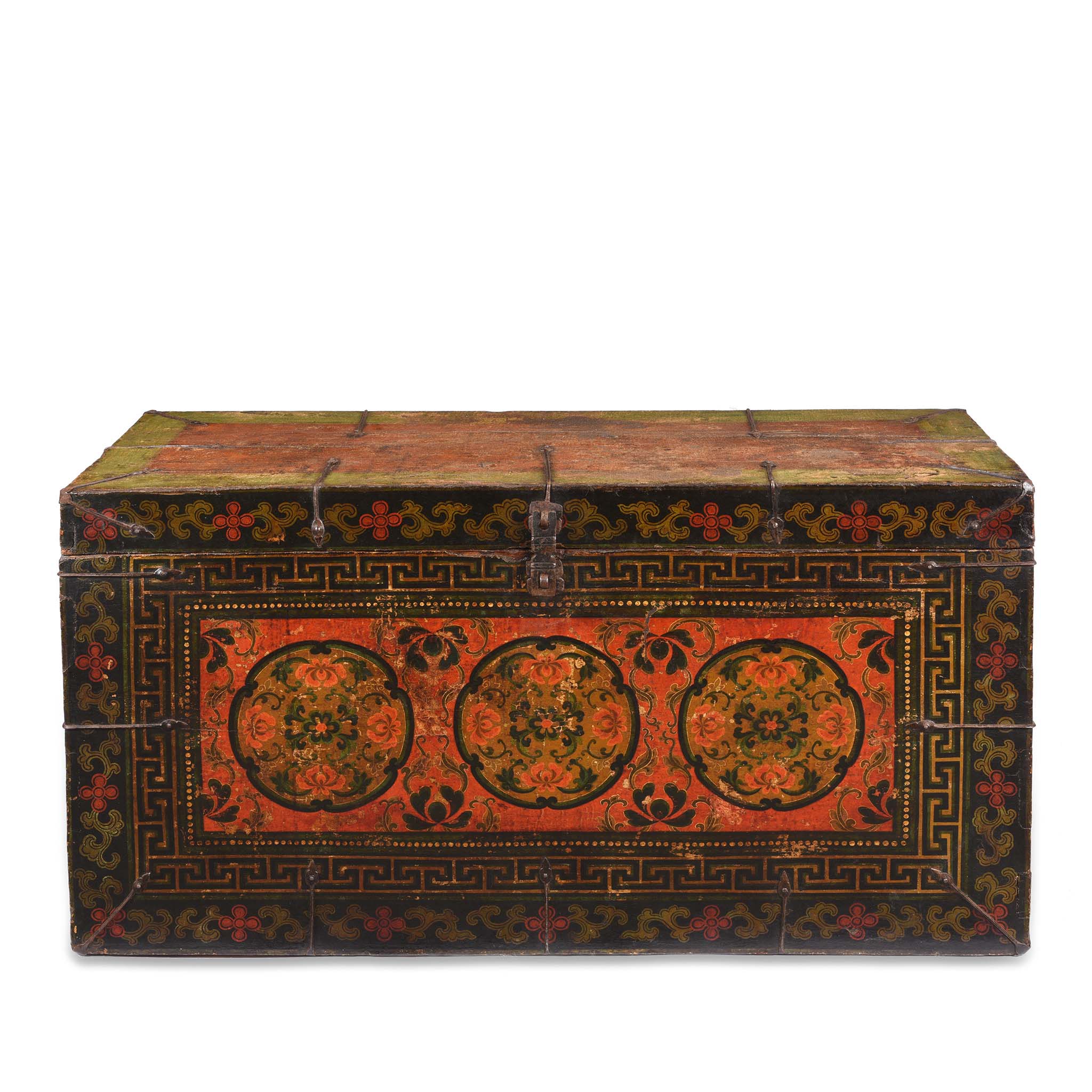
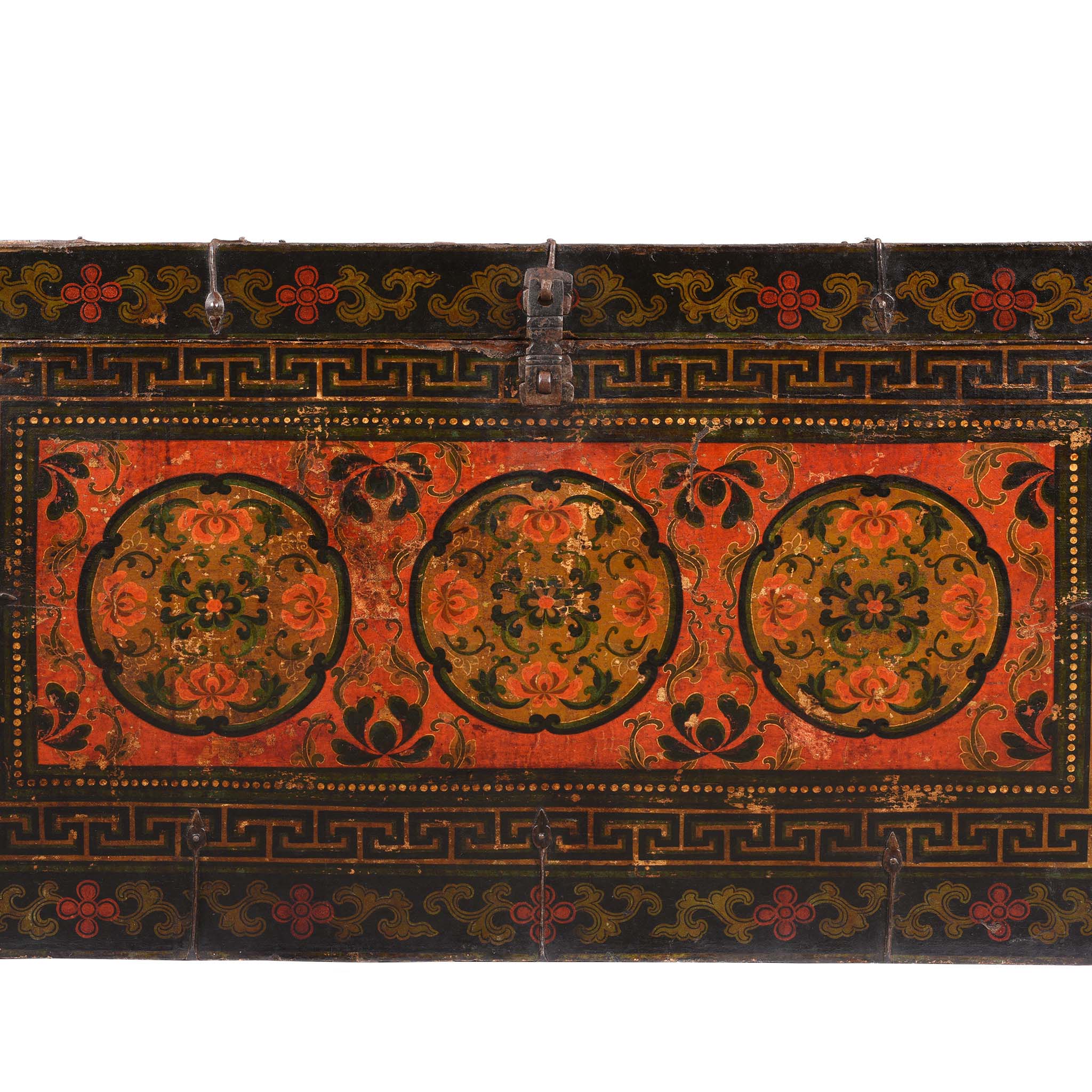
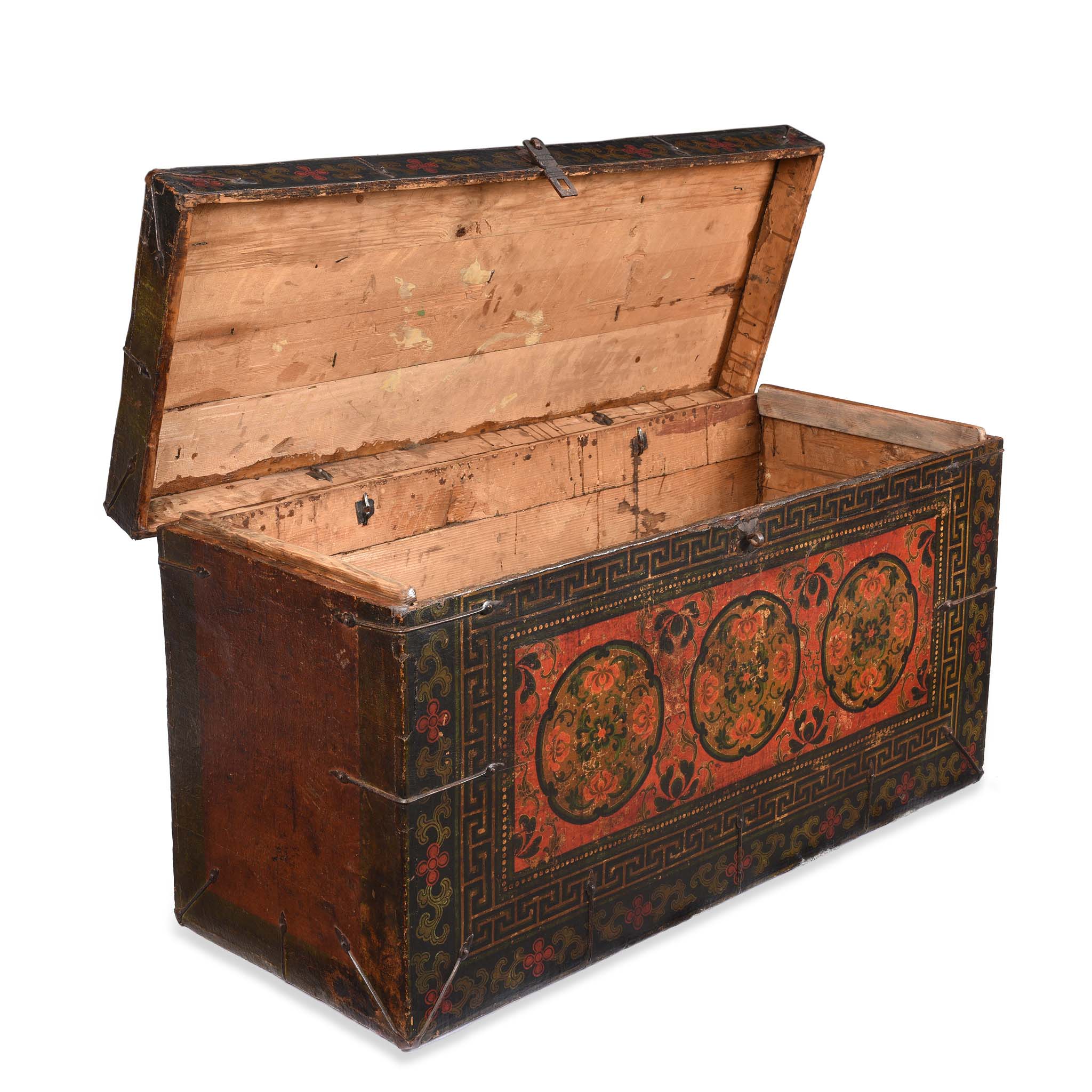
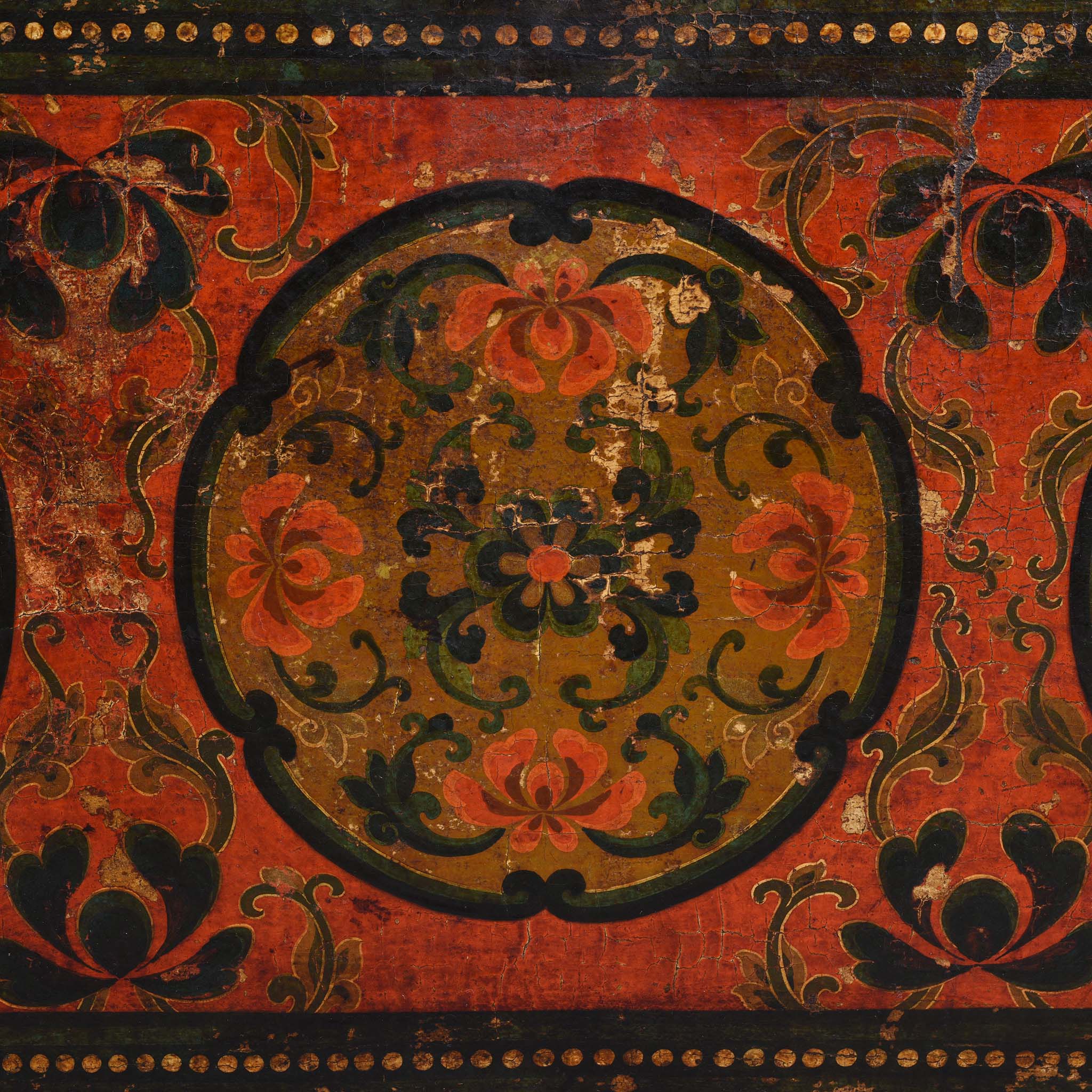
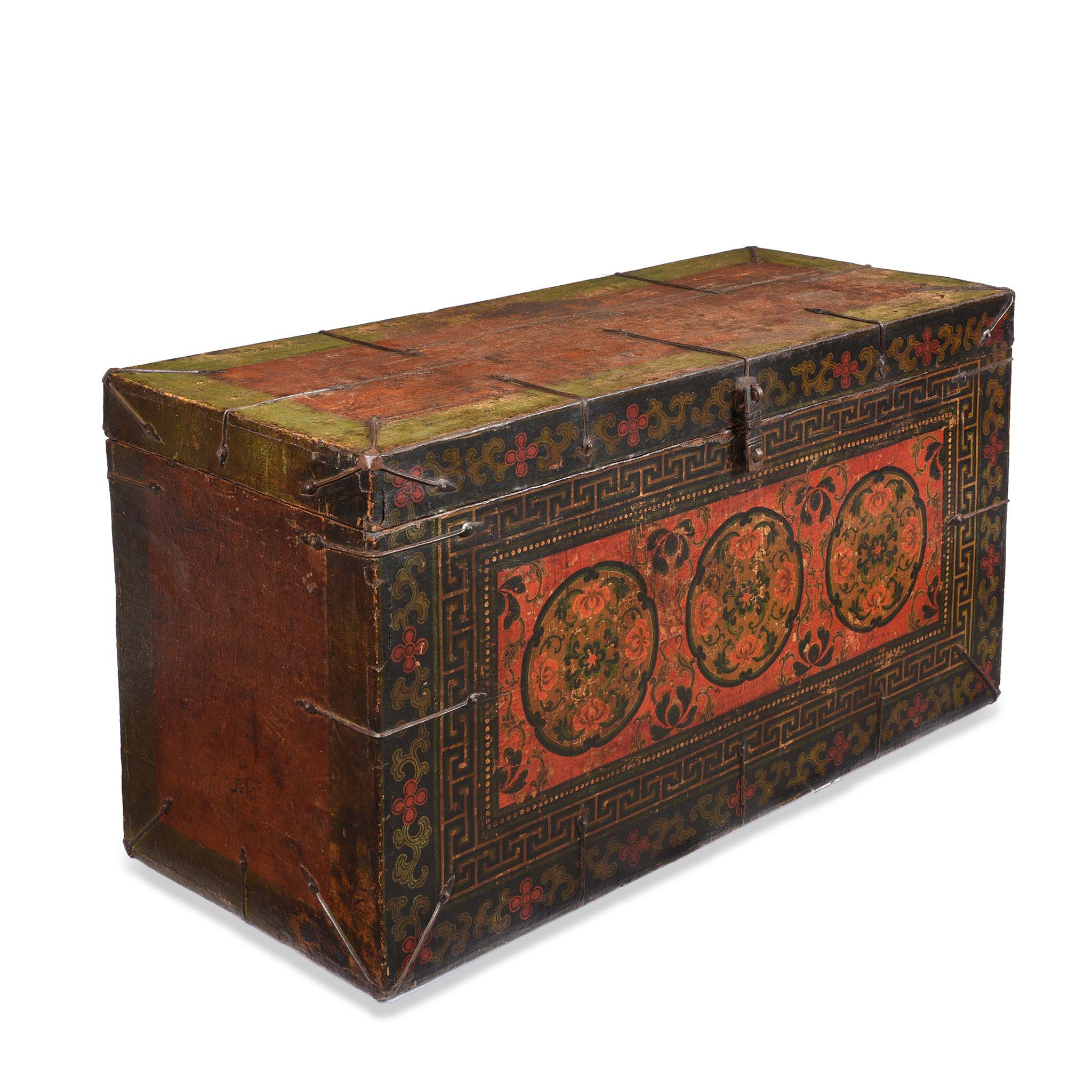
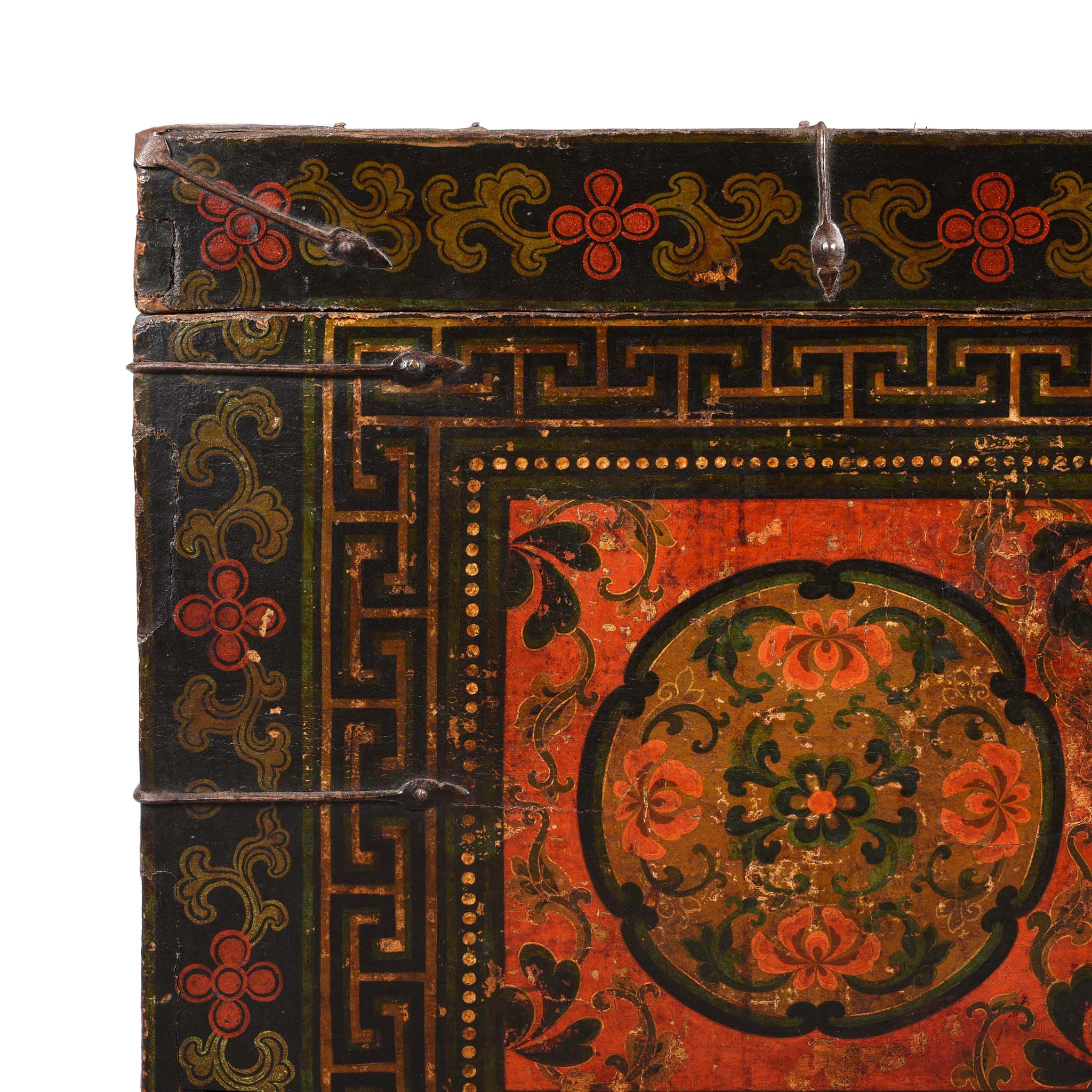
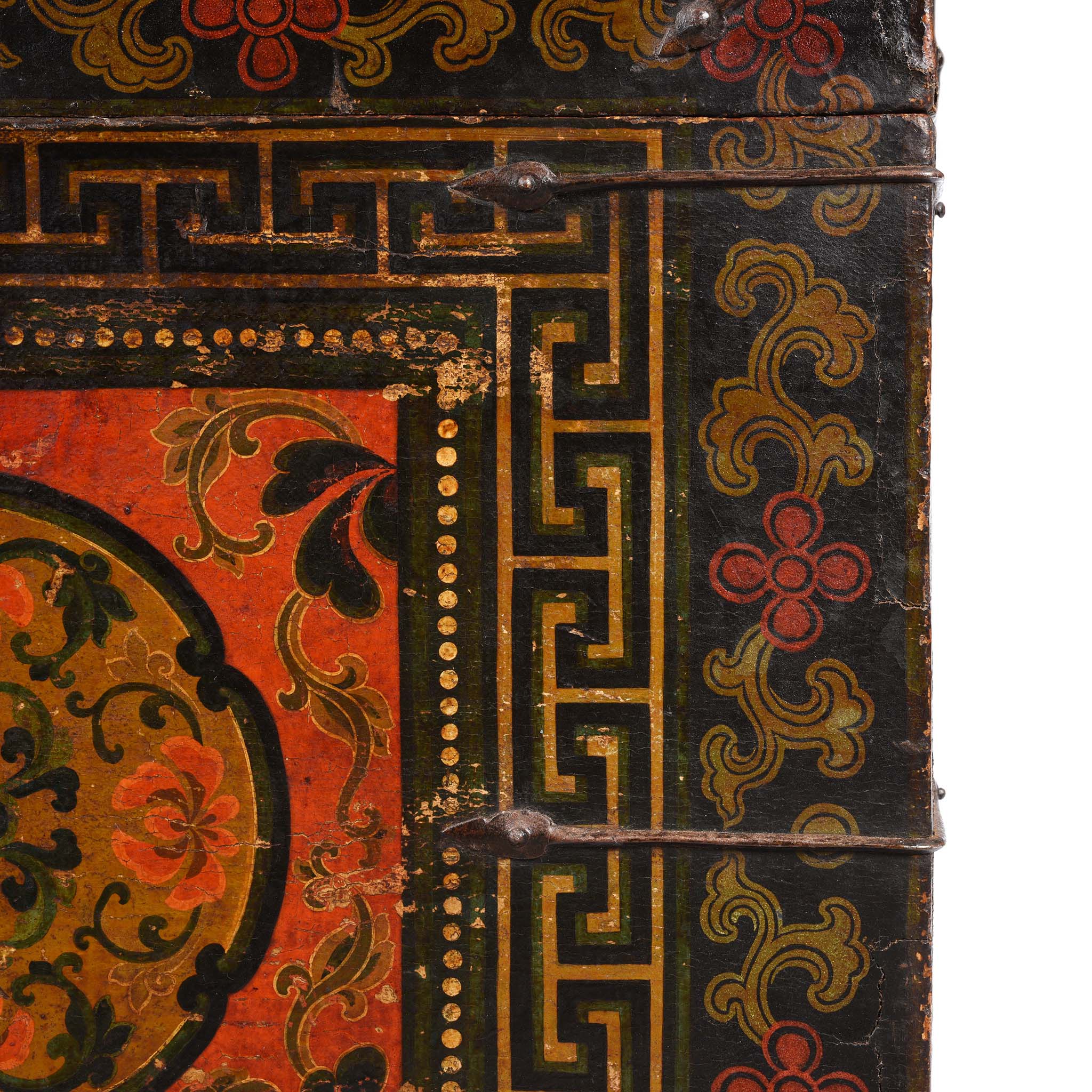
This Tibetan storage chest is painted with a triple medallion scheme on a rich red ground, framed by a meander (key) border and scrolling florals. The composition consciously imitates a Tibetan rug field, while the disciplined roundels and borders point to patterns derived from kati rimo silk brocades—textile sources that early Tibetan workshops translated into paint.
As noted by leading studies of Himalayan furniture, painted chests like this served both practical and devotional roles: secure storage for textiles and garments, and—when lined up in ranks—an altar façade whose imagery conveyed auspicious and protective meaning. The present example’s brocade-informed layout and robust ironwork support a cautious attribution to the 17th century.
- Origin: Tibet (Himalayan region)
- Date: 17th century (stylistic comparison with early textile-derived painted chests)
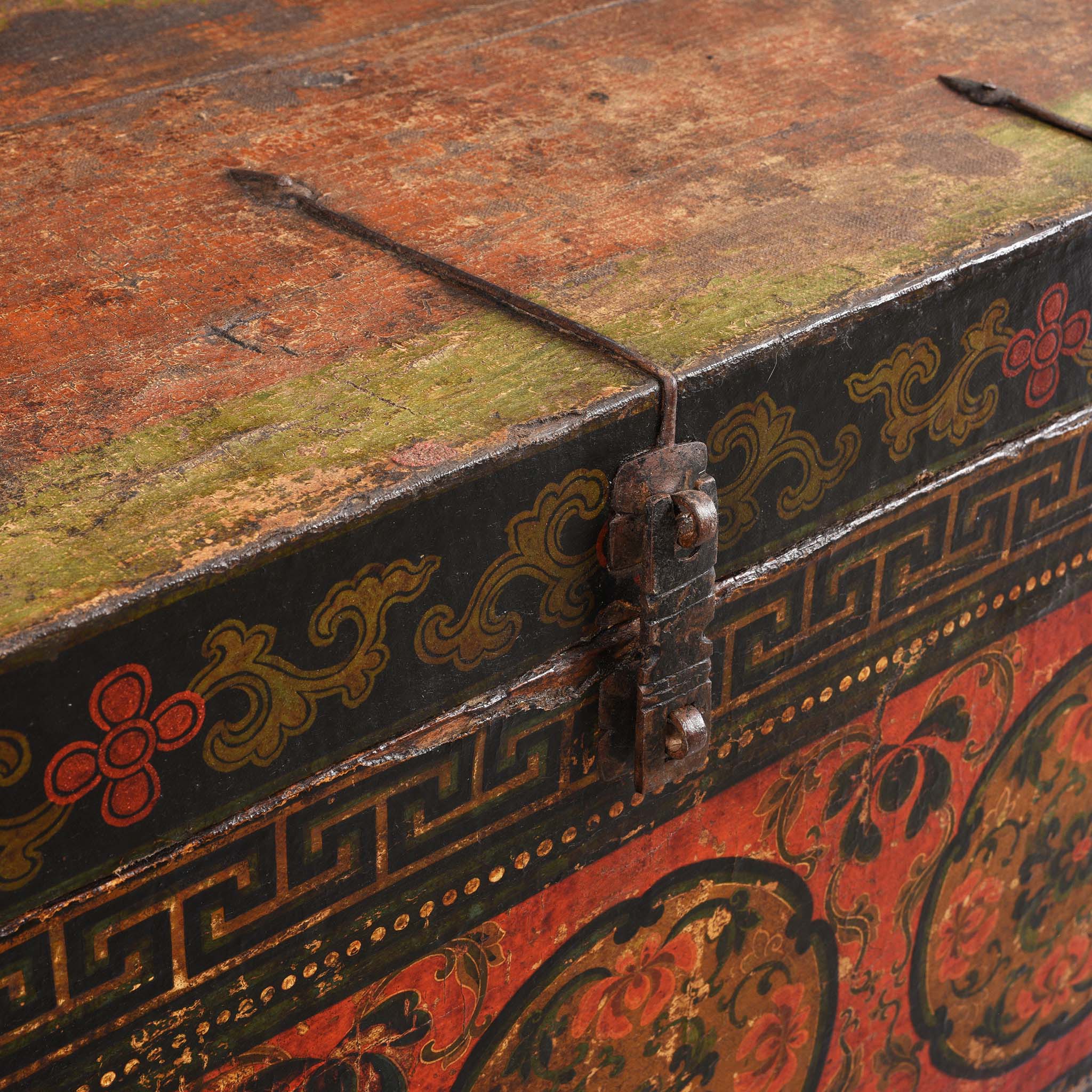
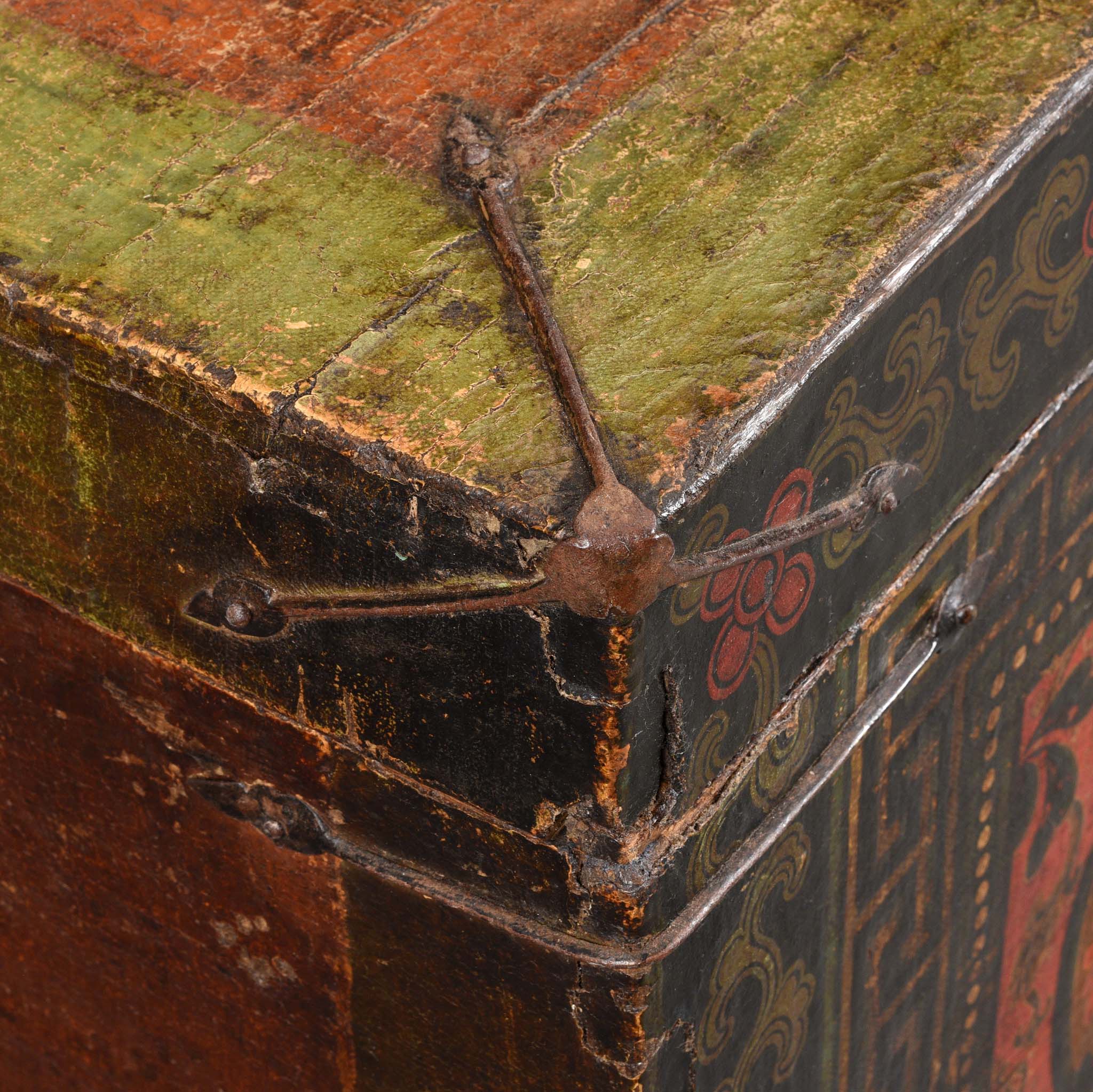
- Main material: Softwood carcass with mineral pigments; iron hasp, strap hinges and corner mounts
- Motifs: Triple medallion “rug” layout, lotus scrolls, meander/key-pattern border, rosettes
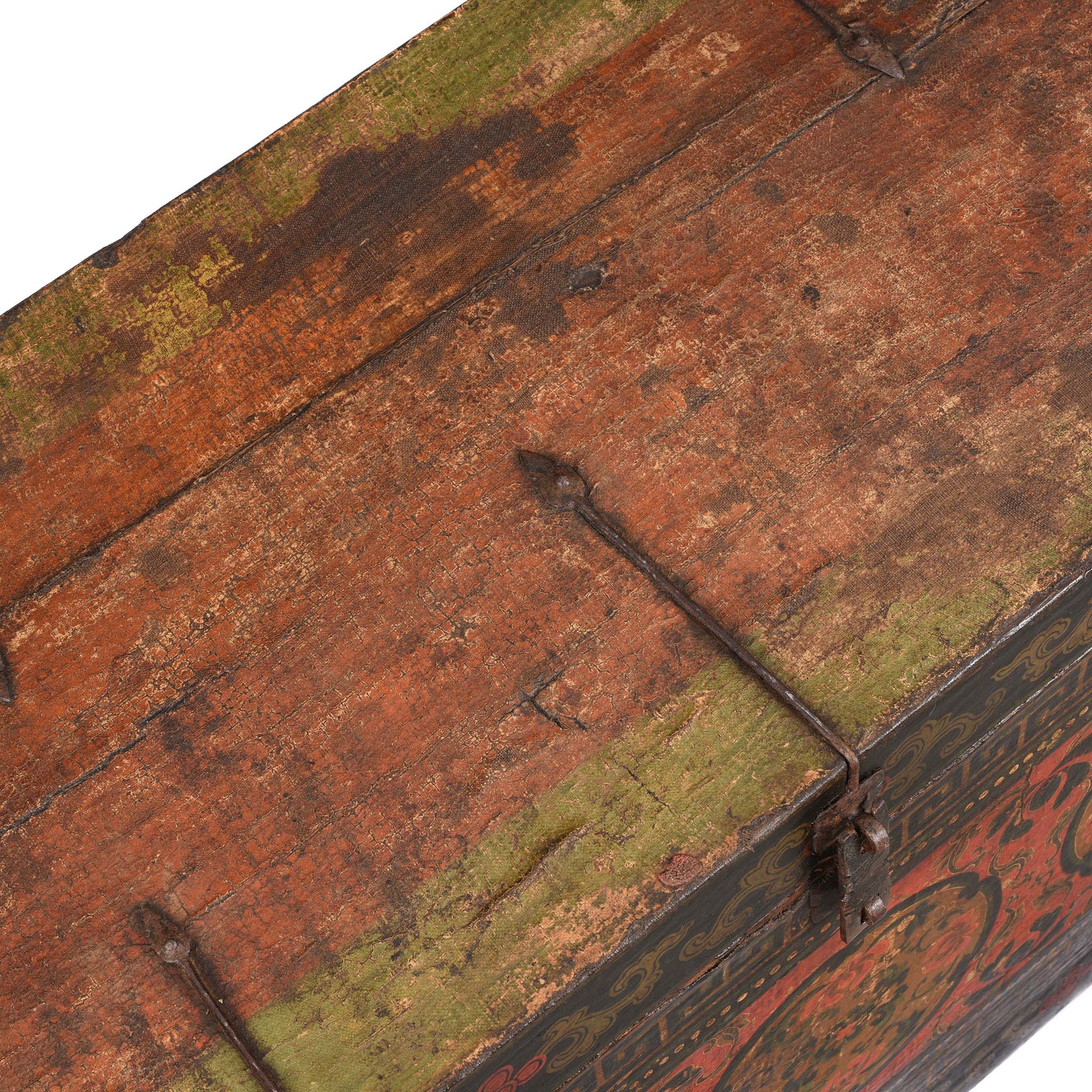
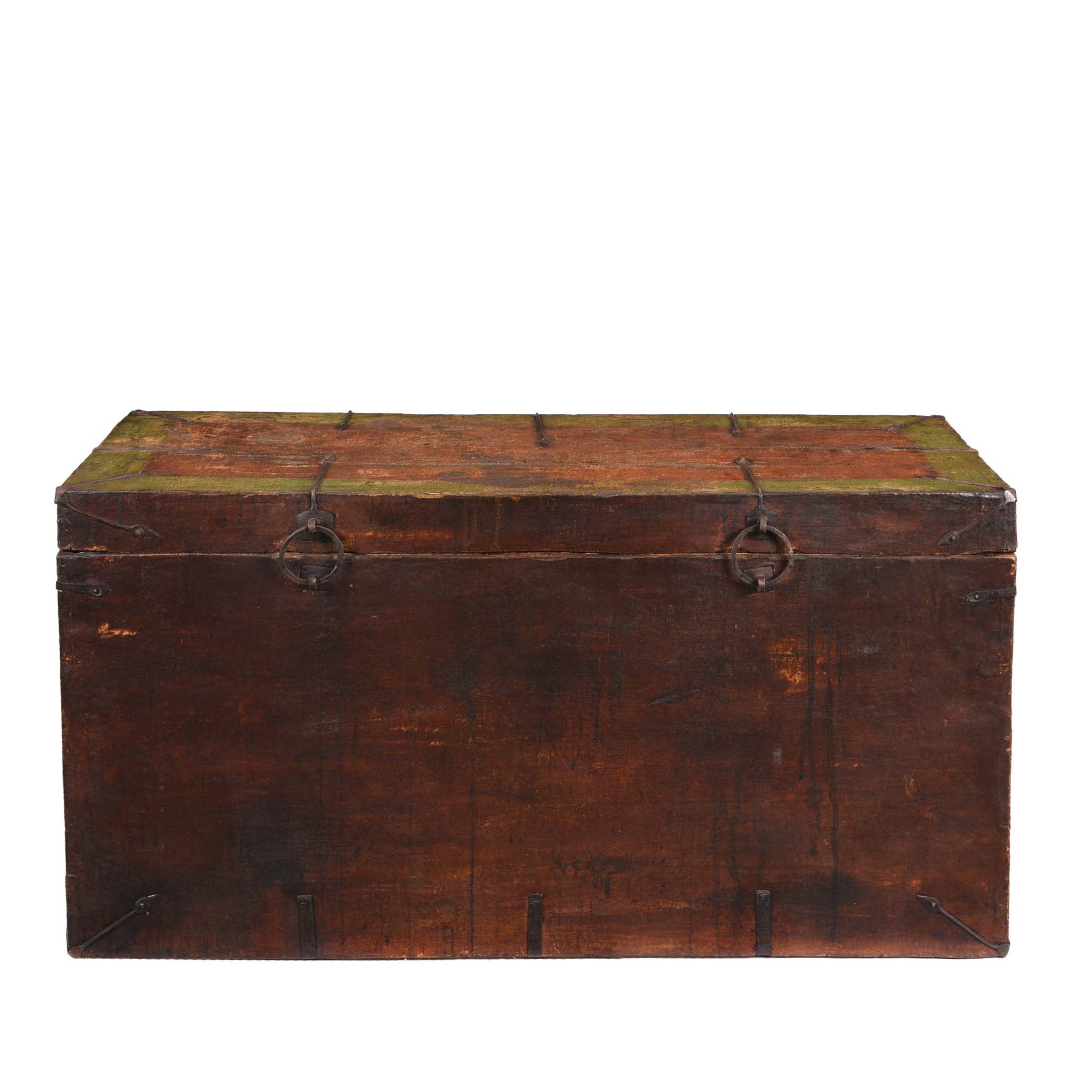
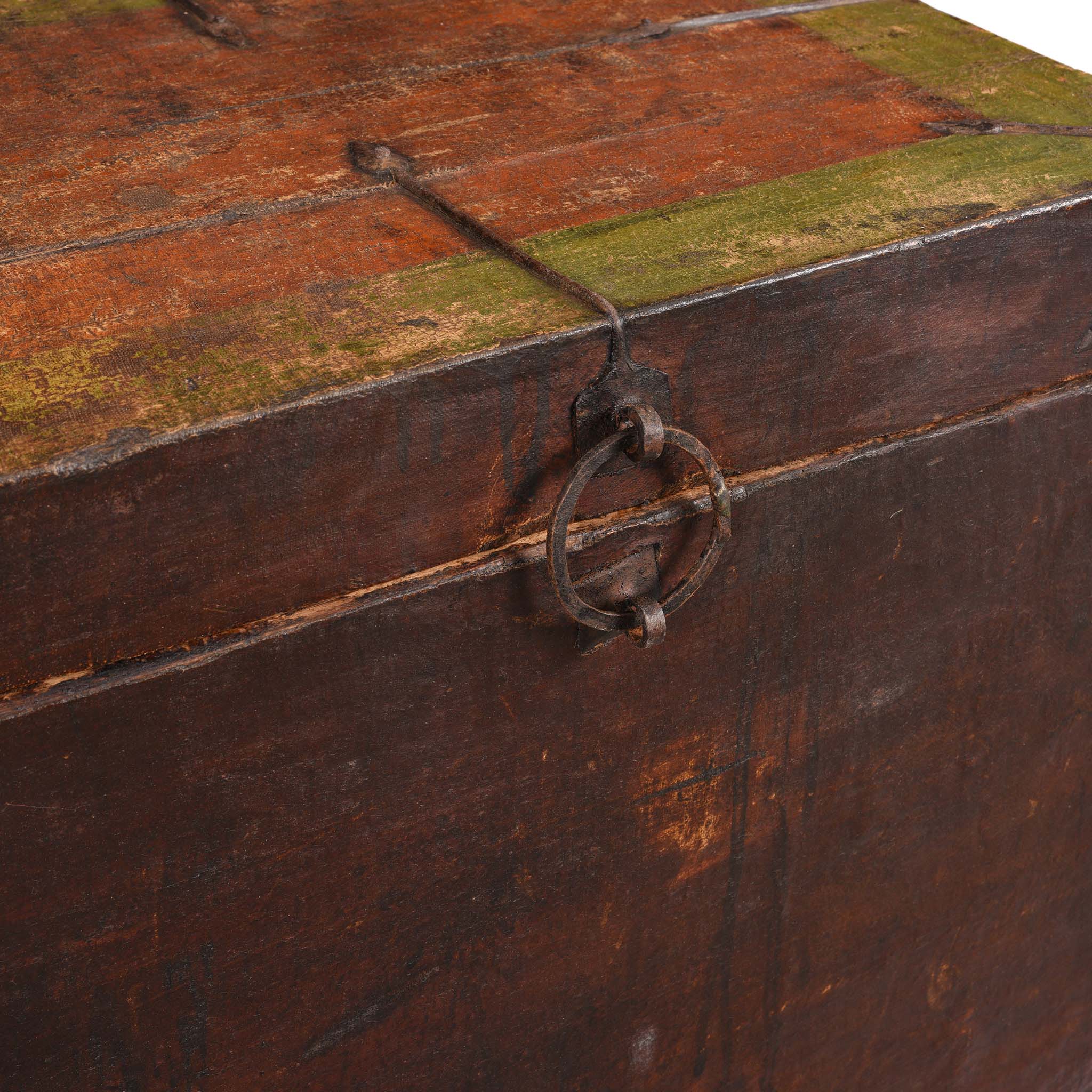
- Construction: Dovetailed carcass with plank lid; painted front panel within a black framed surround; heavy ironwork for stacking and transport
- Function: Storage for clothing and festival textiles; commonly arranged to form domestic or monastic altar walls
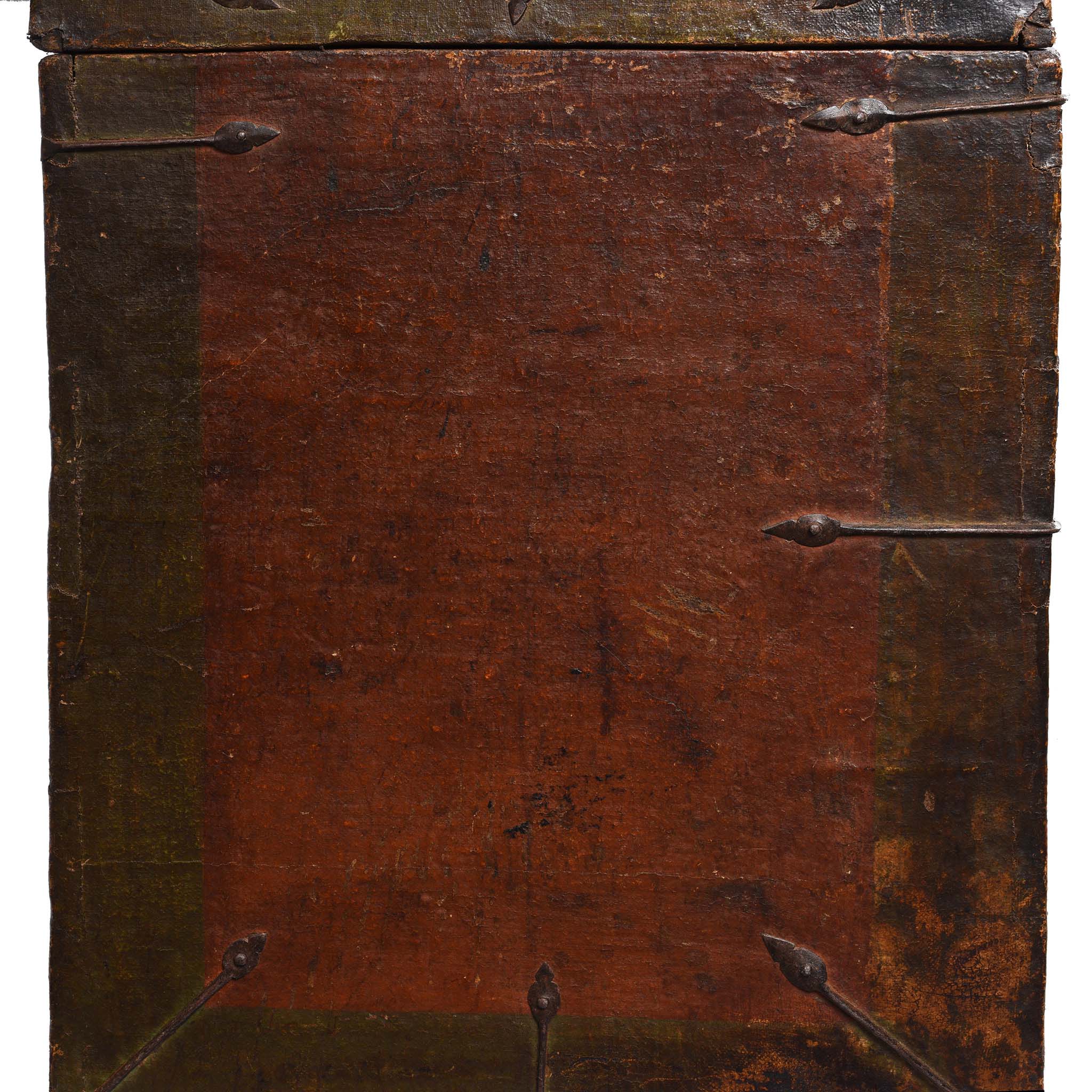
- Condition: Surface wear, age toning and small paint losses from long use; structurally sound and well presented
- References: Chris Buckley, Tibetan Furniture: Identifying · Appreciating · Collecting (River Books, 2005); David Kamansky (ed.), Wooden Wonders: Tibetan Furniture in Secular and Religious Life (2004); Dale Carolyn Gluckman, “A Multifaceted Relationship: Textiles and Tibetan Painted Furniture” (LACMA, 2003).
A rare early painted Tibetan chest in which brocade-derived roundels and a disciplined “rug” layout capture the deep dialogue between textiles and furniture in Himalayan material culture.
Product Information
Product Information
Shipping & Returns
Shipping & Returns
Painted Tibetan Storage Chest - 17th Century
Painted Tibetan Storage Chest - 17th Century
This Tibetan storage chest is painted with a triple medallion scheme on a rich red ground, framed by a meander (key) border and scrolling florals. The composition consciously imitates a Tibetan rug field, while the disciplined roundels and borders point to patterns derived from kati rimo silk brocades—textile sources that early Tibetan workshops translated into paint.
As noted by leading studies of Himalayan furniture, painted chests like this served both practical and devotional roles: secure storage for textiles and garments, and—when lined up in ranks—an altar façade whose imagery conveyed auspicious and protective meaning. The present example’s brocade-informed layout and robust ironwork support a cautious attribution to the 17th century.
- Origin: Tibet (Himalayan region)
- Date: 17th century (stylistic comparison with early textile-derived painted chests)
- Main material: Softwood carcass with mineral pigments; iron hasp, strap hinges and corner mounts
- Motifs: Triple medallion “rug” layout, lotus scrolls, meander/key-pattern border, rosettes
- Construction: Dovetailed carcass with plank lid; painted front panel within a black framed surround; heavy ironwork for stacking and transport
- Function: Storage for clothing and festival textiles; commonly arranged to form domestic or monastic altar walls
- Condition: Surface wear, age toning and small paint losses from long use; structurally sound and well presented
- References: Chris Buckley, Tibetan Furniture: Identifying · Appreciating · Collecting (River Books, 2005); David Kamansky (ed.), Wooden Wonders: Tibetan Furniture in Secular and Religious Life (2004); Dale Carolyn Gluckman, “A Multifaceted Relationship: Textiles and Tibetan Painted Furniture” (LACMA, 2003).
A rare early painted Tibetan chest in which brocade-derived roundels and a disciplined “rug” layout capture the deep dialogue between textiles and furniture in Himalayan material culture.
Product Information
Product Information
Shipping & Returns
Shipping & Returns
Description
This Tibetan storage chest is painted with a triple medallion scheme on a rich red ground, framed by a meander (key) border and scrolling florals. The composition consciously imitates a Tibetan rug field, while the disciplined roundels and borders point to patterns derived from kati rimo silk brocades—textile sources that early Tibetan workshops translated into paint.
As noted by leading studies of Himalayan furniture, painted chests like this served both practical and devotional roles: secure storage for textiles and garments, and—when lined up in ranks—an altar façade whose imagery conveyed auspicious and protective meaning. The present example’s brocade-informed layout and robust ironwork support a cautious attribution to the 17th century.
- Origin: Tibet (Himalayan region)
- Date: 17th century (stylistic comparison with early textile-derived painted chests)
- Main material: Softwood carcass with mineral pigments; iron hasp, strap hinges and corner mounts
- Motifs: Triple medallion “rug” layout, lotus scrolls, meander/key-pattern border, rosettes
- Construction: Dovetailed carcass with plank lid; painted front panel within a black framed surround; heavy ironwork for stacking and transport
- Function: Storage for clothing and festival textiles; commonly arranged to form domestic or monastic altar walls
- Condition: Surface wear, age toning and small paint losses from long use; structurally sound and well presented
- References: Chris Buckley, Tibetan Furniture: Identifying · Appreciating · Collecting (River Books, 2005); David Kamansky (ed.), Wooden Wonders: Tibetan Furniture in Secular and Religious Life (2004); Dale Carolyn Gluckman, “A Multifaceted Relationship: Textiles and Tibetan Painted Furniture” (LACMA, 2003).
A rare early painted Tibetan chest in which brocade-derived roundels and a disciplined “rug” layout capture the deep dialogue between textiles and furniture in Himalayan material culture.