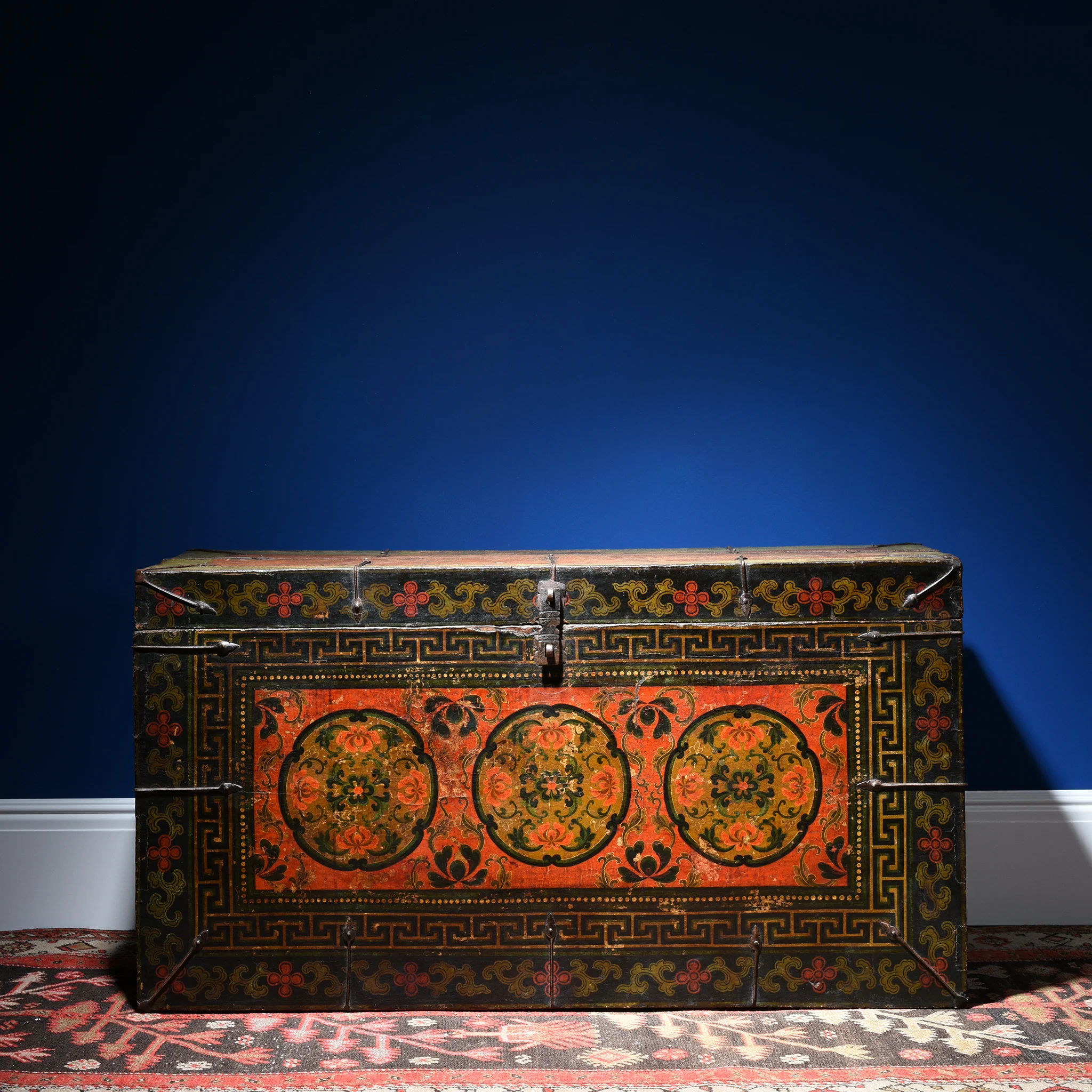
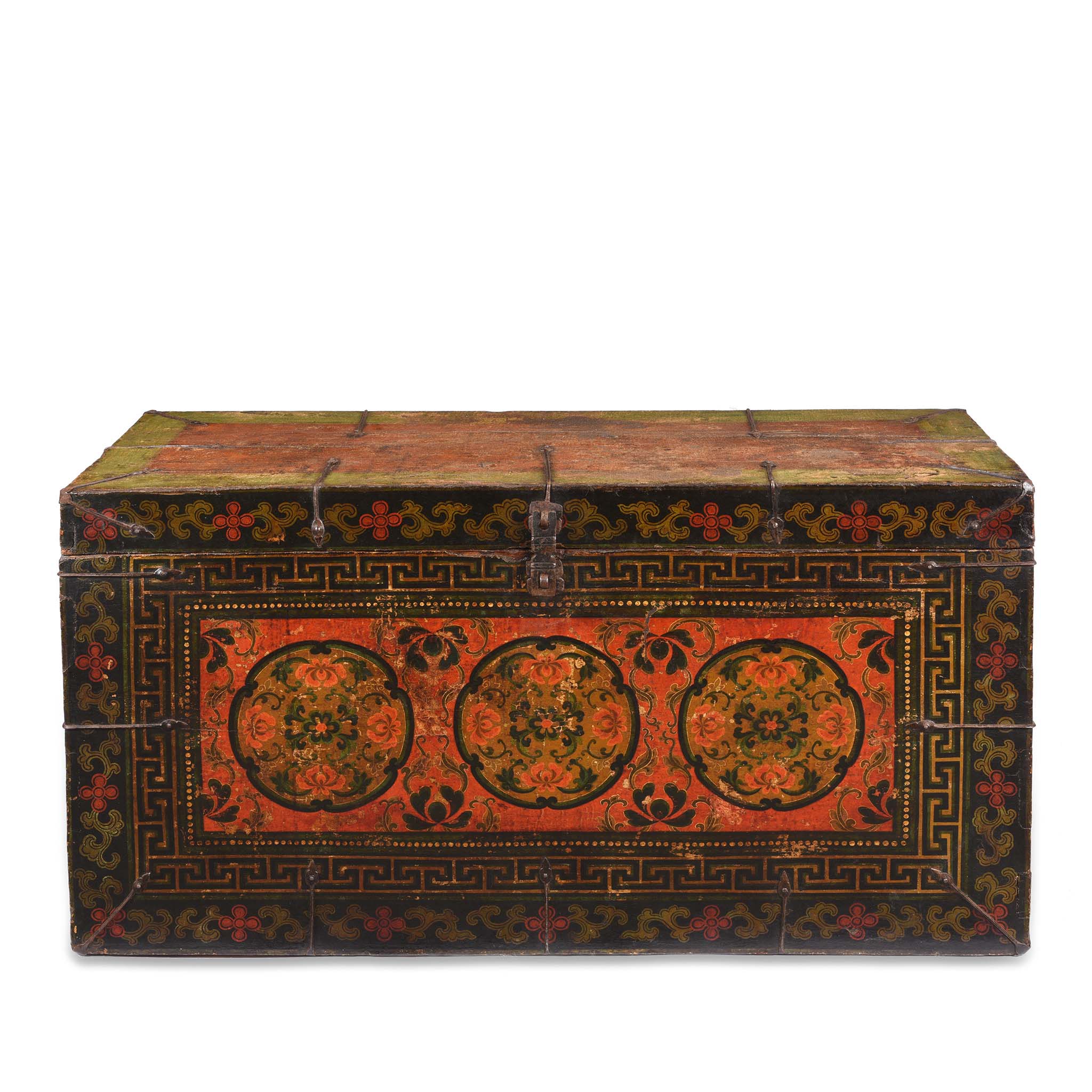
Exceptionally Large Camphor Trunk From Hebei - Early 19th Century
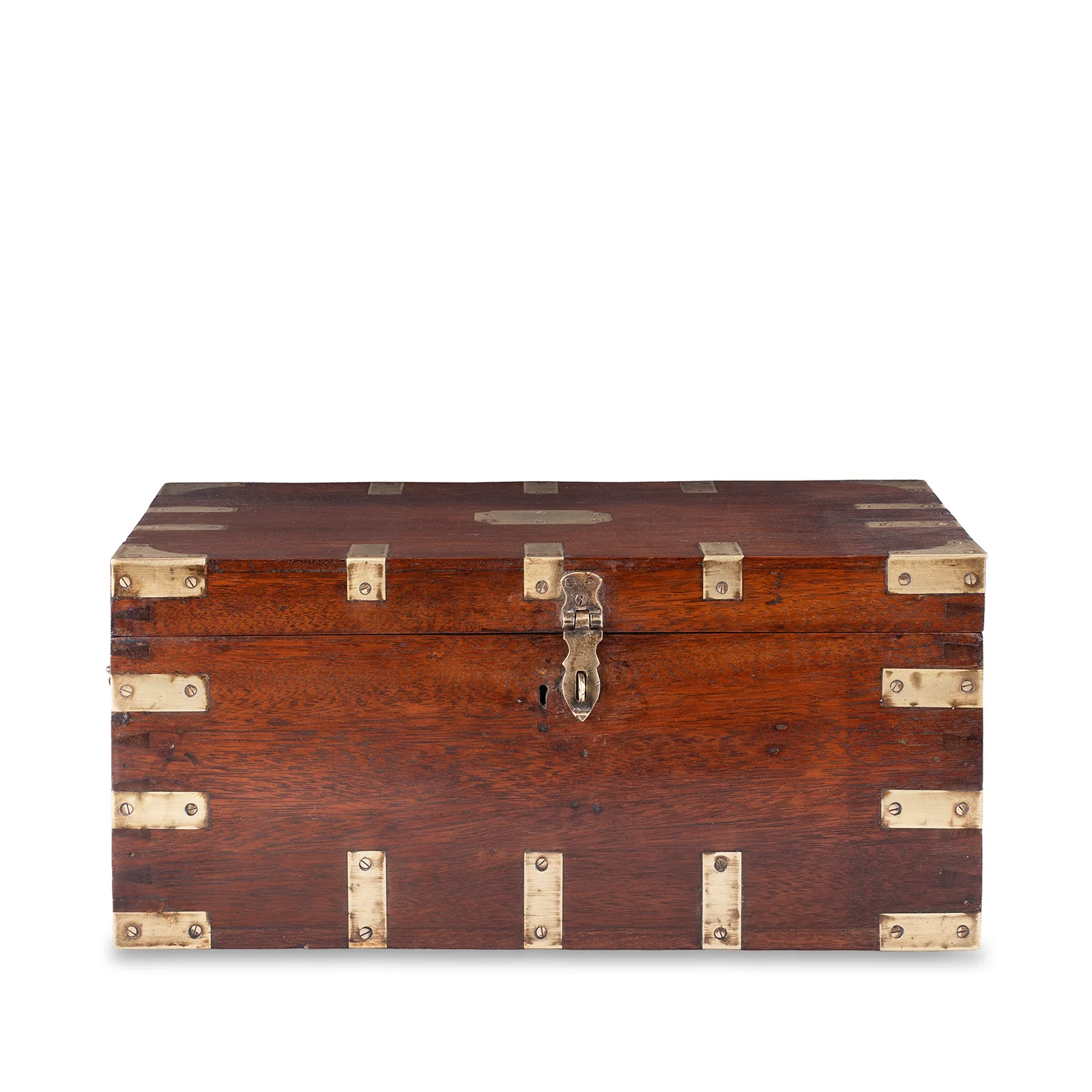
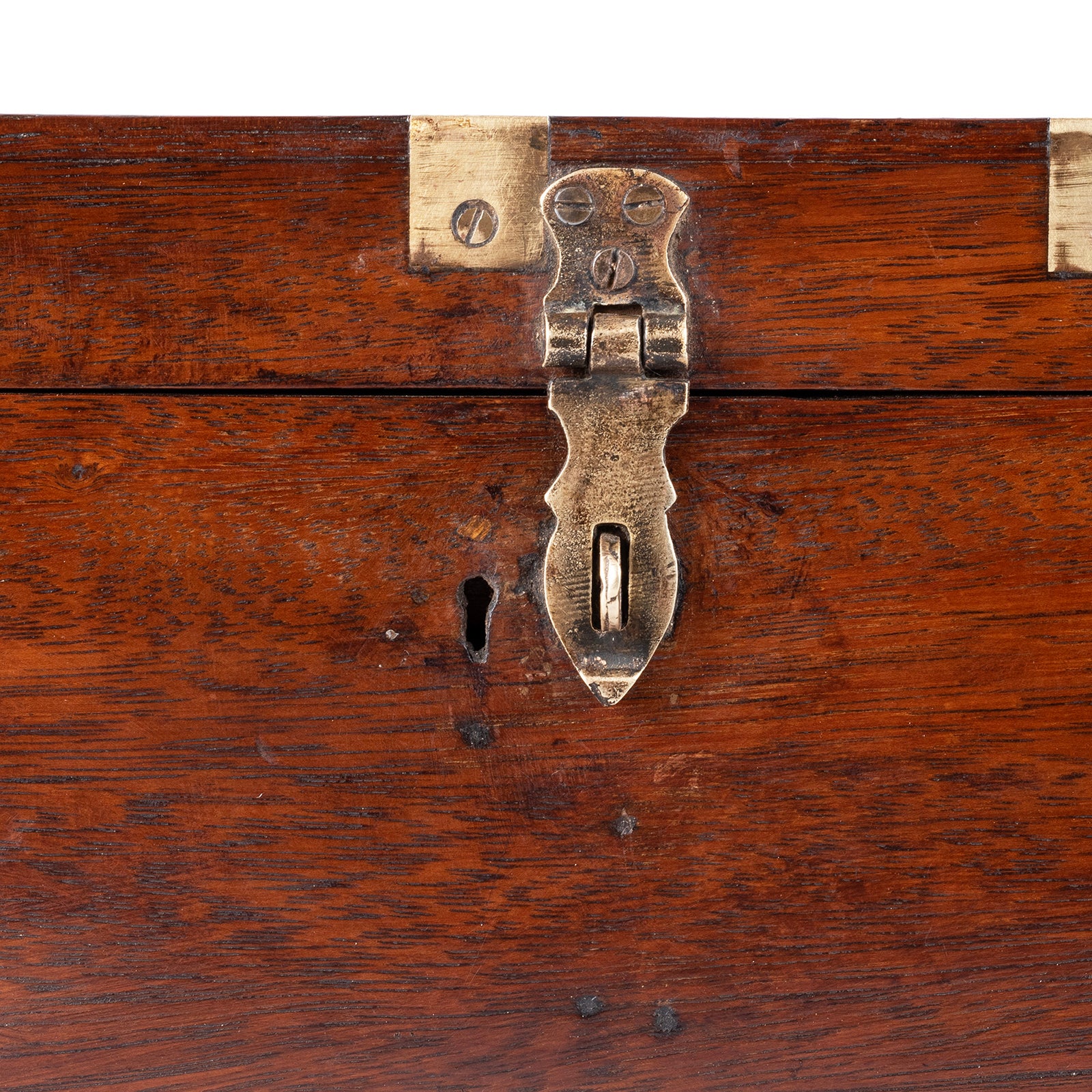
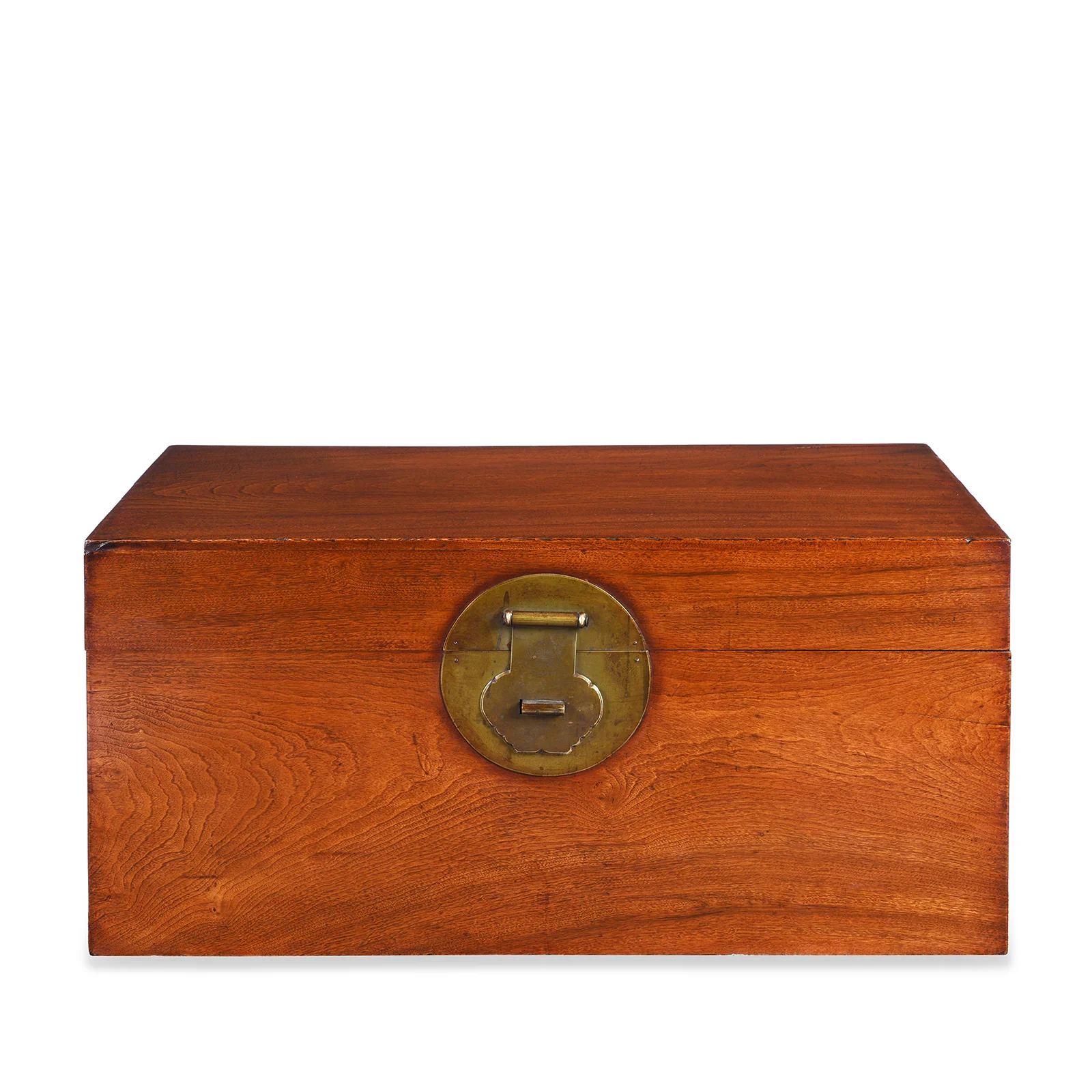
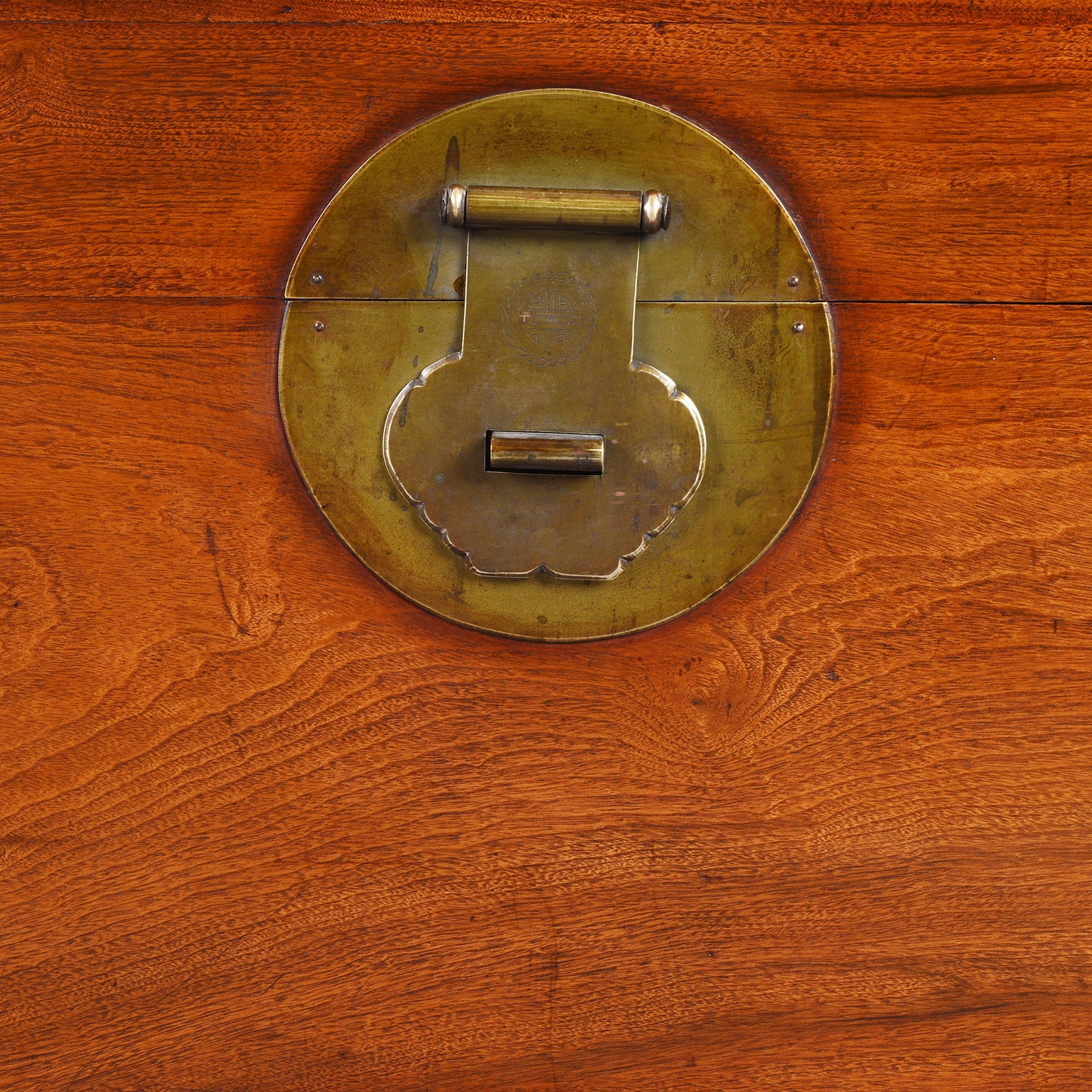
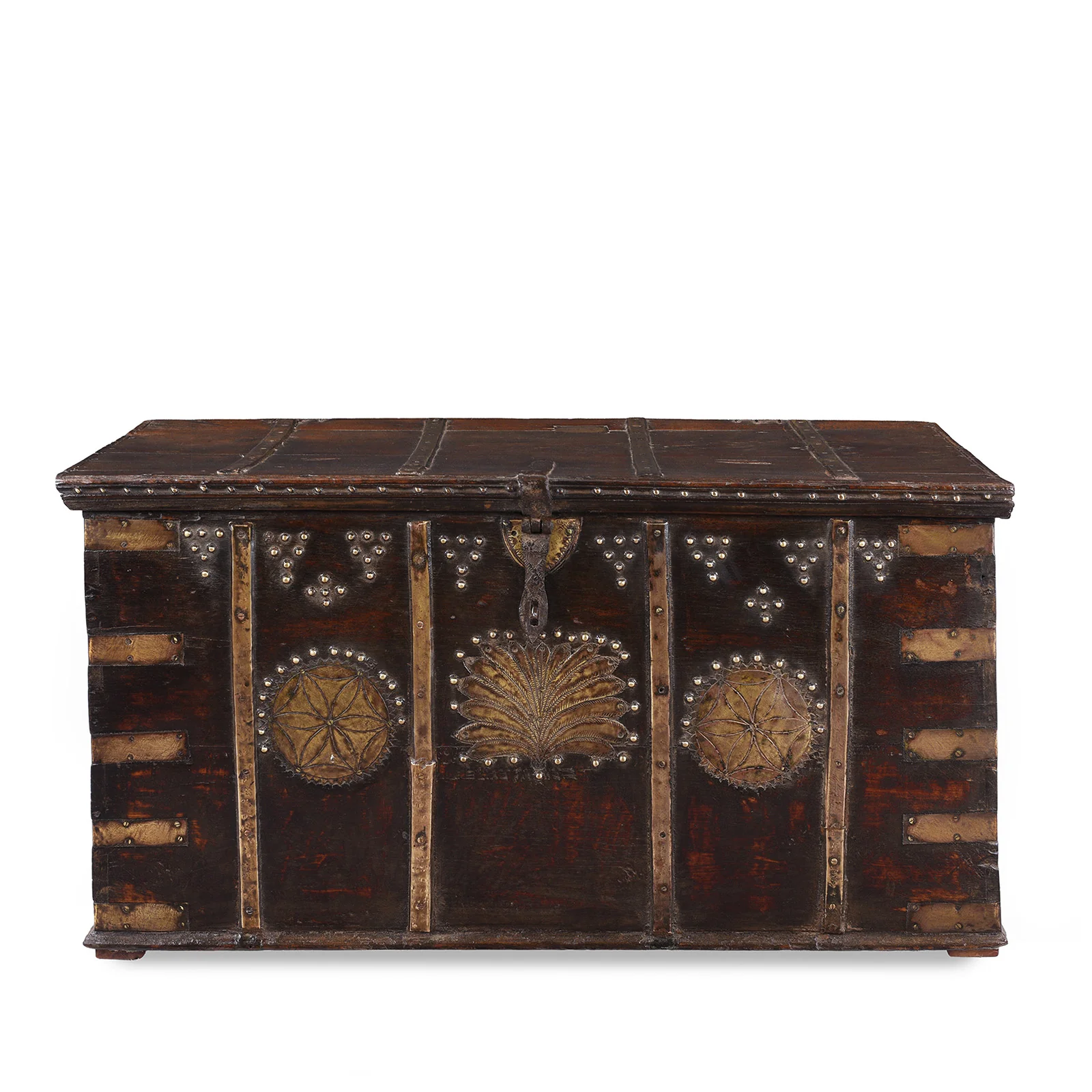
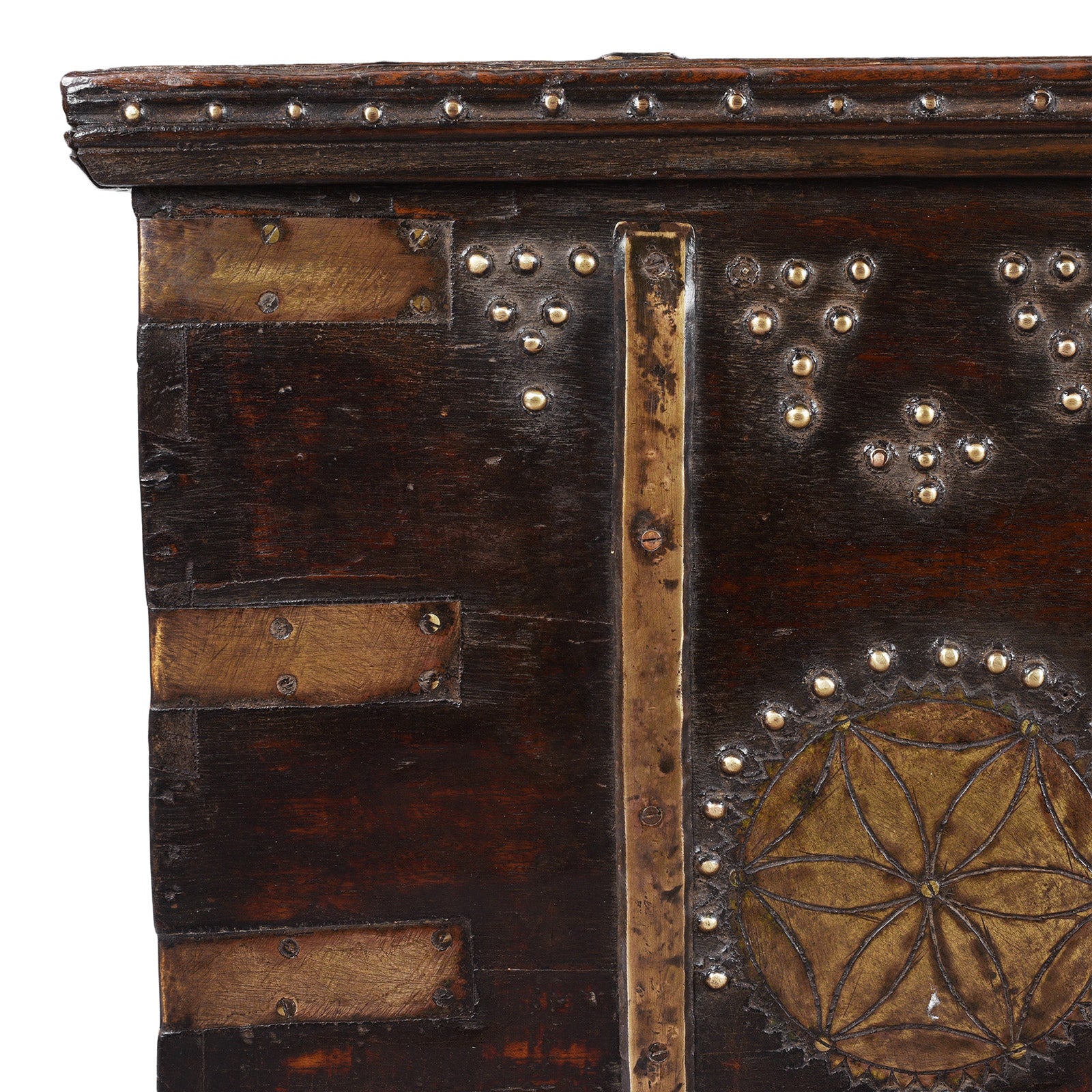
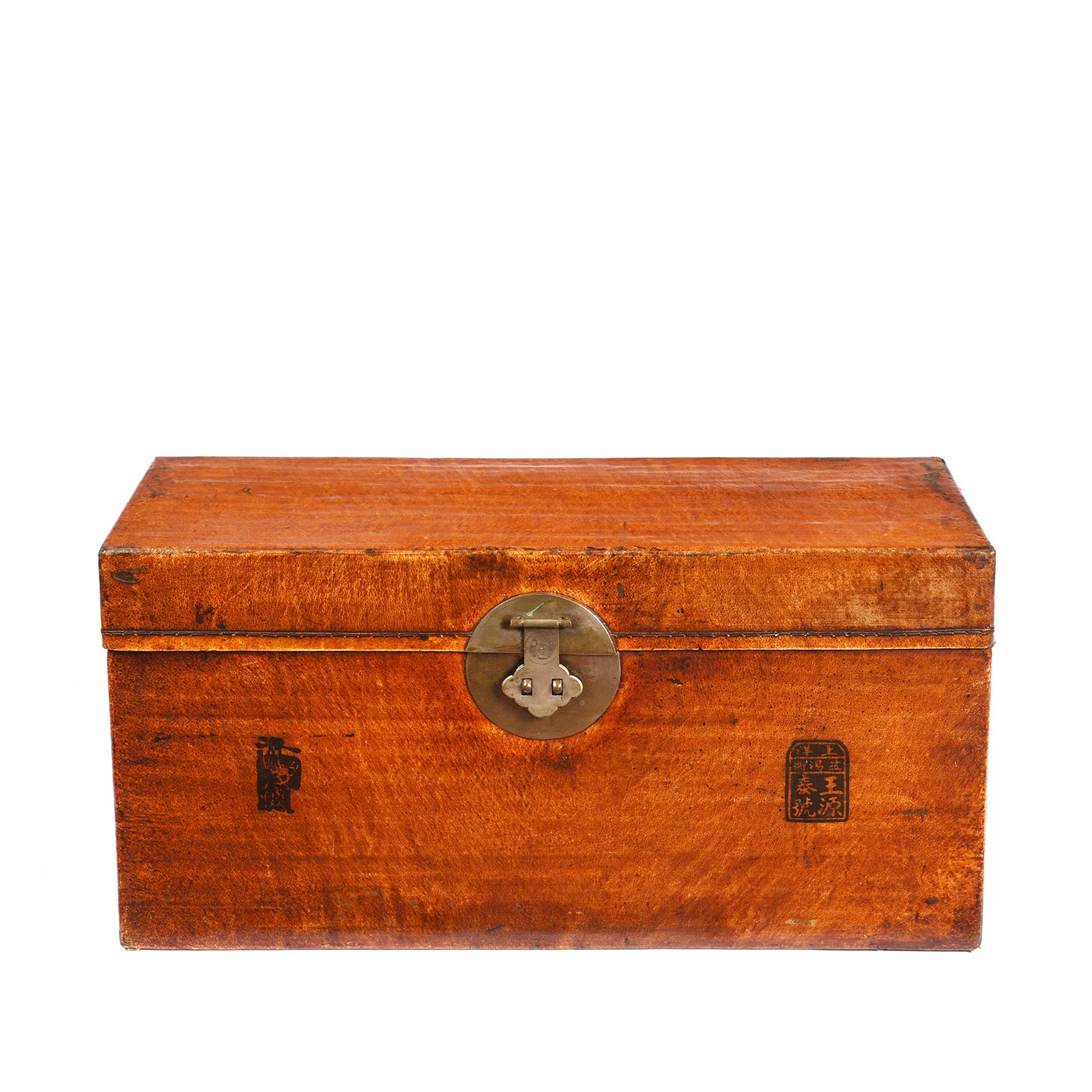
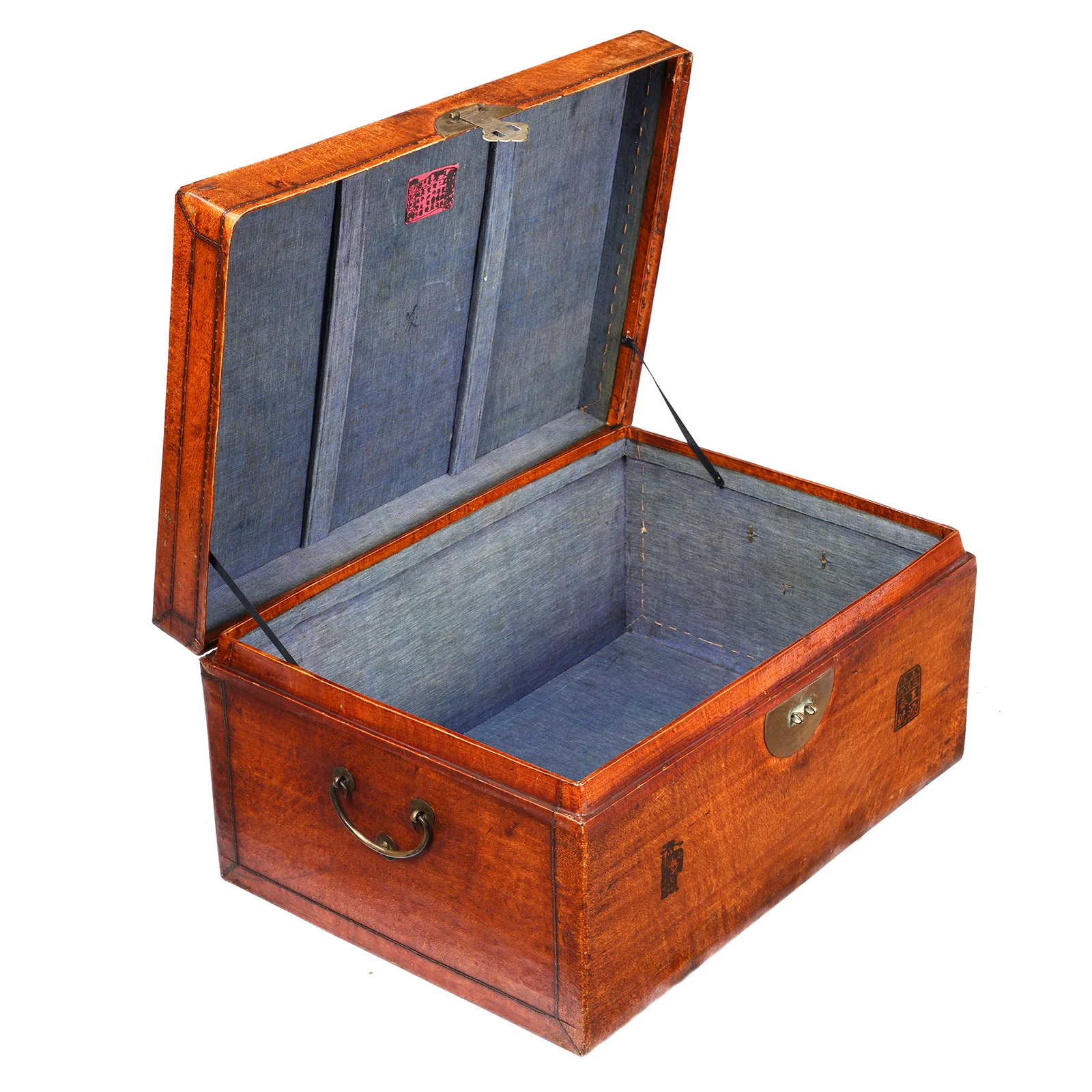
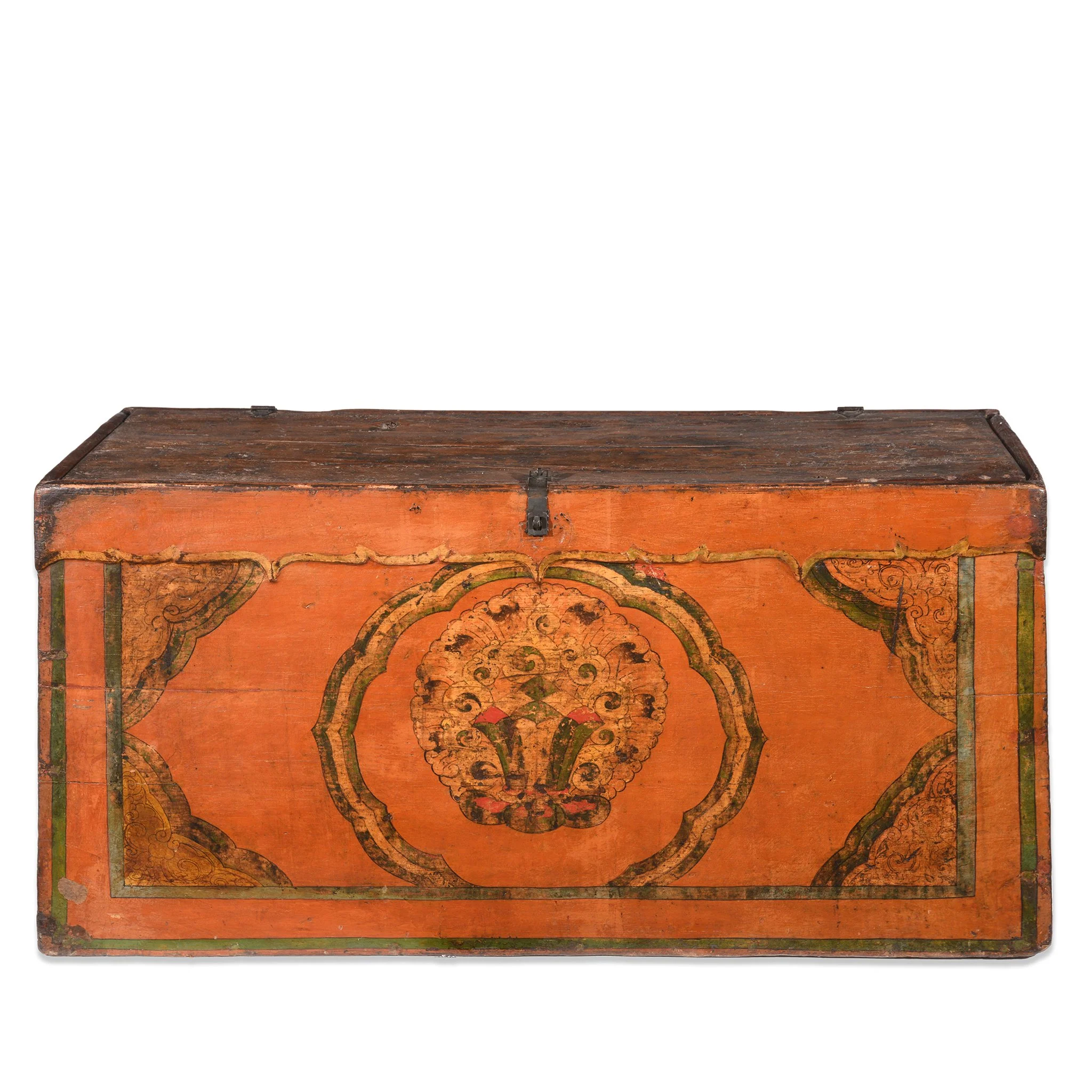
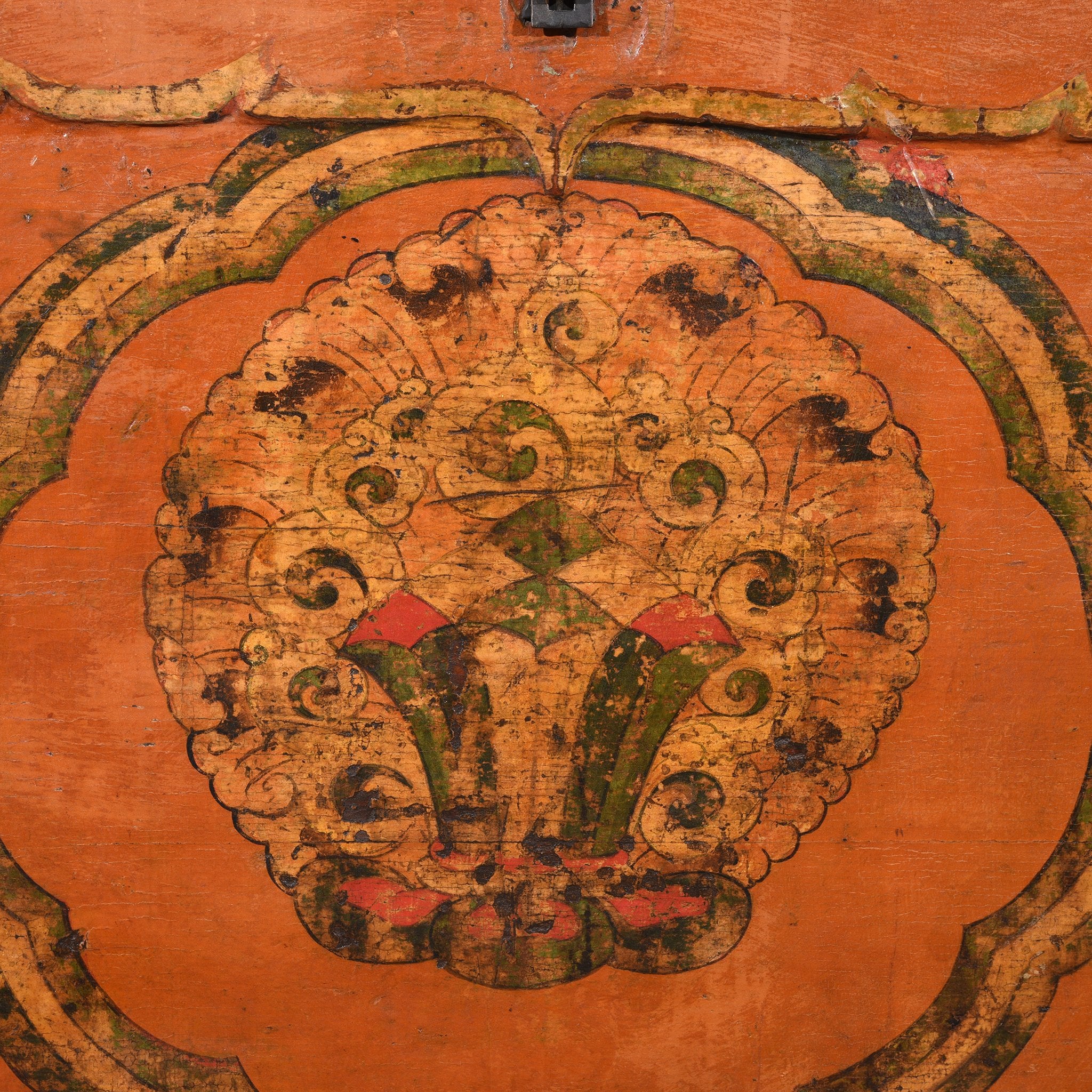
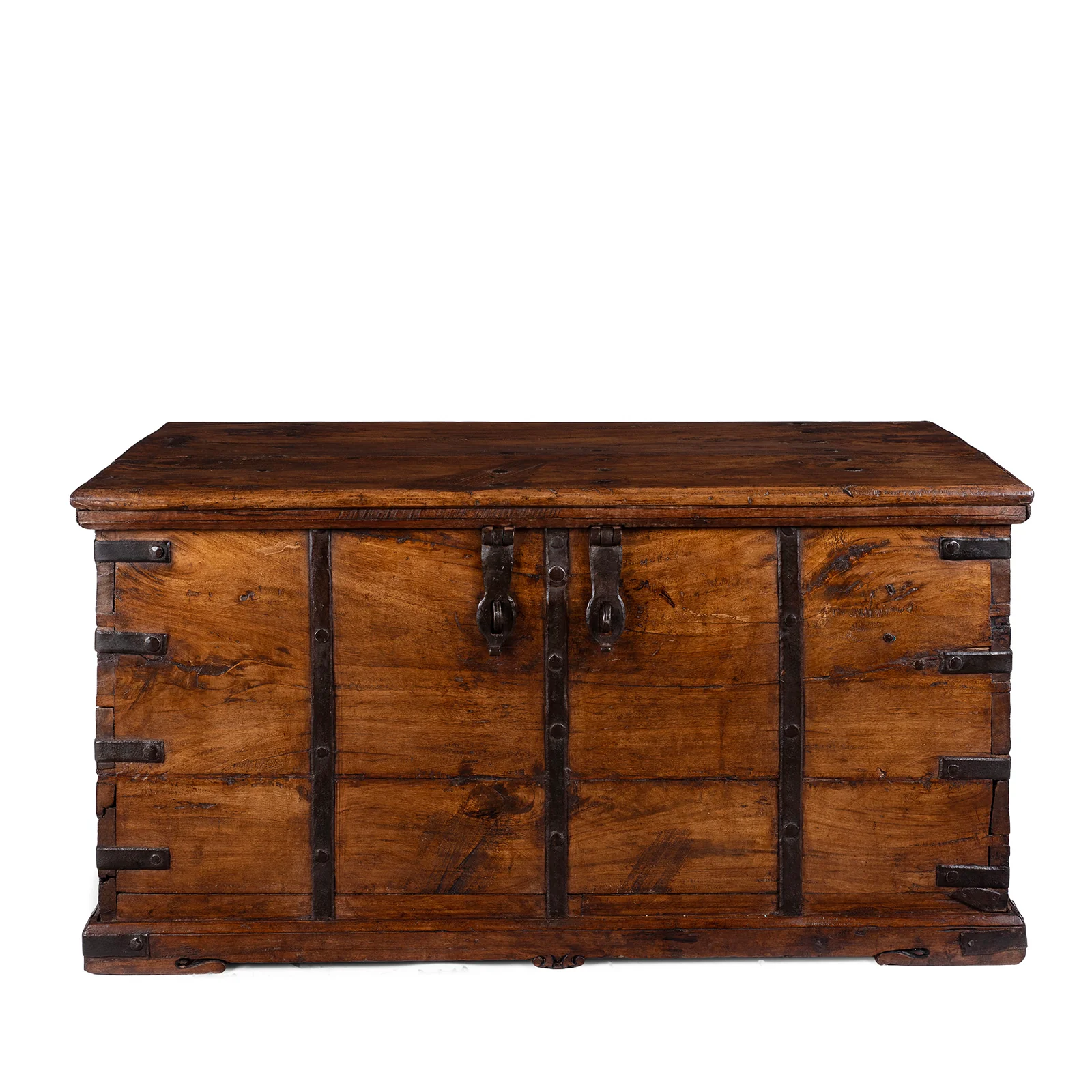
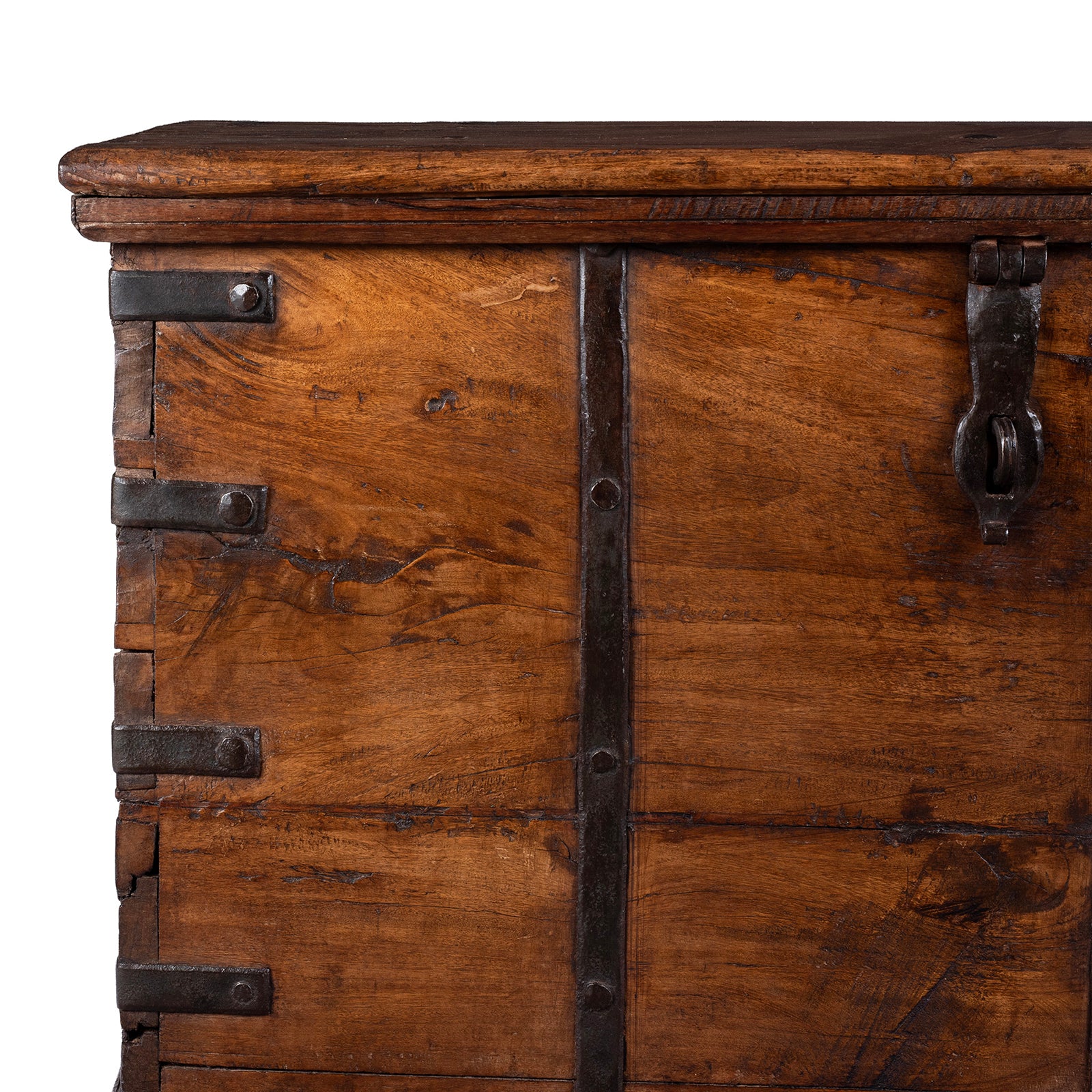
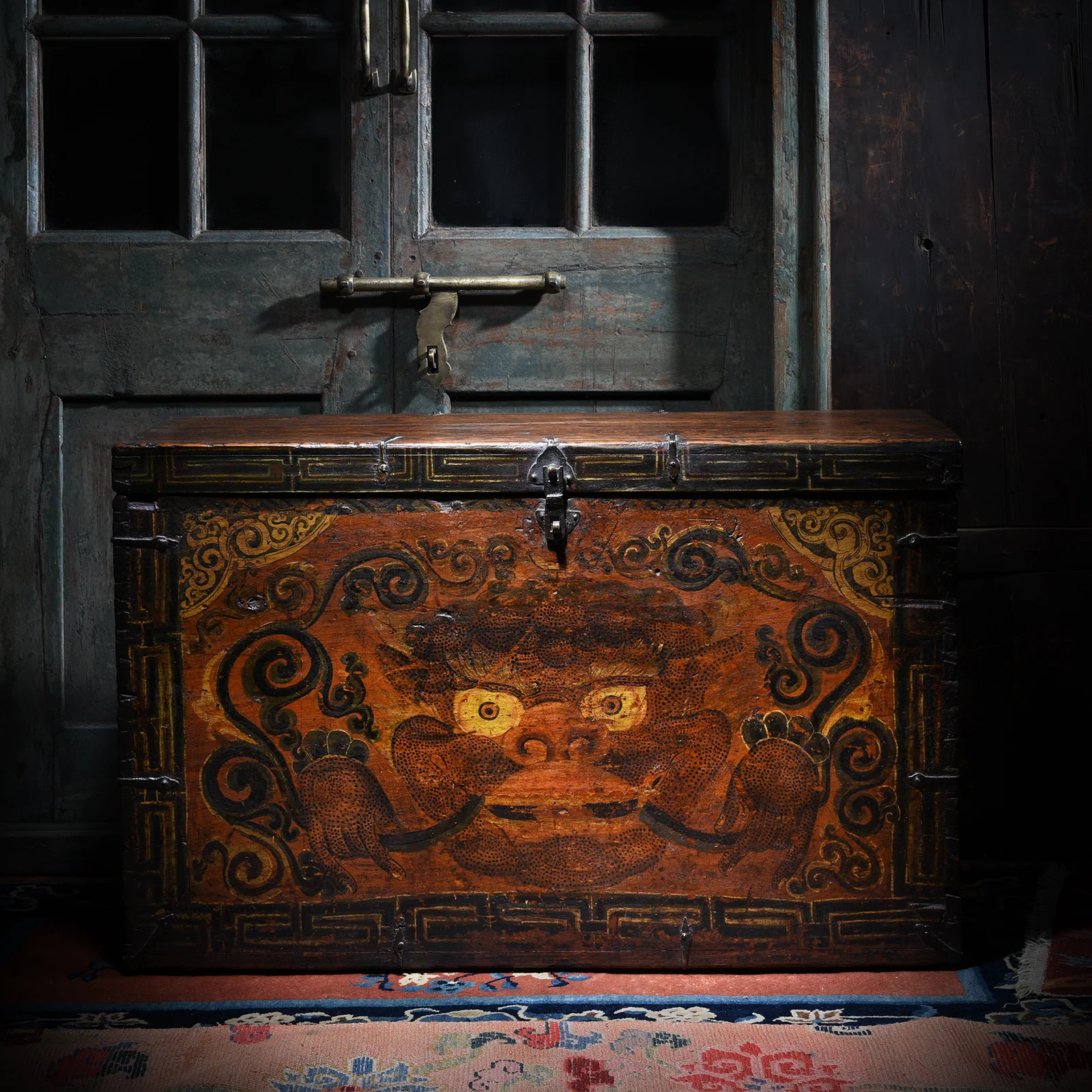
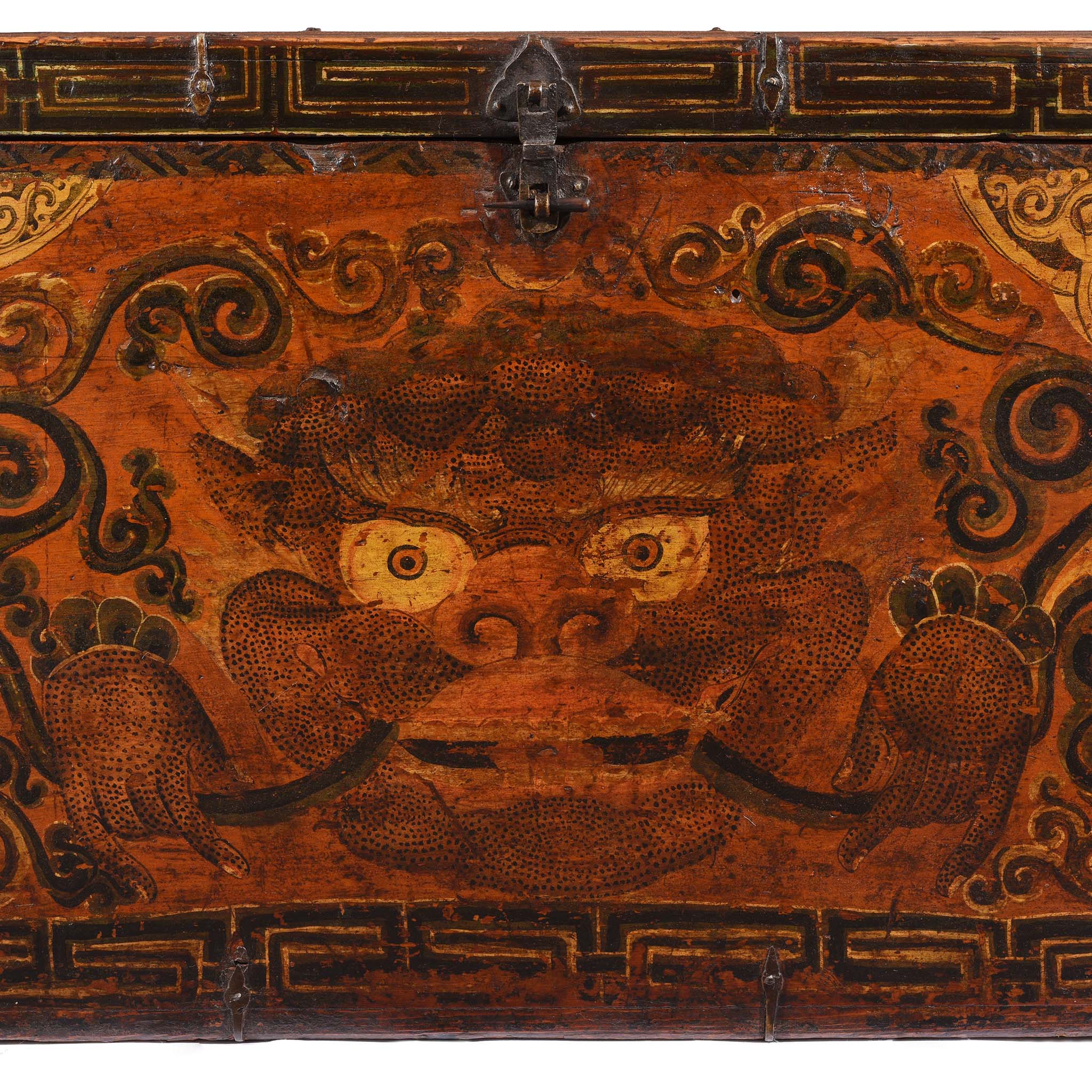
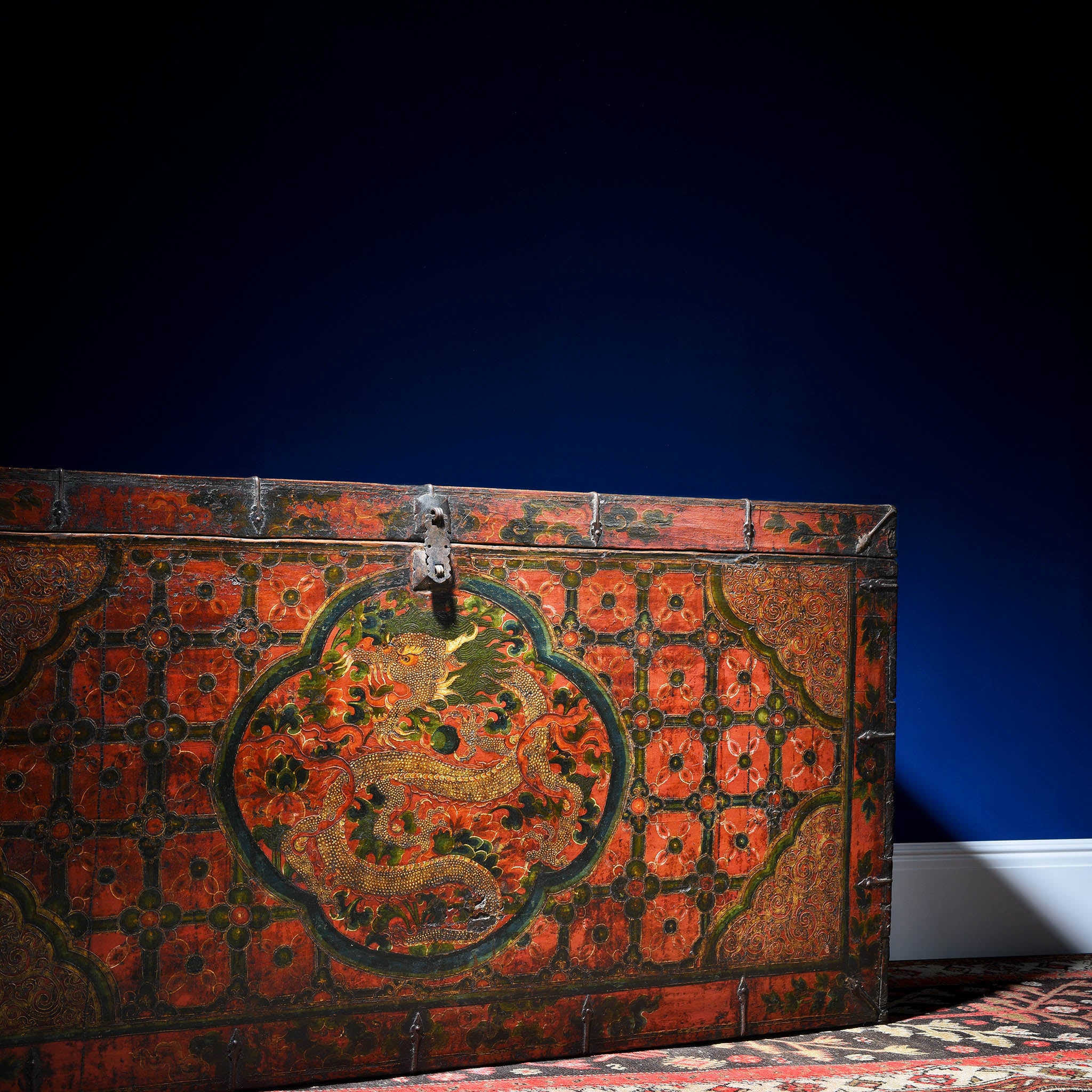
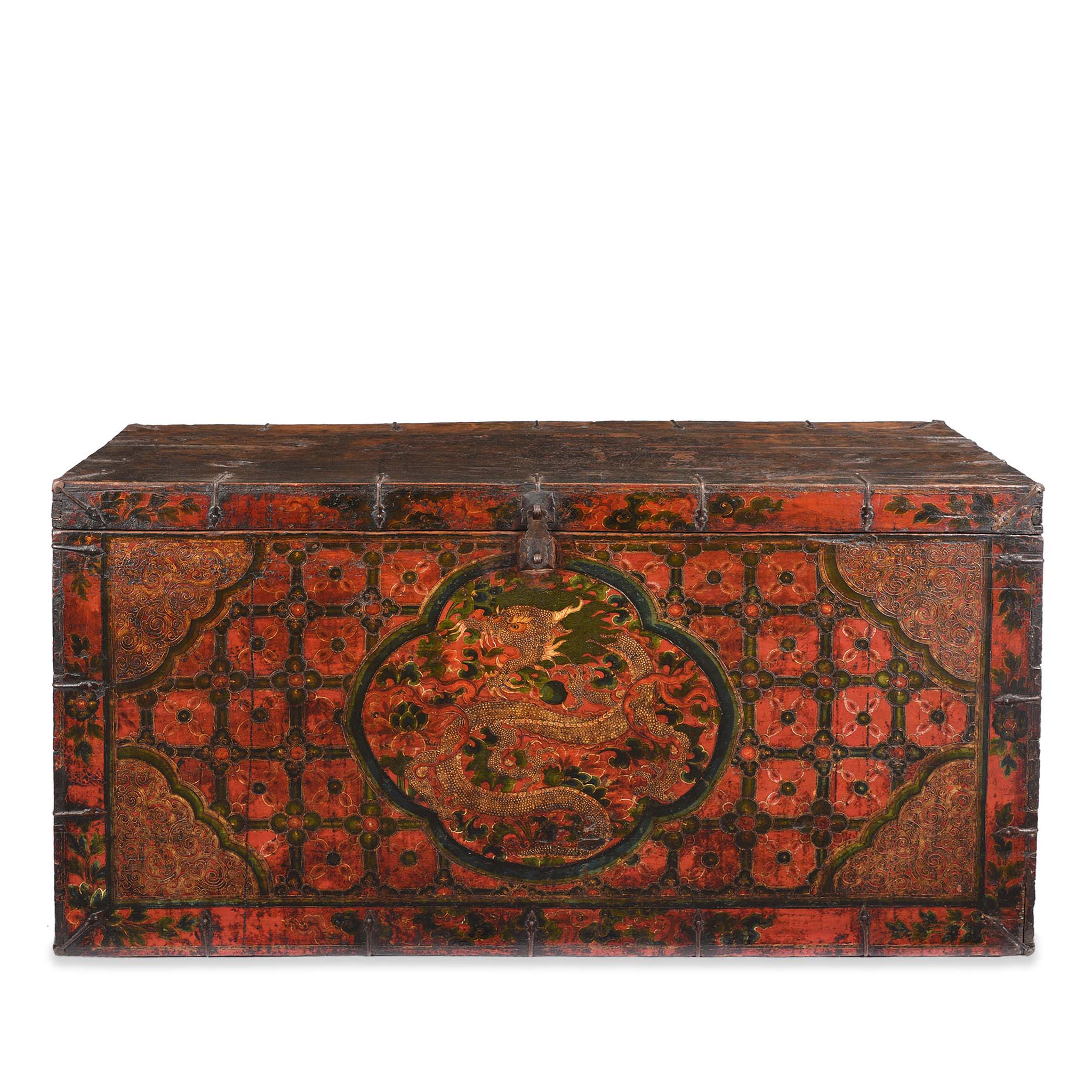
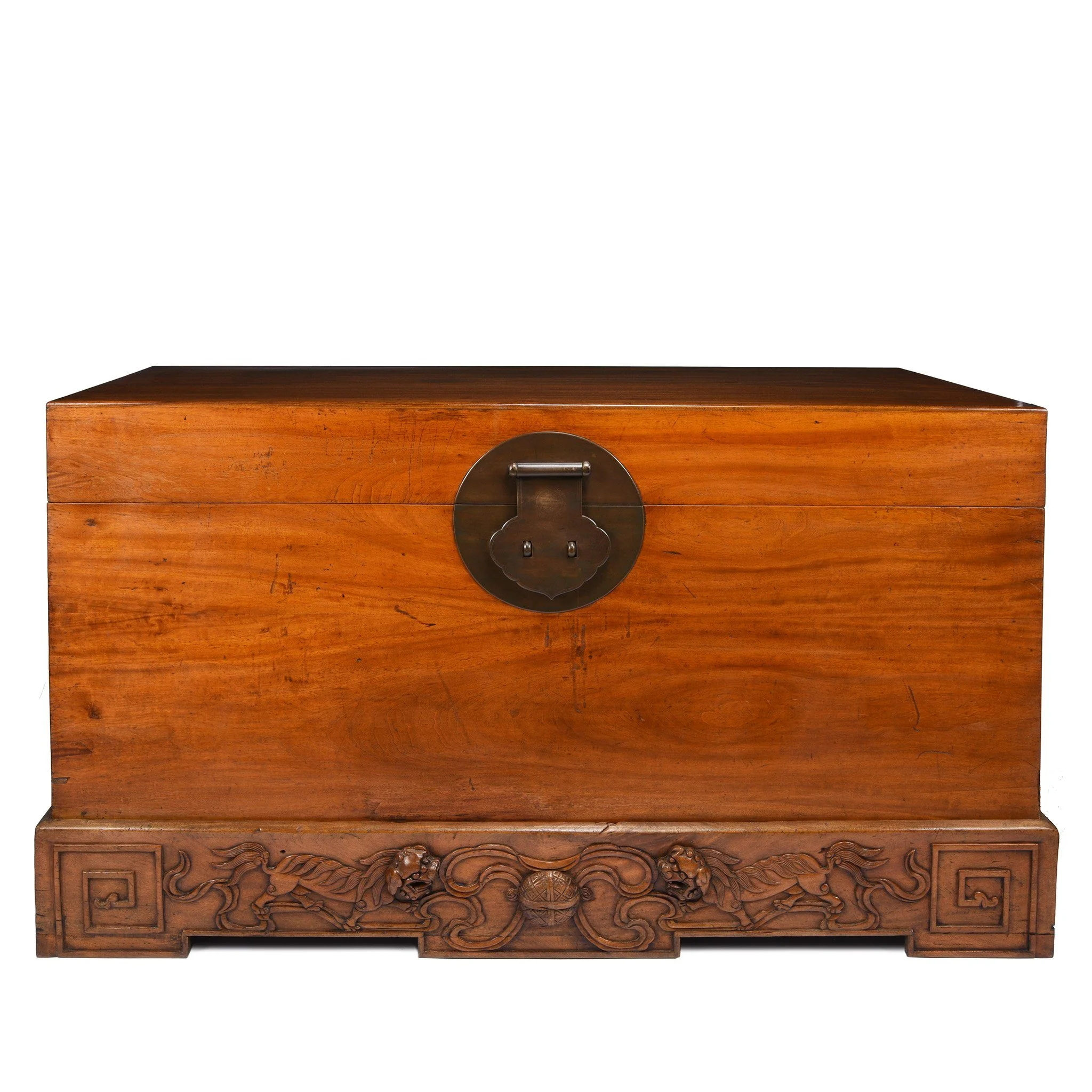
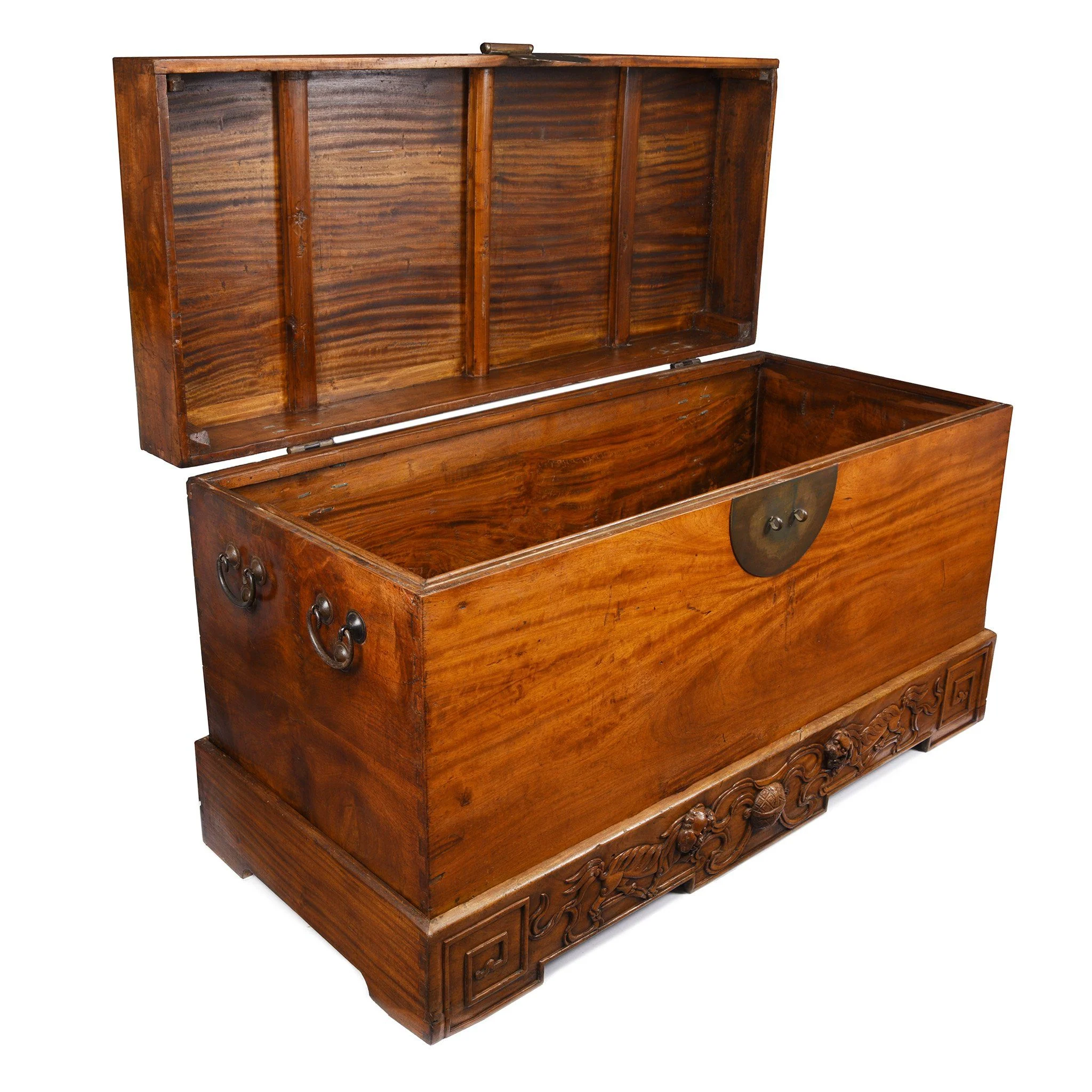
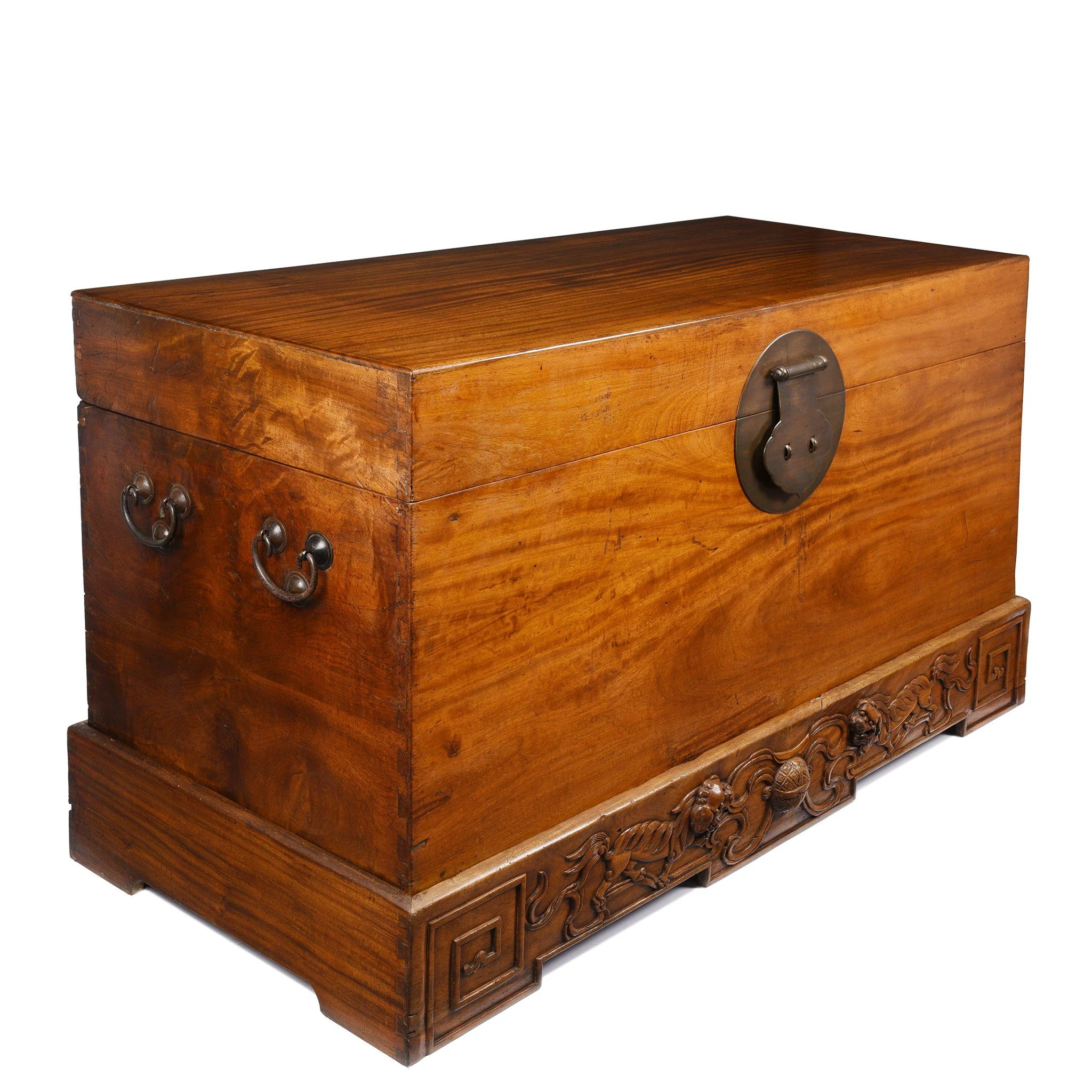
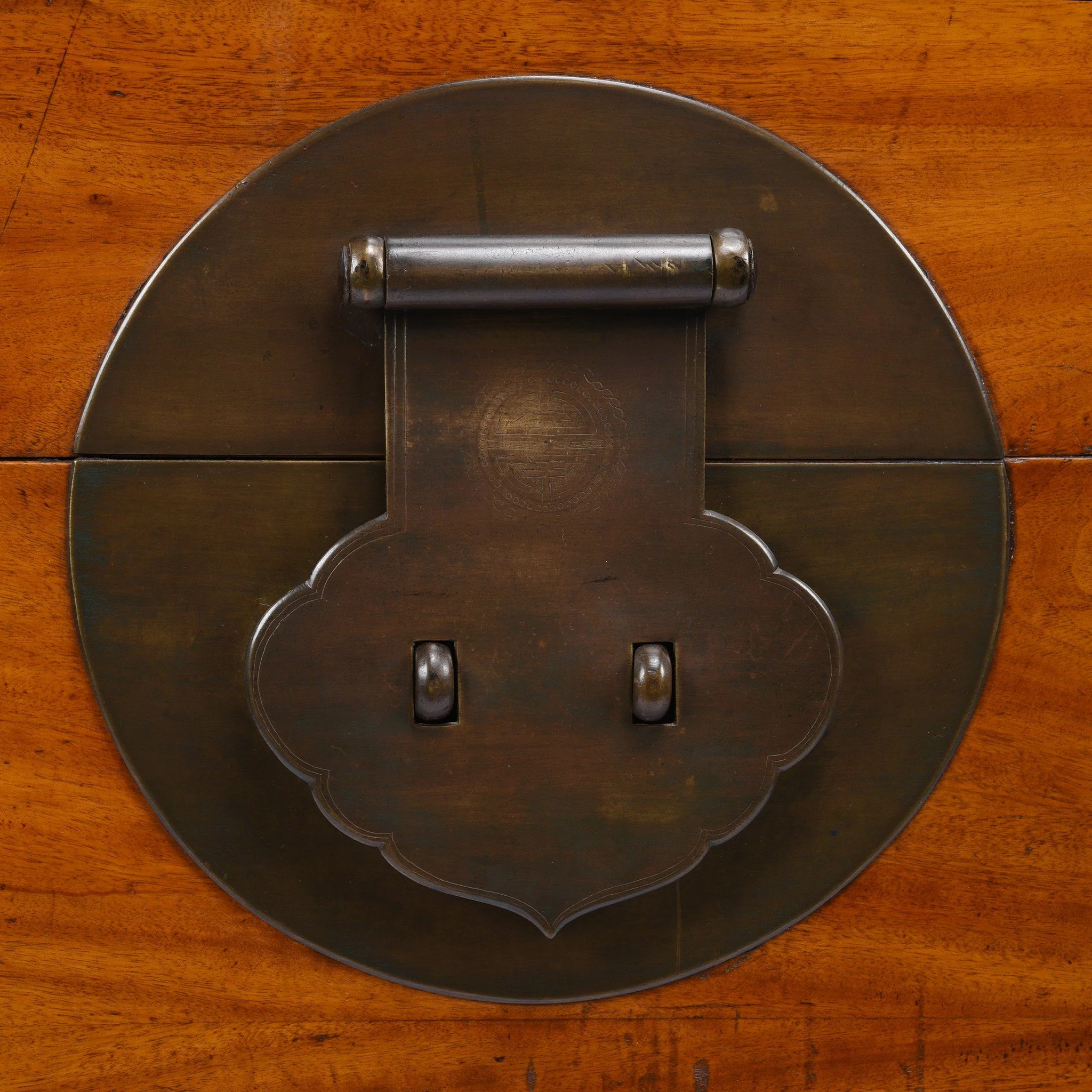
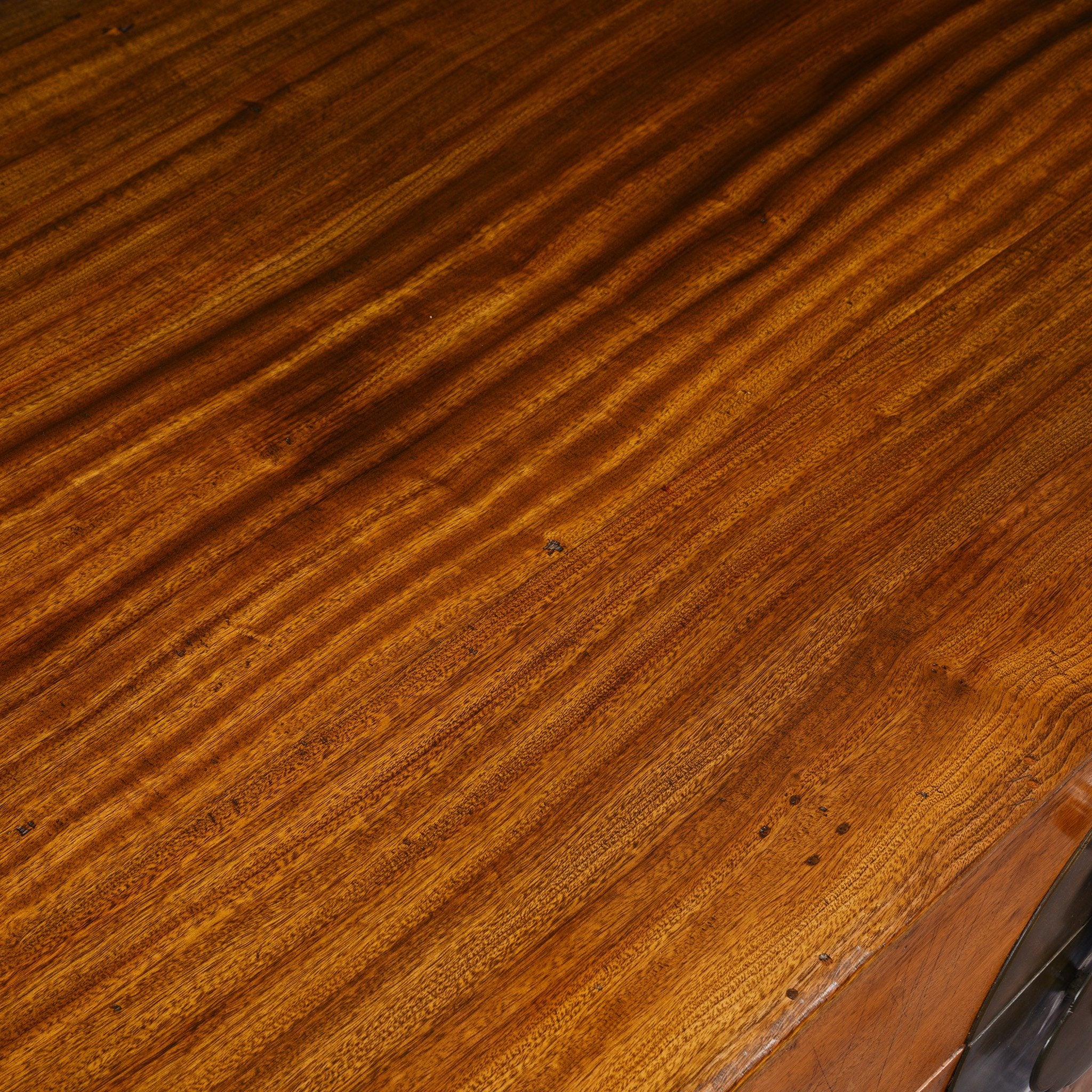
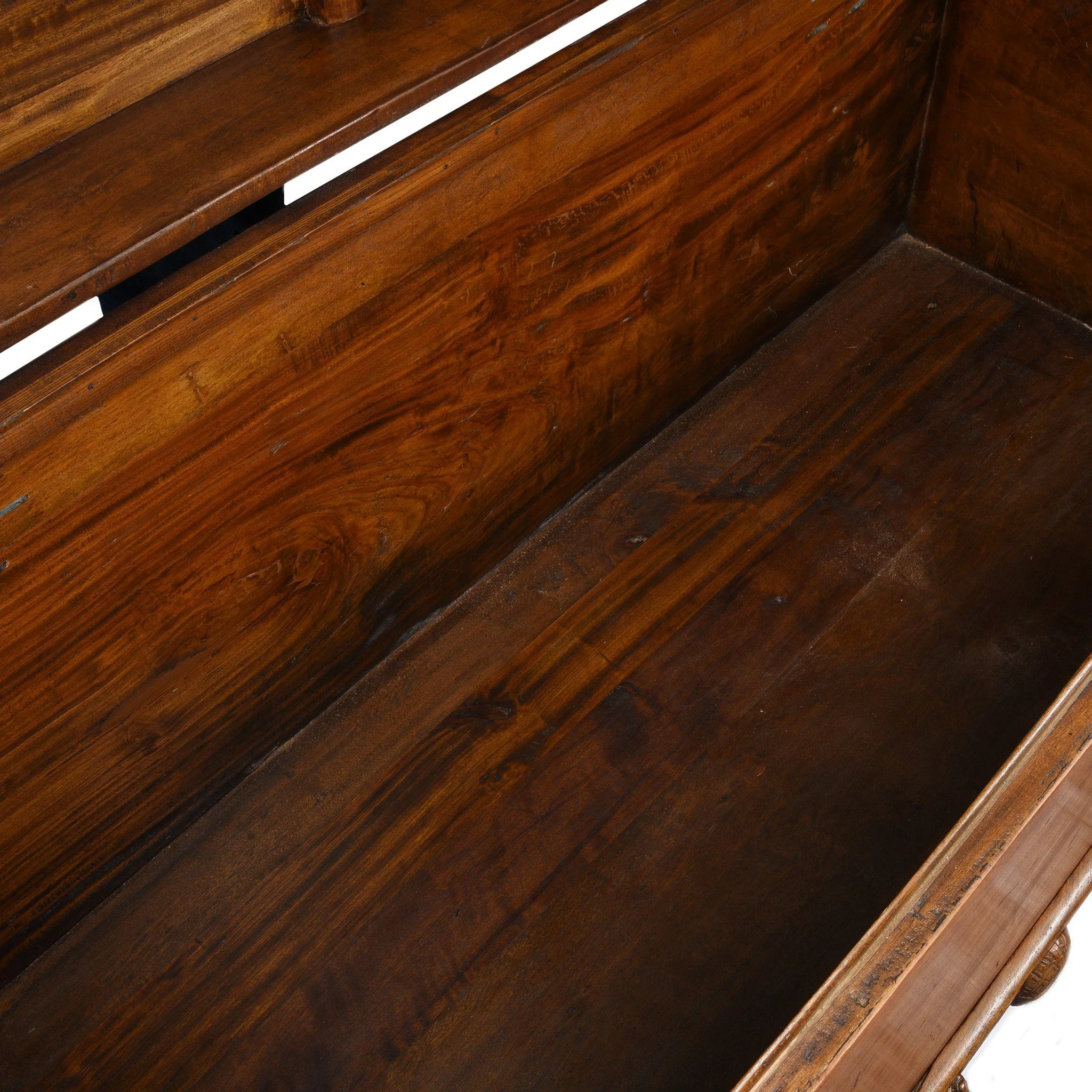
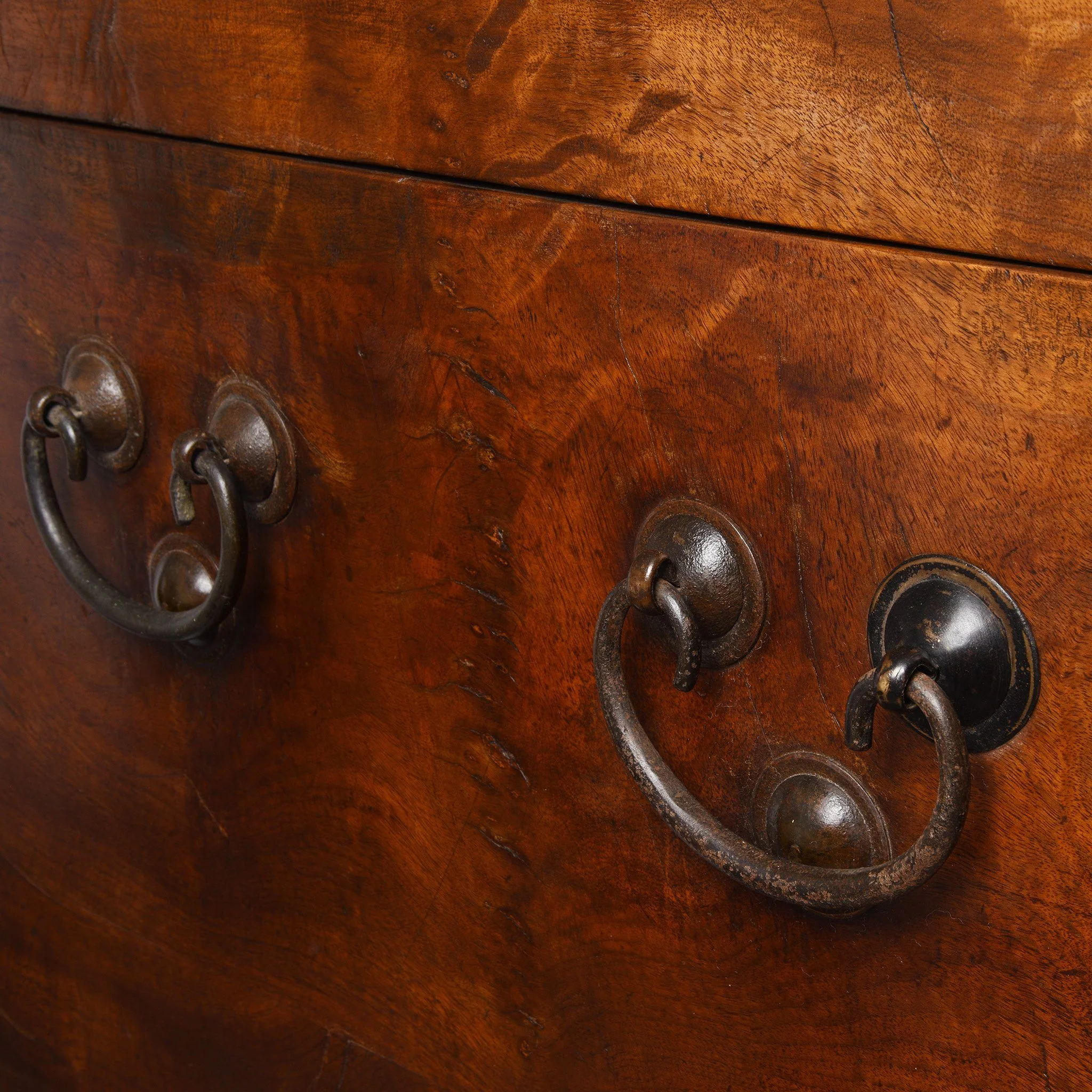
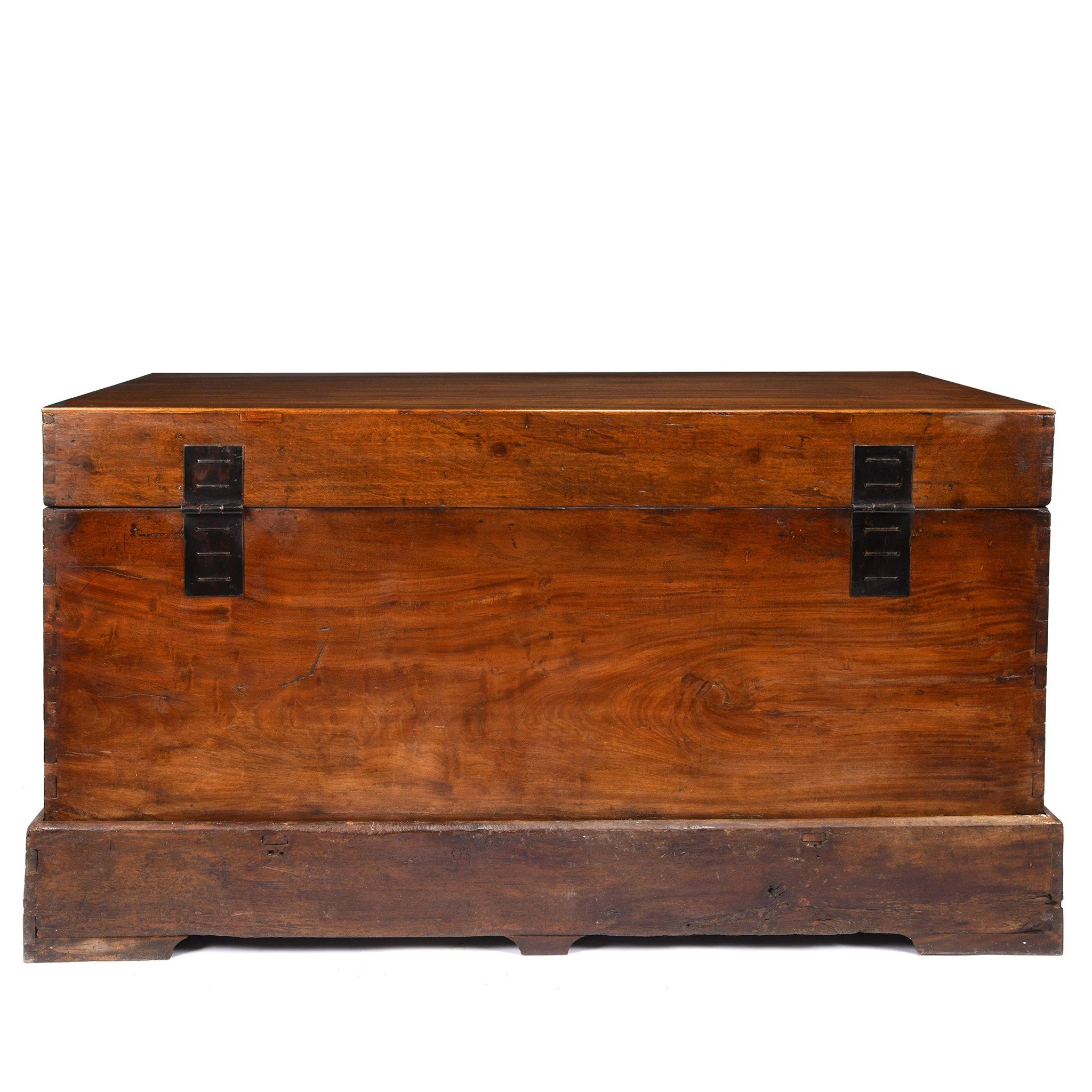
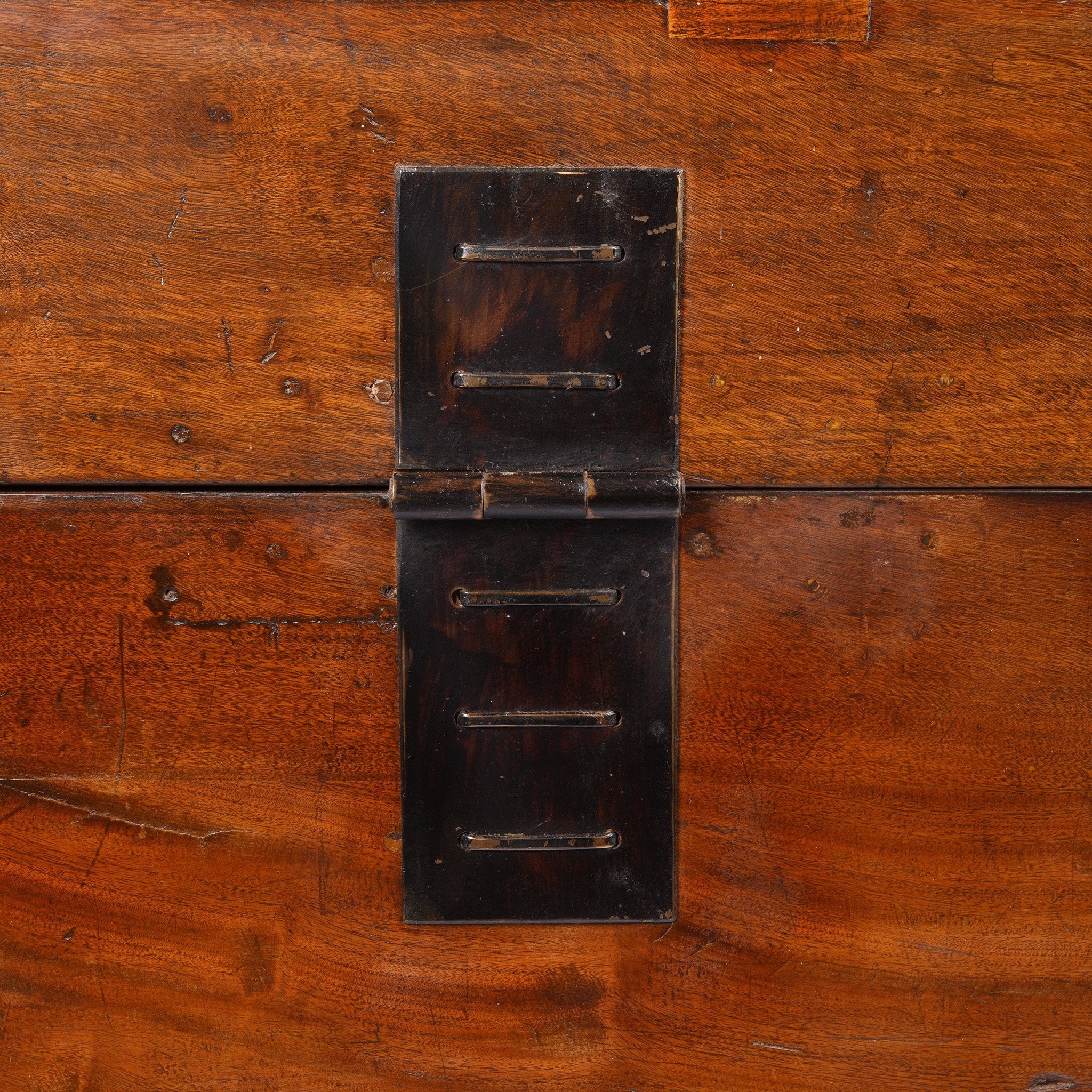
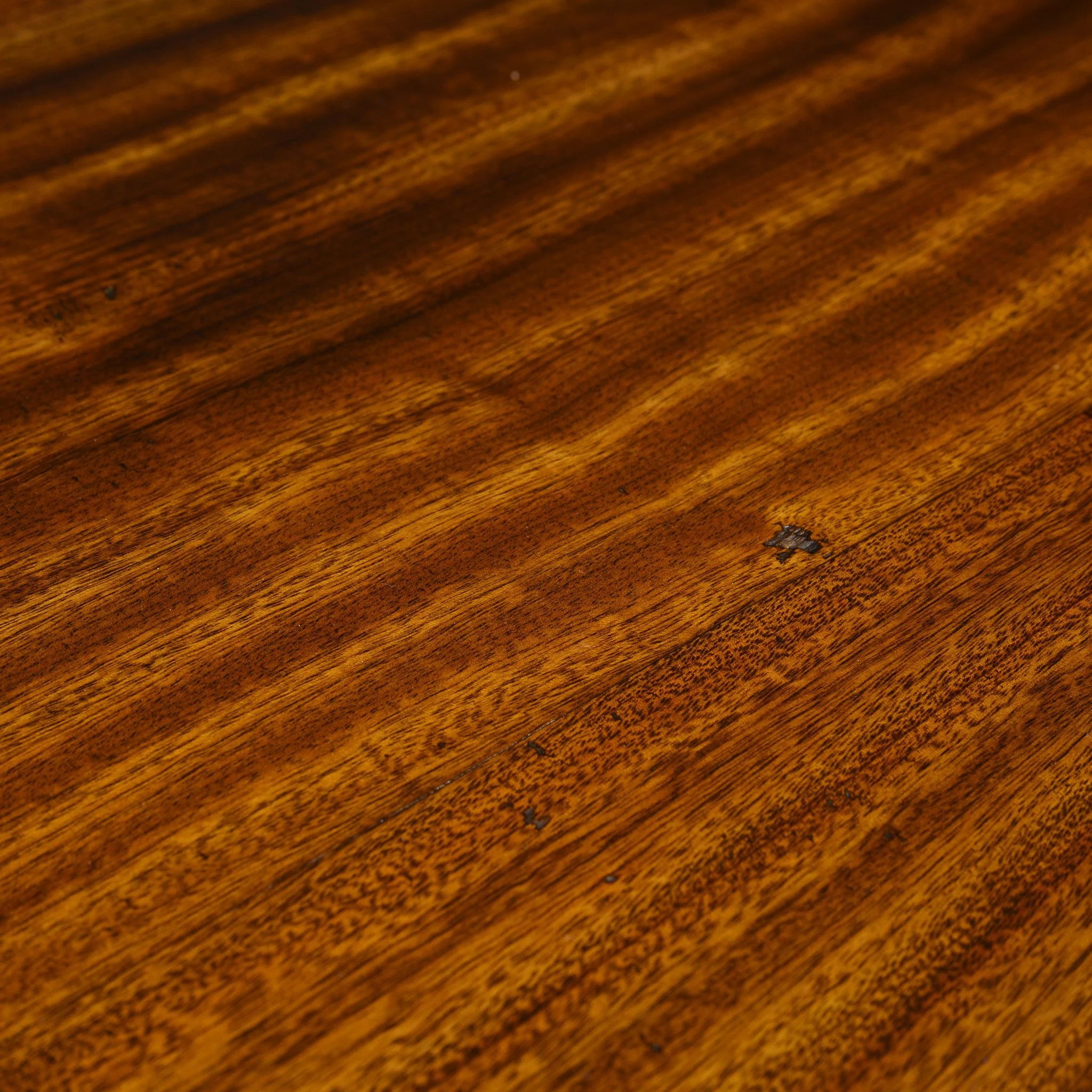
This is a fabulously large antique Chinese camphor trunk from the early 19th century. This original piece is carved from large planks of camphor wood and has its original brass hardware. It is from Hebei province in Northern China, either Beijing or Tianjin city. Camphor (Zhāngmù (樟木 / changmu) was the preferred wood of the wealthy, the smell of camphor discouraged moths and other insects making these chests perfect for storage of silks, bedding and textiles.
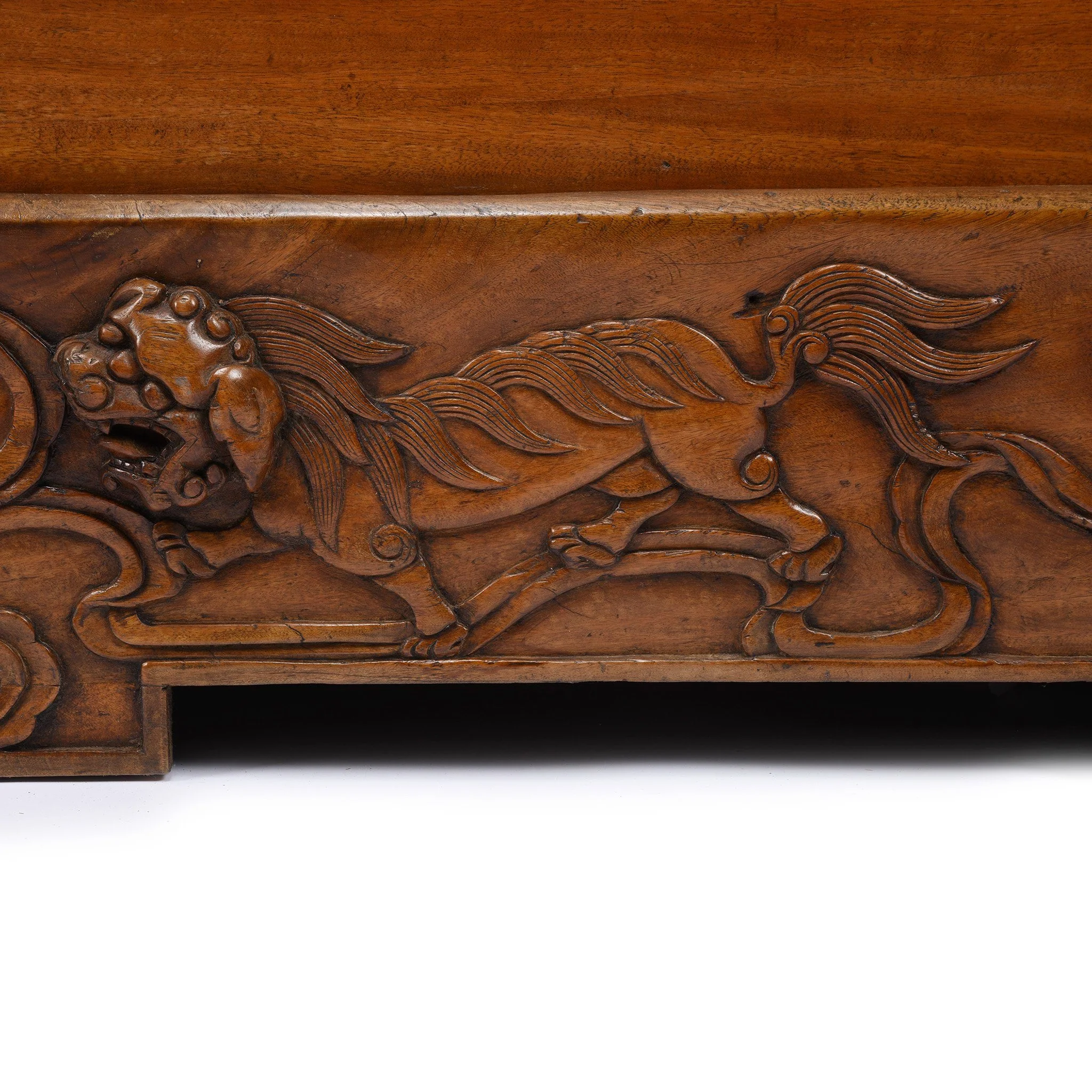
This style of camphor chest has existed in China since the 16th century with ceramic tomb models having been excavated from this period. It has a chejiao (meaning cart base) removable base. The high relief carving on the base leads us to a period of early 19th century (circa 1820).
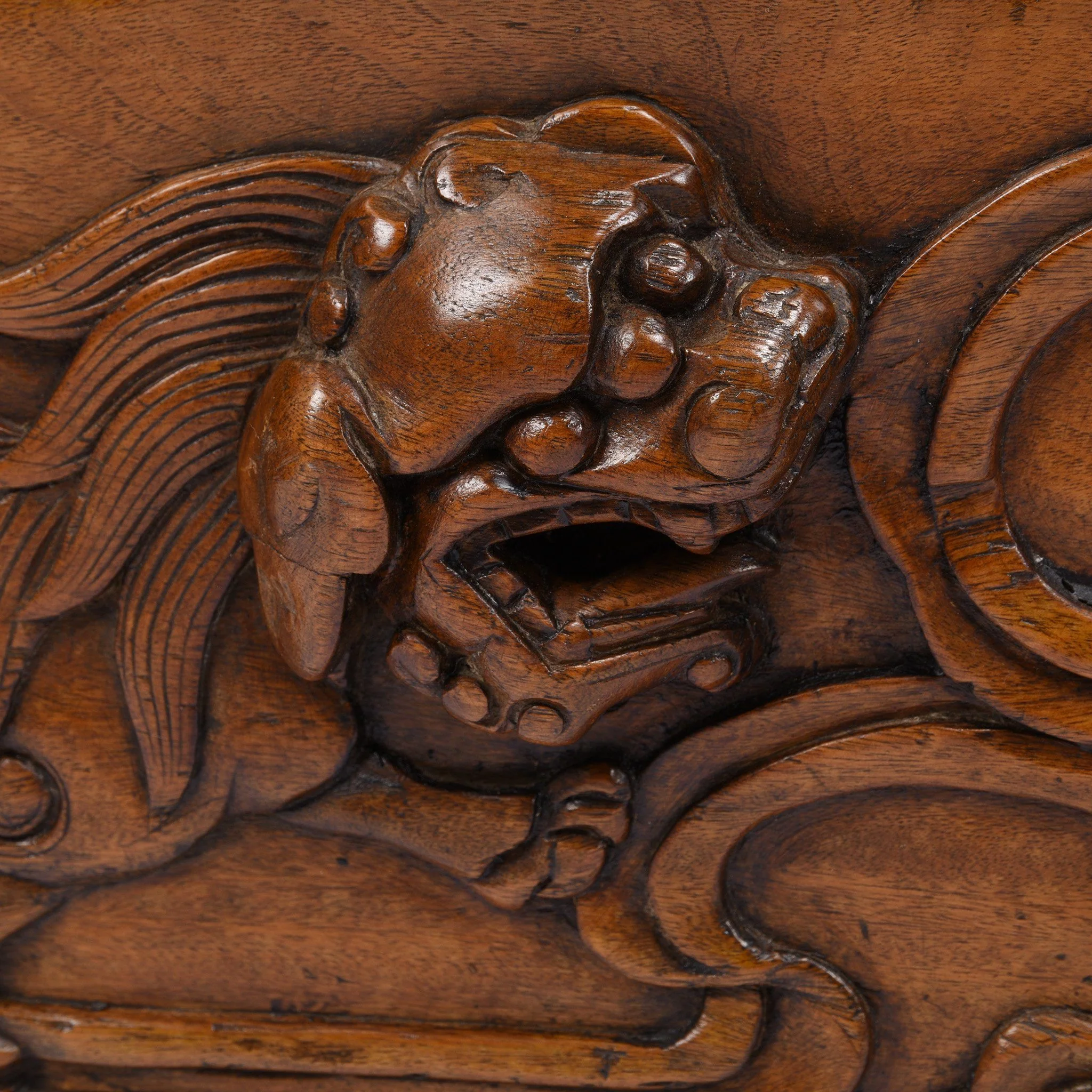
The stand features two facing foo dogs (protective animals) carved in high relief.
References:
A near identical example can be found in the Victoria & Albert Museum collection (FE.77:1-1983) and is published in Chinese Furniture, V&A Far Eastern Series, 1988 by Craig Clunas, Plate No 78.
A similar inferior example in different woods can be found in "Chinese Furniture: A Guide to Collecting Antiques" by Mazurkewich - Fig 518
Product Information
Product Information
Shipping & Returns
Shipping & Returns
Exceptionally Large Camphor Trunk From Hebei - Early 19th Century
Exceptionally Large Camphor Trunk From Hebei - Early 19th Century
This is a fabulously large antique Chinese camphor trunk from the early 19th century. This original piece is carved from large planks of camphor wood and has its original brass hardware. It is from Hebei province in Northern China, either Beijing or Tianjin city. Camphor (Zhāngmù (樟木 / changmu) was the preferred wood of the wealthy, the smell of camphor discouraged moths and other insects making these chests perfect for storage of silks, bedding and textiles.
This style of camphor chest has existed in China since the 16th century with ceramic tomb models having been excavated from this period. It has a chejiao (meaning cart base) removable base. The high relief carving on the base leads us to a period of early 19th century (circa 1820).
The stand features two facing foo dogs (protective animals) carved in high relief.
References:
A near identical example can be found in the Victoria & Albert Museum collection (FE.77:1-1983) and is published in Chinese Furniture, V&A Far Eastern Series, 1988 by Craig Clunas, Plate No 78.
A similar inferior example in different woods can be found in "Chinese Furniture: A Guide to Collecting Antiques" by Mazurkewich - Fig 518
Original: $3,961.24
-65%$3,961.24
$1,386.43Product Information
Product Information
Shipping & Returns
Shipping & Returns
Description
This is a fabulously large antique Chinese camphor trunk from the early 19th century. This original piece is carved from large planks of camphor wood and has its original brass hardware. It is from Hebei province in Northern China, either Beijing or Tianjin city. Camphor (Zhāngmù (樟木 / changmu) was the preferred wood of the wealthy, the smell of camphor discouraged moths and other insects making these chests perfect for storage of silks, bedding and textiles.
This style of camphor chest has existed in China since the 16th century with ceramic tomb models having been excavated from this period. It has a chejiao (meaning cart base) removable base. The high relief carving on the base leads us to a period of early 19th century (circa 1820).
The stand features two facing foo dogs (protective animals) carved in high relief.
References:
A near identical example can be found in the Victoria & Albert Museum collection (FE.77:1-1983) and is published in Chinese Furniture, V&A Far Eastern Series, 1988 by Craig Clunas, Plate No 78.
A similar inferior example in different woods can be found in "Chinese Furniture: A Guide to Collecting Antiques" by Mazurkewich - Fig 518